
REVIEW · GJIROKASTER TOURS
Private Cold War City Tour in Gjirokaster
Gjirokaster keeps its hardest stories underground. This private tour connects the Cold War Tunnel with the city’s communist past, then brings that history into the open at the castle area and museums. I like the small-group format, which gives you room to ask questions, and I like the thoughtful pause for coffee or tea after the historical visits. The main drawback is that the tour is offered only in English, and the €14 entrance fee is separate from the $75.74 price.
You should allow roughly two and a half to just over three hours, depending on the pace of your group. Guide Elisa has been singled out for her kindness and clear explanations, and the company has also helped early-arriving customers find another attraction. That is useful service, but you should still confirm the exact meeting time and which castle areas are included before setting off.
In This Review
- Key points to know before booking
- Why Gjirokaster’s Cold War story matters
- Inside the 1970s Cold War Tunnel
- Meeting Musine Kokalari at the My Muse Memorial
- Enver Hoxha’s former home and the Ethnographic Museum
- Ending with coffee, tea, and the less visible story
- What the $75.74 price really buys you
- Timing, group size, and practical comfort
- Who will get the most from this tour?
- How the experience compares with a simple castle visit
- Should you book the Cold War City Tour?
- FAQ
- How long does the private Cold War City Tour last?
- What language is the tour offered in?
- Is the tour private?
- What is included in the tour price?
- Are entrance tickets included?
- Where does the tour start and finish?
Key points to know before booking
- A private tour for your group only: You avoid the shuffle of a large bus tour and can ask more questions about Albania’s communist period.
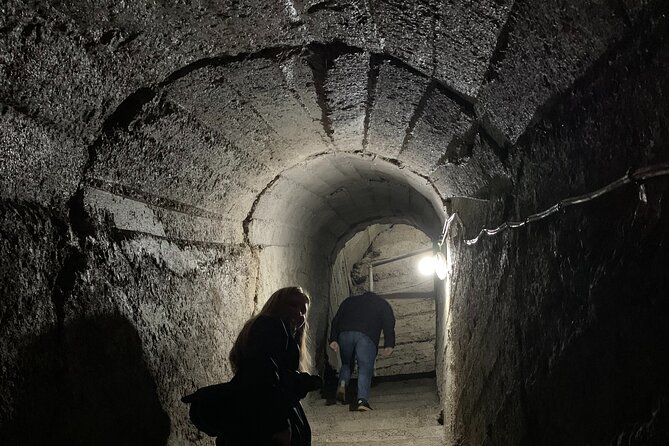
- The Cold War Tunnel is the central experience: You spend about 50 minutes inside a shelter built for the political leadership of the 1970s.
- Musine Kokalari adds a human story: Her memorial presents the life of Albania’s first female writer and a dissident punished by the regime.
- Enver Hoxha’s former home has had several lives: The building became a weapons museum before its current role as the Ethnographic Museum.
- Coffee and tea are included: The final presentation gives you time to process the subject matter in a calmer setting.
- Budget for the separate entrance fee: The tour price is $75.74 per person, while entrance tickets cost €14 per person.
Why Gjirokaster’s Cold War story matters
Gjirokaster is often praised for its stone houses, steep streets, castle, and Ottoman-era character. This tour asks you to look at another layer of the city, one shaped by fear, surveillance, political loyalty, and the strict rule of Enver Hoxha.
That change in focus is valuable. You are not simply walking through attractive old streets and taking photographs from the castle walls. You are being shown how the city functioned under a communist government that prepared for war, punished opposition, and controlled public life.
I like the way the tour links large political events with individual lives. The tunnel explains how leaders planned to survive a crisis. The Musine Kokalari memorial shows what happened to a woman who opposed the regime. The former Hoxha family home brings the story back to the man who shaped Albania for decades.
This is a good choice if you want more than architectural sightseeing. It is less suitable if you are looking only for panoramic views or a general introduction to Gjirokaster.
More of Gjirokaster:
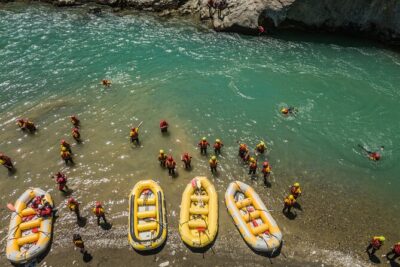
- Rafting Vjosa River Gjirokastër Albania ARG
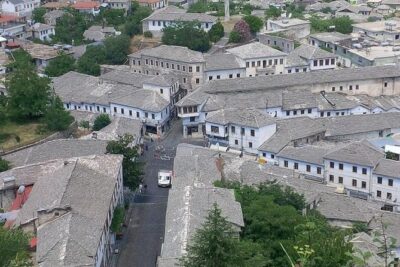
★ 5.0 · 199 reviews - Gjirokastra- The Stone City & Blue Eye- The monument of Nature.
★ 4.5 · 180 reviews - Gjirokastra UNESCO & Ksamil Beach – From Tirana/Durres/Golem
★ 5.0 · 117 reviews
Inside the 1970s Cold War Tunnel
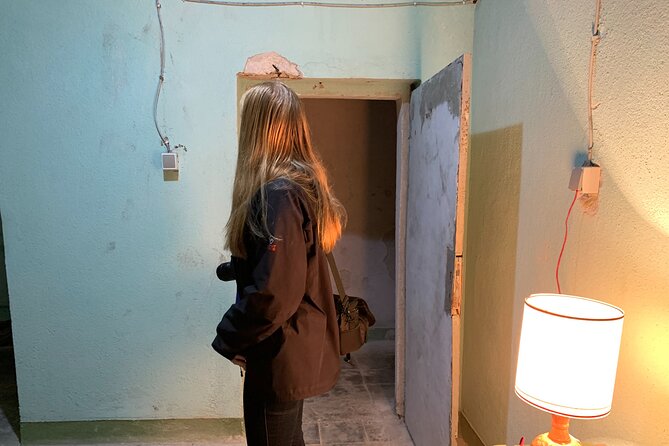
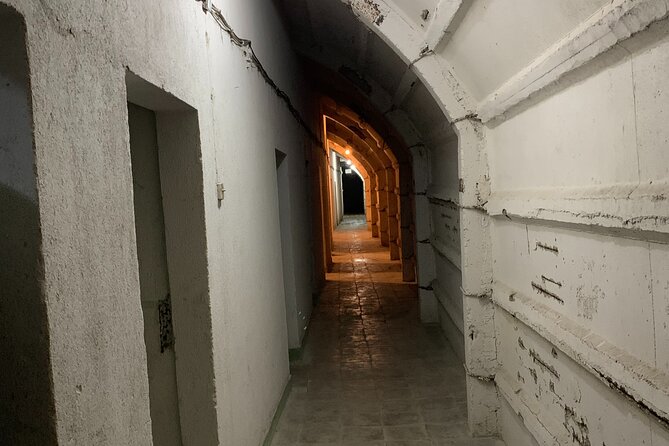
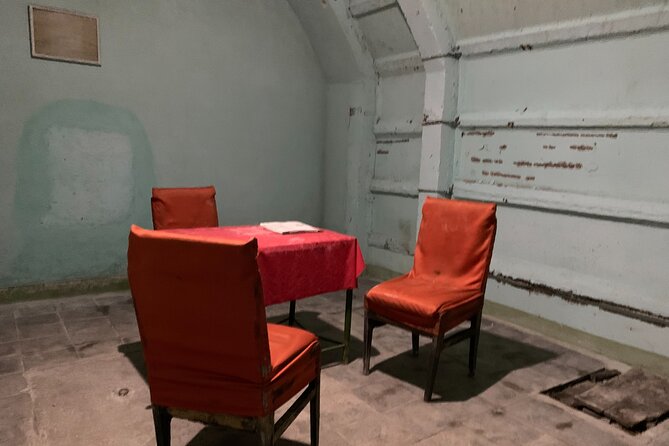
The first stop is the Cold War Tunnel, where you spend about 50 minutes. The tunnel was built to protect the political bureau during the 1970s. In an emergency, it would have served as a shelter from which the leadership could direct military action.
The physical setting does much of the work. A tunnel is not an abstract political idea. It is a confined place built for danger, secrecy, and survival. You can better understand the level of anxiety behind Albania’s defensive planning when the story is told inside the structure itself.
Your guide explains how the shelter was intended to function and shares stories, confessions, and facts connected with the people who might have used it. The focus is not only on construction. It is also on the human behavior created by fear: who was trusted, who was watched, and what political leaders expected to happen if the country came under attack.
The tunnel is also noticeably cool. That may sound minor, but it is useful to know if you are visiting during a hot Albanian summer. Bring a light layer if you tend to feel cold indoors. The cooler temperature also adds to the mood, though you are there for the political story rather than a novelty bunker visit.
The tunnel receives an admission ticket as part of the tour itinerary, but the overall entrance charge of €14 per person is listed separately from the tour price. Ask at the start how the ticket arrangement works so you are not caught off guard.
Meeting Musine Kokalari at the My Muse Memorial
The next stop presents a very different kind of courage. The My Muse Memorial honors Musine Kokalari, an Albanian writer, intellectual, and politician from Gjirokaster.
Kokalari was Albania’s first female writer. She also opposed the communist regime and paid heavily for her political views. She was imprisoned at Burrel and sent to hard labor in Rreshen. The memorial focuses on her ideas, her writing, and the private world she maintained despite poverty and punishment.
For me, this is one of the most important parts of the experience because it prevents the Cold War story from becoming only a tale about government buildings and military plans. You meet a person who kept reading and writing even after the state tried to silence her.
The scheduled visit lasts about 40 minutes, which should give your guide time to explain the main points without turning the stop into a rushed glance at a display. Still, the pace may feel quick if you want to read every detail or if English is not your strongest language.
That language issue matters. The tour is conducted in English, and no translated text in several languages is provided according to the available information. If you understand English only partly, you may miss some of the political detail. I would ask your guide to pause and repeat important names or events rather than trying to absorb everything at once.
Enver Hoxha’s former home and the Ethnographic Museum
The third major stop is the Ethnographic Museum, housed in the building where Enver Hoxha was born and raised. The original house burned and was rebuilt at five times its earlier size. Its later uses make the building even more unusual: it began as the Hoxha family home, became a Museum of Weapons, and eventually became the Ethnographic Museum.
That history gives the site an odd quality. You are looking at a building connected to Albania’s former dictator, but the museum now presents the broader domestic and cultural character of Gjirokaster. The house is not treated simply as a shrine to its famous former resident.
Your guide discusses how Hoxha’s political life developed and how his rule affected opponents, acquaintances, childhood friends, and even people who had known him closely. The emphasis is on the personal costs of the regime, not only on dates and official titles.
The 40-minute visit should suit you if you prefer a guided explanation to a long, independent museum visit. It may feel compressed if you want to study every room or object. The building’s changing identity also means that you should listen carefully to what belongs to its domestic past, its weapons-museum phase, and its current museum role.
The stop is listed with admission included in the itinerary, but again, the overall tour information gives a separate €14 entrance charge. Treat that fee as an extra cost unless the operator confirms otherwise.
More City Tours in Gjirokaster:
- Visit the City of Gjirokastra
★ 4.5 · 12 reviews - 2 Day Tour of the Riviera, Gjirokastra UNESCO city and Blue Eye,
★ 5.0 · 10 reviews - Gjirokaster – The Stone City of UNESCO, Private Tour from Tirana
★ 4.5 · 4 reviews - Full Day trip to Stone City of Gjirokastra & Blue Eye
★ 5.0 · 2 reviews
Ending with coffee, tea, and the less visible story
After the historical stops, the tour closes with a short presentation in the company’s hall. Coffee and tea are included, giving you a quiet break after several serious subjects.
This final pause is more useful than it may first sound. The tunnel, political persecution, imprisonment, and dictatorship can make for a heavy morning or afternoon. A seated drink gives you time to ask follow-up questions and sort out the connections between the different sites.
The presentation focuses on less visible parts of Gjirokaster’s story. The available details do not specify exactly which subjects are covered, so I would use this moment to ask about anything that seemed unclear. You might ask how local families experienced the communist period, how the city changed after the regime, or how the tunnel fits into Albania’s wider Cold War policy.
Coffee and tea are not a major financial benefit by themselves, but they improve the rhythm of the tour. You get a clear ending rather than being left at the last museum entrance with the story unfinished.
What the $75.74 price really buys you
At $75.74 per person, this is not the cheapest way to see Gjirokaster. You also need to account for the separate €14 entrance fee per person. The price makes more sense if you value a private guide, a focused theme, and the ability to ask questions at your own pace.
A private tour is especially useful for couples, families, or a small group of friends with a shared interest in twentieth-century history. You are not paying only for transport between sights. The value lies in the connections between the tunnel, Kokalari’s life, Hoxha’s family home, and the city’s communist past.
The cost is harder to justify if you only want to enter the main sights independently. You could prefer a general castle visit, a self-guided museum stop, or a less specialized walking tour. This experience earns its price through interpretation, not through a long list of included activities.
Before booking, check exactly what is covered by the €14 entrance fee. The highlights refer to the city castle and its prison building, while the timed itinerary specifically names the Cold War Tunnel, the My Muse Memorial, and the Ethnographic Museum. The castle and prison appear to be part of the overall theme, but the supplied schedule does not give them a separate duration. Clarifying that point will help you judge the value accurately.
Timing, group size, and practical comfort
The advertised duration ranges from about two hours and 30 minutes to three hours and 10 minutes. That variation is reasonable for a private experience, since questions and walking speed can affect the finish time.
You meet at C-Adventures & Tours in Gjirokaster and return to the same meeting point. The location is near public transportation, and confirmation is sent when you book. No hotel pickup is listed, so plan to reach the meeting point yourself.
The small-group setup is one of the tour’s strongest features. A private visit lets you ask for clarification, spend a little longer on a subject that interests you, or tell the guide when a point is moving too quickly. It also makes the serious material feel less like a standard group lecture.
Most people can take part, and service animals are allowed. The information does not give detailed access notes for the tunnel, castle areas, or museum buildings, so contact the operator if you have mobility concerns or need specific access arrangements.
This is an English-only activity. If you are comfortable following a spoken historical explanation in English, that should be fine. If not, the lack of multilingual written explanations could limit what you take from the memorial and museum.
Who will get the most from this tour?
I would recommend this experience to you if you have already seen some of Gjirokaster’s old town and want to understand the city’s more recent past. It is also a strong fit for anyone interested in Cold War politics, dictatorship, political imprisonment, or the personal stories behind national history.
The tour should suit adults and older children who can follow a serious discussion. The subject matter includes persecution, prison, forced labor, and punishment, so it may not be the right choice for very young children.
You will get the most from it if you arrive with a few questions. Ask about the tunnel’s planned military role, Kokalari’s writing, the changing use of Hoxha’s home, and the effect of communist rule on ordinary people. A private format gives you a better chance to shape the conversation.
If your main goal is a relaxed city walk, scenic viewpoints, or souvenir shopping, this may feel too concentrated. Gjirokaster has plenty of attractive streets and restaurants, but this tour spends its time on political memory.
How the experience compares with a simple castle visit
A castle visit alone gives you views, stone walls, and a sense of Gjirokaster’s older identity. This tour adds the castle’s prison building and places the city within Albania’s communist story, at least according to the stated highlights.
That distinction matters. You are not choosing between two versions of the same sightseeing stop. You are choosing between a broad visual introduction and a more focused historical examination.
The tour also takes you beyond the castle. Musine Kokalari’s memorial gives you an intimate account of resistance, while the Ethnographic Museum shows how a famous family home can change meaning over time. The result is more varied than a bunker visit by itself.
The trade-off is pace. Three hours is enough for an informed introduction, but not enough for every museum label, castle corner, and political question. If you want maximum detail, use the tour as a framework and return independently to the site that interests you most.
Should you book the Cold War City Tour?
Book it if you want Gjirokaster to make sense beyond its handsome old buildings. The private format, English-speaking guide, tunnel visit, Musine Kokalari memorial, and Hoxha family connection create a focused look at Albania’s communist period.
I especially like the balance between political structures and individual lives. The tunnel explains state planning and fear, while Kokalari shows the cost of dissent. The coffee and tea stop keeps the pace human and gives you time to discuss what you have seen.
Think twice if you need multilingual interpretation, dislike serious historical subjects, or are trying to keep costs low. Remember to add the €14 entrance fee and confirm whether the castle prison building receives a full visit.
For the right audience, this is a worthwhile private introduction to a difficult but essential part of Gjirokaster. Go with an open mind, listen closely, and use the private setting to ask the questions that a standard sightseeing walk often leaves unanswered.
FAQ
How long does the private Cold War City Tour last?
The experience lasts approximately two hours and 30 minutes to three hours and 10 minutes.
What language is the tour offered in?
The tour is offered in English only.
Is the tour private?
Yes. Only your group participates in the activity.
What is included in the tour price?
A guided tour and coffee or tea are included.
Are entrance tickets included?
An entrance charge of €14 per person is listed separately from the tour price, so you should budget for it in addition to the $75.74 tour cost.
Where does the tour start and finish?
The tour starts at C-Adventures & Tours, 6001 Gjirokaster, Albania, and ends back at the same meeting point.
Just added in Gjirokaster
- Southern Albania: from Tirana to Butrint, Saranda and Gjirokaster★ 4.0 · 2 reviews
- Private Day Trip to Gjirokastra from Tirana w/Lunch★ 5.0 · 6 reviews
- Full Day trip to Stone City of Gjirokastra & Blue Eye★ 5.0 · 2 reviews
- Gjirokastra Day Tour from Tirana★ 5.0 · 1 review
- Gjirokaster Guided tour – from Tirana★ 5.0 · 1 review
- Gjirokastra, Full Day Trip from Tirana★ 5.0 · 2 reviews
- Gjirokaster Guided tour – from Durrës★ 5.0 · 1 review
- “Two-Day UNESCO Heritage Tour: Berat, Gjirokastra & Butrint”★ 5.0 · 3 reviews
Gjirokaster Tours, compared.
The Stone City & Blue Eye- The monument of Nature.
Read our review →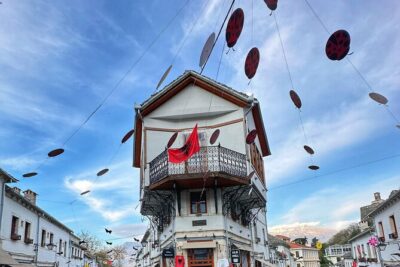
Gjirokastra UNESCO & Ksamil Beach – From Tirana/Durres/Golem
Read our review →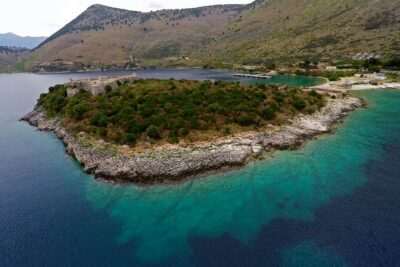
Gjirokastra, Blue Eye, Ksamil & Saranda – Day Tour from Tirana
Read our review →
Blue Eye, Gjirokaster & Lekures | Private & Small Group Tours
Read our review →
Private Day Tour of Saranda Gjirokaster and Butrint from Tirana
Read our review →
Gjirokastra & Bylis Illyrian City Day tour Tirana/Durres/Golem
Read our review →Browse the lists this tour appears in