
REVIEW · SHKODER TOURS
The Best of Shkoder Walking Tour
Shkoder reveals itself one street at a time. The Best of Shkoder Walking Tour links the city’s hardest stories, religious landmarks, and celebrated photography in a compact two-hour walk with a professional local guide. I like the wide historical range, from communist persecution to 19th-century church life, and I like the focus on places you could easily pass without understanding.
The tour is also private, so only your group takes part. That can make questions and conversation easier than on a large city walk. My main caution is the price: at $110.07 per person, this is costly for a two-hour outing unless your group values a private guide and plans to make good use of the historical context.
In This Review
- Five details that shape the experience
- Starting on Rruga Gerej in central Shkoder
- Site of Witness and Memory: Shkoder’s difficult chapter
- Franciscan Church and the Gjuhadol tradition
- Ebu Bekr Mosque and the city’s religious mix
- Marubi National Museum of Photography
- Shkoder History Museum in a 19th-century building
- What the private format is worth at $110.07
- The guide makes or breaks this short walk
- Who will get the most from this experience?
- Should you book The Best of Shkoder Walking Tour?
- FAQ
- Where does The Best of Shkoder Walking Tour begin?
- Where does the tour end?
- How long does the walking tour last?
- Is this a private tour?
- What is included in the price?
- Are entrance fees included?
- Which places are visited?
- Is the tour suitable for most participants?
- Can I cancel for a full refund?
Five details that shape the experience

- A private walk through central Shkoder: Only your group participates, giving the tour a more personal feel.
- Five stops in about two hours: Expect a brisk route with roughly 19 to 21 minutes at each listed site.
- A serious look at Albania’s communist past: The Site of Witness and Memory gives the walk its most sobering stop.
- Religious variety in a short distance: A Franciscan church and the Ebu Bekr Mosque show Shkoder’s Catholic and Muslim traditions.
- The Marubi Museum brings local history to life: Three generations of photographers recorded Shkoder from the 1850s into the communist period.
- The guide is the main value: Storytelling about liberation movements, local life, legends, and city traditions makes the difference.
Starting on Rruga Gerej in central Shkoder
The walk begins on Rruga Gerej in Shkoder and returns to the same meeting point. Since the activity lasts about two hours and remains on foot, you do not need to arrange a car, taxi, or separate transport between stops. The tour is also near public transportation, which helps if you are arriving from another part of the city.
The route is best understood as a quick introduction rather than a slow museum day. The five listed stops add up to about 98 minutes of scheduled time, leaving roughly 22 minutes for walking, explanations, and transitions. That is a sensible pace for seeing the city, but you should not expect long, leisurely visits inside every building.
The guide supplies the thread connecting the sights. Shkoder was founded in the 4th century, and the tour uses its streets, buildings, and corners to explain how the city changed through religious, political, and cultural upheaval. I would ask questions as you go, especially about the liberation movements and daily life under communism, because the guide is where much of the tour’s value lies.
More around Shkoder:
- Shala river & Komani lake -Day trip departure from Tirana/Shkodra
★ 5.0 · 309 reviews - Semi-Private Day Tour of Theth & Blue Eye from Tirana / Shkoder
★ 5.0 · 52 reviews - Day Tour of Theth & Hike to Blue Eye from Tirana, Durres/Shkoder
★ 4.0 · 43 reviews
Site of Witness and Memory: Shkoder’s difficult chapter
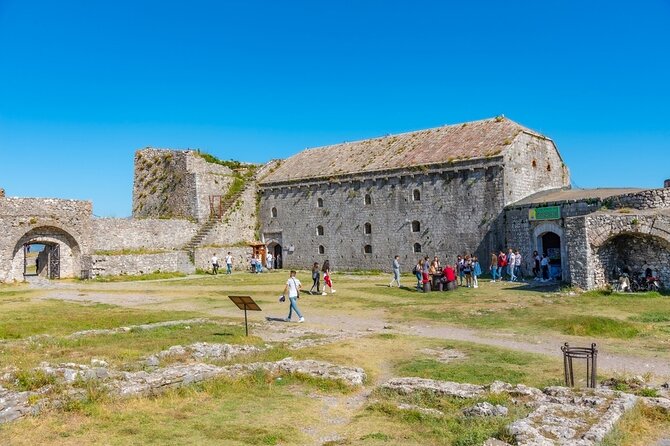
The first stop is the Site of Witness and Memory, described as the only monument honoring victims from Shkoder who suffered under Albania’s communist government. It occupies a former Dega e Brendshme building, one of the local branches of the Ministry of Interior and a center of communist persecution.
This is not a light opening to the city. The museum was created in response to the Cultural Revolution of 1967 and tells the stories of people punished for their moral principles and convictions. That gives you a direct way to understand the pressure faced by individuals who resisted or simply failed to fit the system.
The listed visit lasts 19 minutes. That is enough for an introduction and guided explanation, but perhaps not enough for a detailed museum visit if you want to examine every display. Admission is not included, so confirm the current entrance charge before booking or arriving.
I consider this the most important stop for context. Churches, mosques, and old photographs show what Shkoder created. This site shows what was damaged or suppressed. The contrast gives the rest of the walk more meaning.
Franciscan Church and the Gjuhadol tradition
The Franciscan Church of Shkoder takes you from political history to the city’s Catholic heritage. The present church was completed in 1905, while its religious foundation reaches back to the Assembly of Gjuhadol, created in 1861 by Luigj Gurçis, the Franciscan bishop of the Roman Catholic Archdiocese of Shkoder-Pult.
Construction of the current structure began in 1875 under Father Tom Markoci. Father Gjan Pier Ferrari consecrated the grounds in 1878. These dates help you see the church as part of a long religious and cultural tradition, not simply as another attractive building on a walking route.
You have about 19 minutes here, and admission is listed as free. The tour does not promise a long interior visit or a special service access, so treat the stop as a guided introduction. Your guide can explain why the Franciscan presence mattered in Shkoder and how Catholic institutions shaped education, culture, and public life.
I like the change of mood after the first museum. The church gives the route a human scale. Instead of reading only about institutions and government, you begin to see how communities organized their lives around faith and local leadership.
Ebu Bekr Mosque and the city’s religious mix
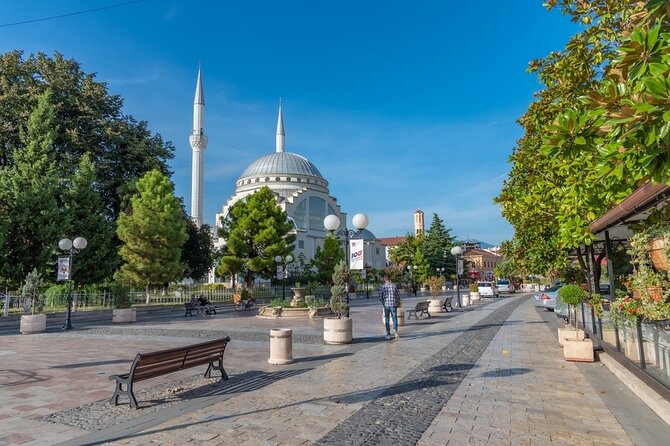
The Ebu Bekr Mosque offers a different religious perspective. Built from 1994 to 1995 on the site of the old Fushë Çela Mosque, it replaced a place of worship destroyed during the communist era. The new mosque was funded by Saudi entrepreneur Sheikh Zamil Abdullah Al-Zamil and named for Abu Bakr, the first Rashidun caliph.
Its inauguration took place on October 27, 1995, and it was renovated in 2008. Those details matter because the building belongs to the period after communism, when religious institutions could return to public life. In a short walk, you see both a Franciscan church with 19th-century roots and a mosque rebuilt in the post-communist era.
The stop lasts 20 minutes and admission is free. As with any active place of worship, follow the guide’s instructions and respect local customs. The supplied details do not promise entry beyond the planned visit, so you should think of this as a cultural and architectural stop rather than a guaranteed extended interior tour.
The church and mosque work well together. They show Shkoder through more than one faith tradition, while the first museum explains the years when religious expression was restricted. That three-part sequence is one of the strongest ideas in the route.
More Walking Tours in Shkoder:
- Walking Tour of Tirana
★ 5.0 · 646 reviews - Local food experience & walking tour of Tirana
★ 5.0 · 192 reviews - Berat Walking Tour
★ 5.0 · 86 reviews - Tirana Walking Tour: History, Culture &Gems by a Passionate Guide
★ 5.0 · 52 reviews
Marubi National Museum of Photography
The Marubi National Museum of Photography is likely the tour’s most distinctive cultural stop. Its story begins in 1856, when Pietro Marubbi, an Italian painter and photographer, moved to Shkoder and created the Photo-Studio Marubbi.
The studio remained active through three generations of photographers. Their work recorded people, customs, public life, and changing fashions in Albania. In the early 1950s, Geg Marubi was forced into communist collective anonymity, ending the family’s public identity as an independent photographic studio.
The museum visit is scheduled for 19 minutes, with admission listed as free. That is a short window for a museum built around a substantial photographic legacy. You can get the essential story and see selected material, but you may want to return later if photography interests you or if the museum is open for a fuller visit.
This is where the guide’s storytelling can turn old photographs into evidence of ordinary life. A portrait is not just a portrait when you know who made it, when it was made, and what political system later tried to erase the photographer’s name. I especially like that the tour connects art with power, memory, and identity.
Shkoder History Museum in a 19th-century building
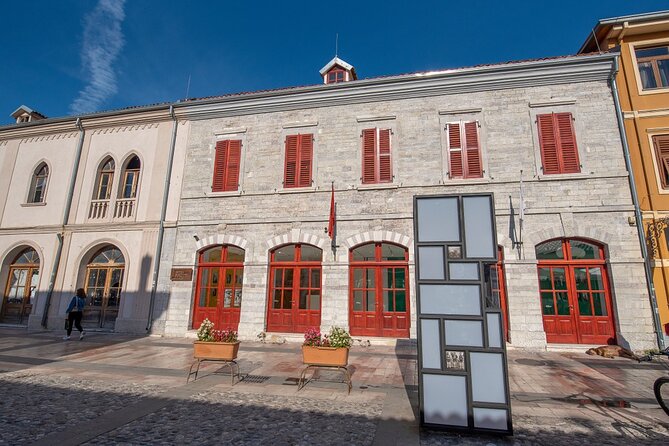
The final listed stop is the Shkoder History Museum. It opened in 1947 under the name Folk Museum and took its present form in 1949. The museum is housed in a large 19th-century building in the city center, close to the Clock Tower.
Its collections began with historic material donated from Jesuit and Franciscan institutions. That origin links back to the religious buildings you have already seen, helping the route finish with a broader look at Shkoder’s past.
The planned stop lasts 21 minutes, the longest of the five, and admission is listed as free. Even so, you should expect an overview rather than a complete museum visit. The guide can point out the sections that best explain the city, but the short schedule limits how much time you have to read labels or study individual objects.
Ending here is a sensible choice. You have moved from a site focused on communist victims to religious buildings, photography, and finally a general museum. The sequence gives you several ways to understand Shkoder without reducing it to a single era or attraction.
What the private format is worth at $110.07
The price is the biggest decision point. At $110.07 per person, the tour costs more than a basic group walk, but this is a private activity. Only your own group participates, and the guide can adjust explanations and answer your questions without managing a large crowd.
That value depends heavily on group size. For one or two people, the cost is high for two hours, especially since admission is not included at the Site of Witness and Memory. For a larger party, the advertised group discounts may make the price easier to justify. Check the final booking total carefully, since the listed price is per person.
You are paying mainly for interpretation, not transportation or exclusive access. The sights themselves are in the city, and several have free admission listed. If you enjoy learning the story behind a place, the guide may justify the cost. If you prefer to wander slowly and read museum displays at your own pace, you may get better value by visiting independently.
The activity is booked, on average, 16 days in advance. That suggests you should reserve ahead if your schedule is fixed, especially if you need a particular date or time. Confirmation arrives when you book, and free cancellation is available up to 24 hours before the start time. Cancellations or changes made less than 24 hours before the start are not refunded or accepted.
The guide makes or breaks this short walk

The strongest feature is the guide’s role. The tour promises stories about legends, major liberation movements, and what makes daily life in Shkoder special. That is exactly the kind of local explanation that turns a collection of buildings into a coherent city visit.
One piece of feedback described the guide as transforming ordinary sightseeing into a memorable experience through local culture and storytelling. That praise is specific and useful. It tells you to expect the human side of the city, not just dates and architectural labels.
No guide’s name is provided, so you cannot request a particular person from the supplied information. I would use the private format to ask for the subjects you care about most. You might ask for more detail on communist persecution, Catholic history, the rebuilding of mosques, photography, or modern Shkoder.
Keep in mind that the overall rating information is limited, with only one published rating noted. The positive response is encouraging, especially its praise for cultural explanation, but it is not enough to predict every guide’s style or every departure. Go in expecting a useful city introduction, not a guaranteed custom research tour.
Who will get the most from this experience?
I would recommend this walk to first-time visitors who want a quick framework for Shkoder. It covers religion, political memory, photography, and local history in one compact route, so you can decide what deserves a longer return visit.
It also suits couples, families, or small groups who prefer a private guide. The route stays in the city, is near public transportation, and is described as suitable for most participants. Since the activity is only about two hours, it can fit neatly into a day that also includes other sightseeing.
History-minded visitors will appreciate the Site of Witness and Memory and the museum stops. Photography fans should pay special attention to the Marubi Museum. People interested in religious heritage will value the Franciscan Church and Ebu Bekr Mosque as a paired look at Shkoder’s changing public life.
I would be less enthusiastic if your main goal is a long museum session. The scheduled time at each stop is short, and the walk is designed to introduce rather than exhaust the sights. The high per-person price also makes it a weaker choice for solo visitors unless private attention is especially important.
Should you book The Best of Shkoder Walking Tour?
Book it if you want a guided historical framework for Shkoder and prefer a private experience. The best part is the combination of difficult political memory, religious heritage, and the Marubi photographic tradition, all explained by a local professional rather than left to disconnected museum labels.
Before paying, compare the price with your group size and confirm the admission details. Ask yourself if two hours of context is worth $110.07 per person, plus any entrance fee not included. For a first visit, a small private group, and a strong interest in stories behind the sights, this can be a useful and thoughtful introduction. If you want depth, silence, or time to study exhibits, use the walk as orientation and return to the museums on your own.
FAQ
Where does The Best of Shkoder Walking Tour begin?
The tour begins at Rruga Gerej in Shkodër, Albania.
Where does the tour end?
The activity ends back at the meeting point on Rruga Gerej.
How long does the walking tour last?
The tour lasts approximately two hours.
Is this a private tour?
Yes. Only your group participates in this private activity.
What is included in the price?
A local professional guide is included.
Are entrance fees included?
Admission fees are not included. The Site of Witness and Memory specifically lists admission as not included, while admission at the other listed stops is shown as free.
Which places are visited?
The route includes the Site of Witness and Memory, Kisha Katolike Franceskane, Ebu Bekr Mosque, the Marubi National Museum of Photography, and the Shkoder History Museum.
Is the tour suitable for most participants?
Yes. The activity information says most travelers can participate, and the route is near public transportation.
Can I cancel for a full refund?
Yes, if you cancel at least 24 hours before the experience’s start time. Cancellations and changes made less than 24 hours before the start are not accepted, and the amount paid will not be refunded.
Just added in Shkoder
- Shkoder In a Day including Lunch – Departs Tirana★ 5.0 · 2 reviews
- Full Day Shkodra Culture Tour from Tirana★ 5.0 · 1 review
- Shkodra, Full Day Trip from Tirana★ 5.0 · 2 reviews
- Shkodra ,Shengjin Including swimming in Adriatic Sea :Tirana★ 5.0 · 7 reviews
- Day Tour of Shkoder and Skadar Lake from Tirana★ 5.0 · 7 reviews
- Private Full Day Tour to Shkodra and Kruja from Tirana★ 5.0 · 2 reviews
- Private Day Tour of Shkodra City and Rozafa Castle, Car & Driver included★ 5.0 · 2 reviews
- Shkodra – Day Tour by ADRIATIK TOURS LLC★ 5.0 · 2 reviews
Shkoder Tours, compared.
Shala river & Komani lake -Day trip departure from Tirana/Shkodra
Read our review →
Semi-Private Day Tour of Theth & Blue Eye from Tirana / Shkoder
Read our review →
Day Tour of Theth & Hike to Blue Eye from Tirana, Durres/Shkoder
Read our review →

Semi-Private Day Tour from Tirana; Shkoder & Mrizi i Zanave
Read our review →
Day Tour of Kruja and Shkoder – Discover North Albania Heritage
Read our review →
Shkodra from Tirana: Day Tour of castle, city & Skadar Lake
Read our review →Browse the lists this tour appears in