
REVIEW · HISTORICAL TOURS
Tirana Walking Tour: History, Culture &Gems by a Passionate Guide
Tirana tells its story in layers. This three to four-hour walk with guide Albiona connects Ottoman landmarks, communist memories, religious sites, markets, and modern city life in one well-planned route. It is a strong first-day choice because you see the main sights while also learning how Albania’s past still shapes daily life.
I especially like the personal scale, with no more than 11 people, and the way the tour moves beyond the usual central square photo stop. The complimentary rakia tasting adds a small but welcome local touch. The main drawback is the pace: 21 stops in a few hours means many visits are brief, and the House of Leaves admission is not included.
In This Review
- Key points to know before you book
- Why this is a smart first walk in Tirana
- Skanderbeg Square and the Ottoman heart of Tirana
- Small squares, old rulers and the New Bazaar
- Communist Tirana in bunkers, villas and surveillance rooms
- Streets, churches and the city’s changing identity
- Komiteti, the Pyramid and a taste of local atmosphere
- What you get for $36.20
- Pace, comfort and practical details
- Who should choose this Tirana walk?
- Should you book it?
- FAQ
- Where does the Tirana walking tour begin?
- Where does the tour end?
- How long does the walking tour last?
- What language is the tour offered in?
- How much does the experience cost?
- How many people can join the tour?
- Is rakia included?
- Are museum admission fees included?
- Can I cancel for a full refund?
- What happens if bad weather cancels the tour?
Key points to know before you book

- Albiona is the central strength: Her warm, personal style and clear English help turn difficult history into an understandable story.
- A useful first-day walk: The route gives you a working map of central Tirana and practical ideas for the rest of your stay.
- Communist history receives serious attention: Bunk’Art 2, the Checkpoint Memorial, Enver Hoxha’s former villa, and the House of Leaves show different sides of the dictatorship.
- The route covers more than the headline sights: You pass markets, religious buildings, old houses, public squares, cafés, and streets that guidebooks can easily skim over.
- Expect a fast overview, not long museum visits: Most stops last between five and 20 minutes, with the House of Leaves charging separately.
- Small-group value is good at $36.20: You are paying for a broad introduction and a guide’s interpretation, not transportation or a string of paid admissions.
Why this is a smart first walk in Tirana
Tirana can feel confusing at first. Its center has broad socialist-era spaces, Ottoman reminders, colorful modern buildings, religious landmarks, and neighborhoods that have changed sharply in only a few decades. A map shows where things are, but it does not explain why the city looks this way.
This tour begins and ends at Skanderbeg Square, making it easy to fit into an arrival day. You do not need to arrange transport between sights, and the route stays focused on central Tirana. The walk is long enough to provide context, but short enough to leave time for lunch, a museum, or an evening in Blloku.
The guide makes a real difference here. Albiona is praised for explaining Albania’s history without burying you in dates. She also leaves room for questions and personal stories, which gives the walk a conversational feel rather than a lecture. One especially useful quality is her flexibility. When a guest arrived late after a major traffic delay, she adjusted the route and still kept the experience worthwhile.
That matters in Tirana, where traffic can make a simple cross-city journey take longer than expected. The meeting point is central, near public transportation, but give yourself enough time to arrive.
More Walking Tours in Tirana
- Walking Tour of Tirana
★ 5.0 · 646 reviews - Local food experience & walking tour of Tirana
★ 5.0 · 192 reviews - Berat Walking Tour
★ 5.0 · 86 reviews
Skanderbeg Square and the Ottoman heart of Tirana
The tour opens at Skanderbeg Square, Tirana’s main public space. The square is named for Skanderbeg, Albania’s national hero, and it provides the right opening lesson: national identity matters greatly here, but the modern city has been shaped by several empires, religions, and political systems.
You have about 20 minutes at the square. That is enough to get your bearings and look toward several major sights before walking onward. I like starting here because the square functions as a simple orientation point. After the tour, you should recognize it as the center from which many other parts of Tirana make sense.
The next stop is Et’hem Bey Mosque, one of the city’s most important historic buildings. Its outside is restrained, while the interior is known for painted scenes of trees, waterfalls, and bridges. These natural images are unusual in Islamic decoration and make the mosque especially memorable.
The scheduled stop is only about 10 minutes. That is enough for a quick look, but not a slow architectural study. Access inside can depend on opening arrangements and religious observance, so treat the mosque as an important short stop rather than assuming you will have unlimited interior time.
Beside it, the 35-meter Clock Tower gives you another quick piece of Tirana’s Ottoman-era story. Built in the 19th century, it combines Ottoman and Venetian influences. The five-minute visit is mainly for explanation and photographs, not an extended climb or tower visit.
Small squares, old rulers and the New Bazaar
Sulejman Bargjini Square is a much smaller public space than Skanderbeg Square, but it connects the city to its founder, Sulejman Bargjini. The brief stop helps show that Tirana’s story is not limited to grand monuments. Its identity also comes from modest squares and local places tied to the city’s beginnings.
From there, the route reaches Pazari i Ri, or the New Bazaar. This is one of the most enjoyable stops for anyone interested in everyday life. You may see produce, spices, local food, crafts, and shops that blend older market traditions with a more polished modern setting.
You have around 20 minutes here. That is enough to look around and get suggestions, but it is not a full food tour. If you want to return for a meal or shopping, make a note of the area. The market is also a good place to ask Albiona what foods or drinks are worth trying elsewhere in Tirana.
The nearby Teqja Pazari introduces Albania’s Bektashi tradition. This is a Bektashi religious site connected to a Sufi Muslim order known for its mystical and progressive outlook. It is a valuable stop because Albania’s religious story is more varied than a simple Muslim and Christian divide.
Kapllan Pasha’s Tomb offers another short historical pause. The octagonal tomb, built in the early 19th century, uses carved stone columns and plant decoration. It was declared a first-category Cultural Monument in 1948. Kapllan Pasha, a former ruler of Tirana, was buried here before his remains were later returned to Istanbul.
The nearby Toptani Sarajet, also called the Ethnographic Museum of Tirana, represents traditional domestic life. The planned five-minute visit is very short, so do not expect a full museum tour. Think of it as a glimpse at an older Tirana house and a prompt for Albiona to explain how people lived before the city’s modern growth.
Communist Tirana in bunkers, villas and surveillance rooms
Albania’s communist period is the emotional center of this walk. Albiona’s strongest praised quality is her ability to explain the dictatorship in human terms, including its effect on families and ordinary people. She also presents the resilience and optimism of Albanian society, rather than treating the past as a collection of grim facts.
Bunk’Art 2 is a former communist-era bunker turned historical site. The planned stop is only five minutes, so you may see the entrance and receive context rather than complete the full exhibition. If you want substantial time inside, you would need to return separately.
The same practical point applies to the House of Leaves, now called the Museum of Secret Surveillance. It occupies a building linked to the communist security system and offers a closer look at surveillance and state control. Admission is not included, and the stop lasts about 10 minutes. I would consider this the most obvious place to extend your visit after the walking tour if modern Albanian history interests you.
The Checkpoint Memorial, or Postbllok, is an open-air installation near Blloku. It recalls the restrictions and pressure of the former regime through a small group of stark objects. The 10-minute stop gives Albiona room to explain why the location matters, especially because Blloku was once reserved for communist officials.
You then pass Enver Hoxha’s former villa. The five-minute stop is viewed from the outside, and it helps make the dictatorship feel less abstract. Hoxha was Albania’s long-time ruler, and the villa sits in the same district that was closed to ordinary citizens. Seeing the address alongside the memorials gives you a clearer sense of the separation between political elites and the rest of society.
Blloku itself is now one of Tirana’s main social districts. Cafés, restaurants, and nightlife have replaced its former status as a restricted government quarter. That contrast is one of the tour’s best lessons: Tirana does not hide its recent past, but it also refuses to remain defined by it.
Something completely different:
- Hike Gamti Mountain with Bovilla lake view & canyon- From Tirana
★ 5.0 · 1,280 reviews - Berat city UNESCO tour, the Castle & Belshi lake- From Tirana
★ 5.0 · 804 reviews - Kruja castle, the old Bazaar & Sarisalltik- Departure from Tirana
★ 5.0 · 592 reviews - Albanian Night Show: Traditional Music, Dance & Dinner in Tirana
★ 5.0 · 431 reviews
Streets, churches and the city’s changing identity
Rruga Murat Toptani provides a more relaxed urban stretch between major historical stops. It blends older character with present-day city life and gives you a chance to watch Tirana function as a living capital, not just a museum.
Tirana Castle follows, though the five-minute stop is brief. The site combines older ruins with modern shops and cafés. It is best understood as a quick orientation to the city’s layers rather than a full archaeological visit.
Saint Paul’s Cathedral brings a Catholic perspective to the route. The building offers architectural interest and a quiet spiritual setting. It also supports a wider lesson: Albania has long had several religious communities, despite the harsh communist ban on worship.
The Orthodox Cathedral of the Resurrection makes that point even more clearly. Built between 2001 and 2012 and consecrated in June 2012, it represents the return of open religious practice after Albania’s dictatorship declared the country atheist in 1967.
That context is crucial. During the communist period, religious practice was banned, and many churches, mosques, and other religious places were destroyed or given new uses. The cathedral is therefore not only a place of worship. It is also a sign of the country’s attempt to restore public religious life after decades of suppression.
The planned visit is about 10 minutes. You will get the historical and architectural setting, but again, the schedule favors breadth over a slow inspection of every detail.
Komiteti, the Pyramid and a taste of local atmosphere
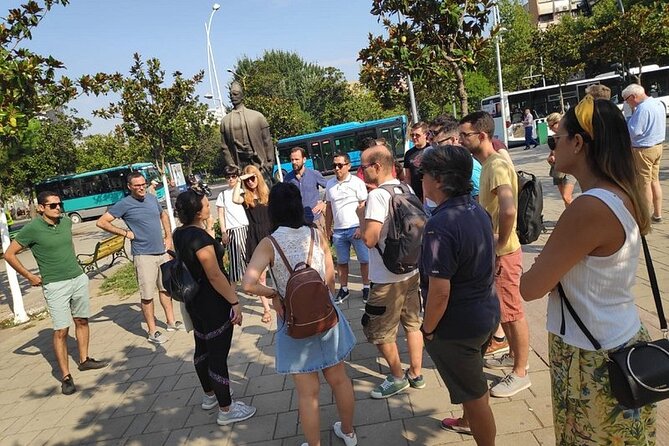
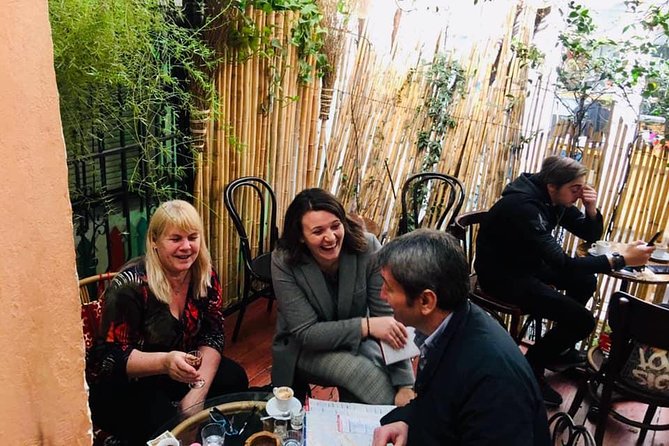
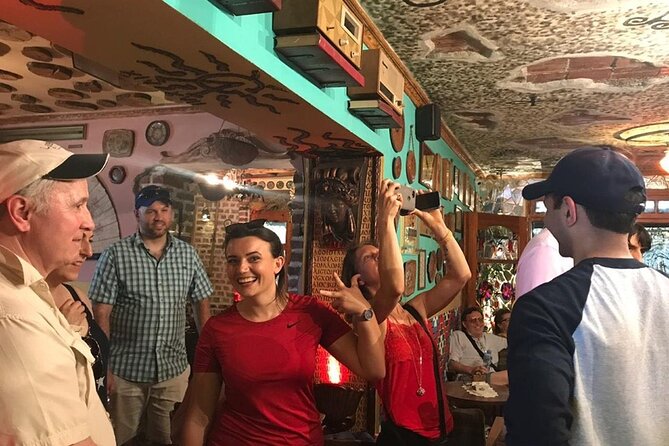
Komiteti Bar, also called Komiteti Kafe Museum, offers a lighter change of mood. The café combines traditional Albanian hospitality with objects and memories linked to the socialist era. It is a useful setting for discussing how people remember the past in ordinary homes, cafés, and family conversations.
The stop lasts about 20 minutes, making it one of the more generous pauses on the route. This is also where the tour’s rakia tasting fits naturally. Rakia is a traditional Albanian spirit, and the included shot gives you a small introduction to local drinking customs without turning the tour into a bar crawl.
One caution: rakia is strong. The portion is only a shot, but you may want to eat beforehand and drink water during the walk.
The Pyramid of Tirana is another symbol of changing Albania. Built as a monument connected to Enver Hoxha, the structure has taken on a new role as the city rethinks its communist architecture. The five-minute stop is enough to explain its significance and see its unusual form, but not to spend much time exploring the building.
Shallvaret adds another neighborhood-level view of Tirana. The area has historical roots but also belongs to the city’s current daily life. Stops like this are easy to skip when touring independently, yet they help connect the famous monuments into a real city.
What you get for $36.20
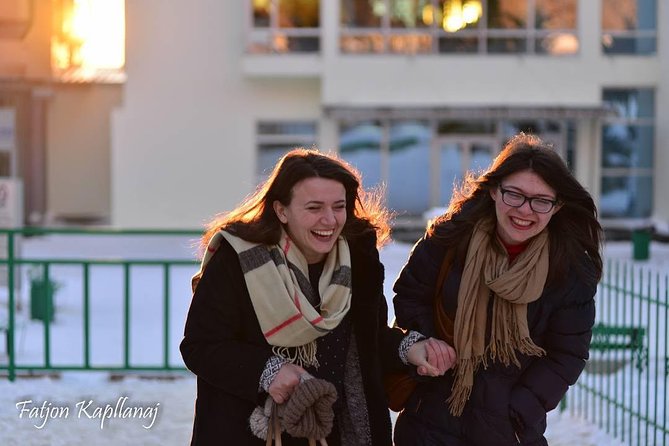
At $36.20 per person, this is not the cheapest way to walk around Tirana. You can see many exterior sights on your own for free. The value comes from the guide’s interpretation, the route design, and the time saved deciding what matters.
You are covering a large portion of central Tirana in three to four hours. You also receive a rakia tasting, a small-group format, and the chance to ask questions in English. There are no included museum admissions, and personal expenses are extra, so budget separately if you want to enter the House of Leaves or return to Bunk’Art 2 for a longer visit.
I think the price works best for a first visit, especially if Albania is new to you. The tour can help you understand the country before you move on to Berat, Shkodër, Gjirokastër, or the coast. It is less useful for someone who has already spent several days studying Tirana and prefers slow museum visits.
The maximum group size is 11, which is small enough for a personal exchange without requiring the cost of a fully private tour. Some people have described the experience as feeling like time with an old friend. That warmth is important here because the subject matter can be heavy.
Pace, comfort and practical details
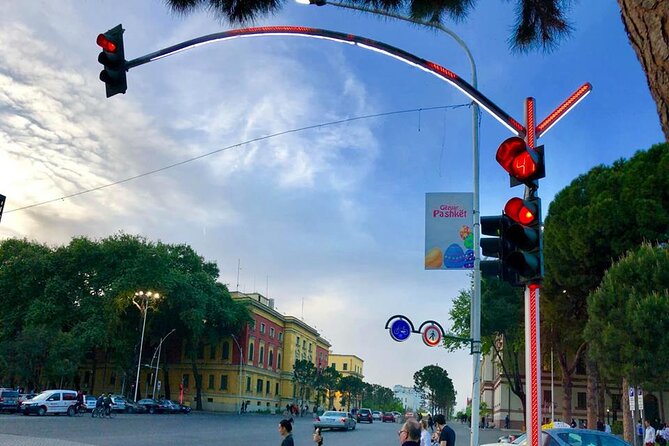
This is a walking tour, so wear comfortable shoes and expect several hours on city streets. The schedule includes many five-minute stops, and that tells you exactly what kind of experience this is: a broad city introduction with short explanations, not 21 full visits.
The meeting point is Skanderbeg Square, and the tour ends there. Mobile tickets are provided, the experience is offered in English, and service animals are allowed. Most people can participate, and the route is near public transportation.
The tour requires good weather. If poor weather causes cancellation, you can choose another date or receive a full refund. You can cancel for a full refund up to 24 hours before the start time, but changes or cancellations within 24 hours are not accepted.
The experience is often reserved well ahead of time, with an average booking lead time of about 33 days. Same-day arrangements have also worked when availability allowed, but I would not rely on that during a busy visit.
Who should choose this Tirana walk?
I would recommend it most strongly to:
- First-time visitors who want a clear introduction to the capital
- History-minded people interested in Albania’s communist period
- Solo visitors or couples who prefer a small group
- Anyone who wants local advice beyond printed guidebooks
- People who enjoy asking questions and discussing a country’s past and future
- Visitors arriving without much background on Albania
It may be less suitable if you want a slow architectural tour, extensive museum time, or a food-focused experience. The route is wide-ranging, and the guide has to keep moving.
Albiona’s personal approach also suits people who value conversation. She explains difficult subjects honestly, but she also talks about Albanian strength, family, culture, and hope. That balance is one of the tour’s greatest assets.
Should you book it?
Yes, if you want to understand Tirana quickly and prefer a guide who brings personal feeling to the history. The route gives you the city’s main landmarks, but its real value lies in the connections between them: Ottoman Tirana, religious revival, communist control, and the modern social life of Blloku.
Book it early if your dates are fixed, and choose it near the beginning of your stay. Keep another hour or two available if you want to return to the House of Leaves or spend more time at Bunk’Art 2. If you prefer a leisurely museum day, this may feel rushed. For most first-time visitors, though, the combination of context, personality, and location makes $36.20 a sensible investment.
FAQ
Where does the Tirana walking tour begin?
It begins at Skanderbeg Square, Plaza Tirana, Sheshi Skender Beu, Tirana 1001, Albania.
Where does the tour end?
The experience ends back at the meeting point in Skanderbeg Square.
How long does the walking tour last?
It lasts approximately three to four hours.
What language is the tour offered in?
The tour is offered in English.
How much does the experience cost?
The listed price is $36.20 per person.
How many people can join the tour?
The maximum group size is 11 travelers.
Is rakia included?
Yes. One complimentary shot of rakia, a traditional Albanian spirit, is included.
Are museum admission fees included?
No. Personal expenses are not included, and admission to the House of Leaves is specifically excluded.
Can I cancel for a full refund?
Yes. You can cancel at least 24 hours before the start time for a full refund.
What happens if bad weather cancels the tour?
You will be offered another date or a full refund if poor weather causes the experience to be canceled.
More History Tours in Tirana
- Semi – Private Tour at Cape of Rodon; Hidden Beaches & History
★ 5.0 · 46 reviews - Walking tour of Tirana; History & Culture
★ 5.0 · 37 reviews - Berat Cultural Tour by 1001 Albanian Adventures
★ 5.0 · 26 reviews - Day Trip To Berat,UNESCO Heritage with Tirana Day Trips
★ 5.0 · 19 reviews
Just added in Tirana
- Wine Tasting day in Berat (Visit to the Berat Castle & Lunch included)★ 4.5 · 6 reviews
- From Tirana Wine Tasting & Food tour in Berat★ 5.0 · 5 reviews
- Bovilla and Kruja: Where History Meets Nature★ 5.0 · 2 reviews
- Visit Albania and Kosovo★ 5.0 · 2 reviews
- Visit Albania and Montenegro★ 5.0 · 1 review
- Virtual Reality Games and Experiences – Perfect place to drink and have fun!★ 5.0 · 2 reviews
- UNESCO heritage in Albania – 4 days★ 5.0 · 3 reviews
- Exclusive Qafshtama National Park Hiking Tour With Private Transfer★ 5.0 · 1 review
Historical Tours, compared.
Semi – Private Tour at Cape of Rodon; Hidden Beaches & History
Read our review →
Ancient City of Butrint, UNESCO World Heritage site – A Must
Read our review →
Day Trip To Berat,UNESCO Heritage with Tirana Day Trips
Read our review →
Private Full-Day Historical Day Tour in North Macedonia and Albania
Read our review →
Browse the lists this tour appears in