
REVIEW · TRIPS ACROSS THE BORDER
Visit Albania and Kosovo
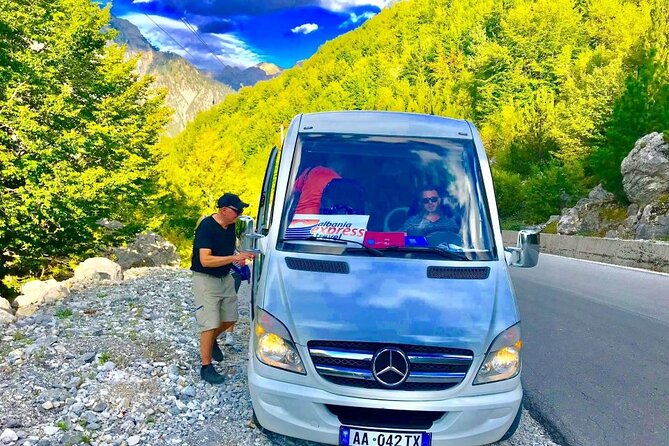
Europe still has corners where a fortress, mosque, or mountain road feels like your own discovery. This private Albania and Kosovo tour packs two fascinating countries into nine days, with eight nights of lodging, breakfast, a guide, an air-conditioned vehicle, and a ferry ride on Komani Lake. I like the strong mix of Ottoman towns, Byzantine churches, Roman ruins, and mountain scenery. I also like the freedom of a small private group, though the schedule is busy and several days involve long drives.
You will cover a lot of ground for $2,025.80 per person, especially with accommodation and transport included. The main consideration is that lunches, dinners, entrance fees, and taxes are extra, so the final cost will be higher than the advertised price. Still, this is a useful choice if you want Albania and Kosovo in one carefully arranged trip instead of piecing together buses, hotels, and border crossings yourself.
In This Review
- Key Points About the Albania and Kosovo Route
- What the $2,025.80 Price Really Covers
- Day One: Tirana’s Square, Bunkers, and Communist Memory
- Day Two: Kruja and the Ottoman Streets of Prizren
- Day Three: Gračanica, Pristina, and the Rugova Valley
- Day Four: Gjakova and the Three-Hour Komani Lake Ferry
- Day Five: The Roman Amphitheater at Durres and Berat’s Many Windows
- Day Six: Gjirokaster, the Blue Eye, and Ancient Butrint
- Day Seven: The Albanian Riviera and Vlora
- Day Eight: Apollonia, Ardenica, and a Final Afternoon in Tirana
- Who Will Get the Most From This Tour?
- Should You Book the Albania and Kosovo Tour?
- FAQ
- How long does the tour last?
- Where does the tour begin?
- Where does the tour end?
- Is this a private tour?
- What transportation is included?
- Are breakfasts included?
- Are lunch and dinner included?
- Are attraction admission fees included?
- What is the cancellation policy?
Key Points About the Albania and Kosovo Route
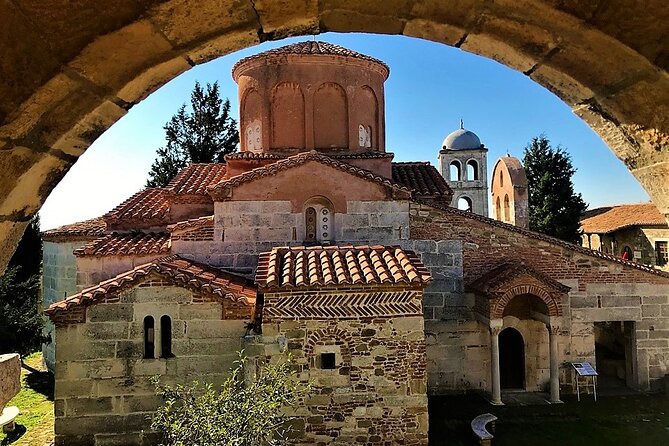
- Private touring with a dedicated vehicle: Your group travels in an air-conditioned vehicle rather than joining a large coach.
- Two countries in nine days: The route links Tirana, Prizren, Pristina, Peja, Shkoder, Berat, Gjirokaster, Saranda, Vlora, and more.
- A strong mix of culture and scenery: You get Ottoman bazaars, Orthodox monasteries, Roman ruins, mountain gorges, lakes, forests, and coast.
- Eight nights and eight breakfasts included: Hotel planning is handled, while lunch and dinner remain your choice.
- Komani Lake ferry crossing: The three-hour boat ride passes through green water and steep mountains with a fjord-like feel.
- Excellent for history-minded independent visitors: You can see places that are awkward to connect by public transport, with a guide explaining the background.
What the $2,025.80 Price Really Covers
At first glance, the cost is not bargain-basement Balkan travel. But this is a private nine-day journey, not a simple hotel-and-transfer package. Your price includes eight nights of accommodation, eight breakfasts, an air-conditioned vehicle, ferry tickets, a professional guide, airport transfers, and transport between many scattered sights.
That matters in Albania and Kosovo. The route reaches mountain monasteries, archaeological parks, coastal towns, and rural areas that are not arranged in a neat line. A private vehicle saves you from working out several separate connections, and you can ask your guide to explain what you are seeing as you go.
You should budget separately for lunches, dinners, entrance fees, and all taxes. The tour includes admission to the Blue Eye, Butrint National Park, Ali Pasha Castle, Apollonia, and Ardenica Monastery, but the general inclusion wording says all fees and taxes are not included. I would confirm exactly which sites require payment before departure.
The food arrangement gives you some welcome choice. Breakfast is covered, but you are not locked into a group menu for every meal. That lets you choose a quick lunch on a driving day or sit down for a longer local meal in Gjirokaster, Berat, or Saranda.
More trips over the border:
- Semi-Private Tour of North Macedonia: Ohrid & Struga from Tirana
★ 5.0 · 170 reviews - North Macedonia: Ohrid & Saint Naum Day Tour from Tirana
★ 5.0 · 151 reviews - Day Tour of Kosovo from Tirana, Pristina and Prizren
★ 5.0 · 93 reviews
Day One: Tirana’s Square, Bunkers, and Communist Memory
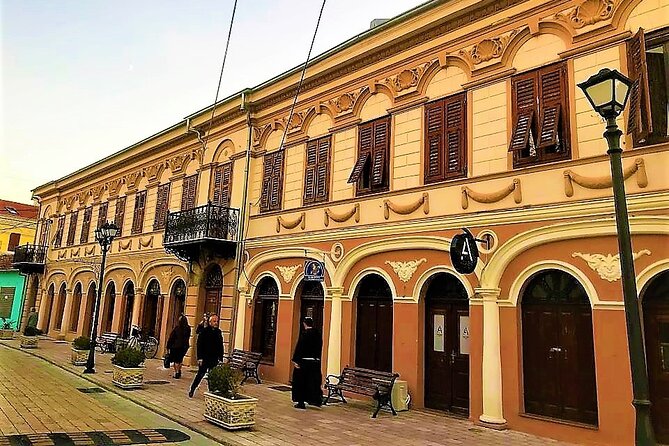
Your arrival begins with pickup at Rinas Airport at 8:30 a.m., followed by a transfer into Tirana. The first stop is Skanderbeg Square, the city’s main public space and a sensible place to get your bearings.
The square is named for Albania’s national hero, Skanderbeg, whose statue occupies the center. Around it are the opera house, National History Museum, and Et’hem Bey Mosque. The recently renewed square is broad and open, making it easy to walk around and take in Tirana’s central landmarks.
The day then turns toward Albania’s twentieth-century past. BunkArt and BunkArt2 occupy former anti-nuclear bunkers built during the rule of Enver Hoxha. These museums offer a direct look at the country’s years of isolation and political fear. They are not just ordinary city museums, since the buildings themselves are part of the story.
You also visit the Pyramid of Enver Hoxha, designed as a museum for the former communist leader. The three-hour city introduction is compact, but it gives you useful context before the journey moves into smaller towns and historic sites.
Day Two: Kruja and the Ottoman Streets of Prizren
After breakfast, you drive toward Kosovo, stopping first in Kruja. This mountain town is closely tied to Skanderbeg and Albania’s resistance to Ottoman rule. The tour visits the castle, two museums, and the old Ottoman-style bazaar.
Kruja is a good early stop because it connects national history with a walkable old quarter. The bazaar offers handicrafts and traditional shopping, while the castle area gives you views and a clearer sense of the town’s defensive role. Allow about two hours here.
Prizren then supplies one of the most rewarding town visits on the route. Its old center brings together Ottoman mosques from the fifteenth and sixteenth centuries, Orthodox churches from the fourteenth and fifteenth centuries, a nineteenth-century Catholic cathedral, fountains, a stone bridge, and a fortress above town.
Sinan Pasha Mosque, completed in 1615, is singled out as one of the city’s most beautiful mosques. The Church of Our Lady of Ljeviš is another important stop, particularly for its role within Serbian Orthodox tradition.
You have roughly four hours in Prizren, enough for a serious walk rather than a quick photograph from the vehicle. The fortress adds a climb, so wear shoes suited to uneven streets and stone paths. The reward is a broad view over the city.
Day Three: Gračanica, Pristina, and the Rugova Valley
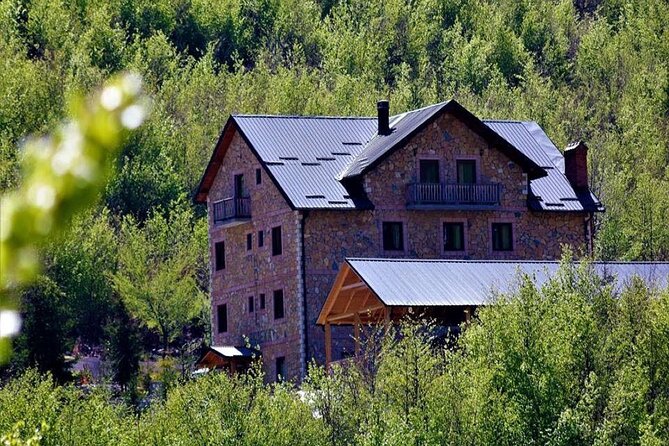
The third day brings several different faces of Kosovo. You begin with a short city tour in Pristina before visiting Gračanica Monastery, southeast of the capital.
Completed in 1321 by Serbian King Milutin, the monastery is known for its medieval wall paintings. The smaller side chapel is especially noted for vivid murals. Dress respectfully: shorts and sleeveless tops are not allowed, women need headscarves, and photography is forbidden inside.
That dress rule is easy to manage if you plan ahead. Keep a scarf and clothing that covers your shoulders and knees in your day bag. The visit takes about an hour.
The route continues toward Peja through the impressive Rugova Gorge and on to Decani Monastery. Decani is part of a UNESCO World Heritage site and is a major example of Orthodox religious architecture and art in Kosovo. With four hours allocated to this stretch, you get time for both the monastery and the mountain road.
Before or after this, the itinerary includes Pristina itself. You walk along the boulevard and visit the National Library of Kosovo, an unusual building topped by 99 differently sized domes. Its design has been criticized, but it is memorable and gives Pristina a character all its own.
The old town includes narrow streets, mosques, and older buildings. It may not have the polished appeal of some Central European capitals, but the point here is to see a young capital with a complicated recent past and its own visual language.
Peja and Rugova Valley finish the day. Peja’s old bazaar sits near the old mosque, while Rugova offers mountain villages, high peaks, and a spectacular canyon. The area also suits visitors who want outdoor activity, although this tour mainly provides sightseeing rather than a dedicated hiking program. Overnight accommodation is in Peja.
More trips out of Tirana:
- Hike Gamti Mountain with Bovilla lake view & canyon- From Tirana
★ 5.0 · 1,280 reviews - Berat city UNESCO tour, the Castle & Belshi lake- From Tirana
★ 5.0 · 804 reviews - Walking Tour of Tirana
★ 5.0 · 646 reviews - Kruja castle, the old Bazaar & Sarisalltik- Departure from Tirana
★ 5.0 · 592 reviews
Day Four: Gjakova and the Three-Hour Komani Lake Ferry
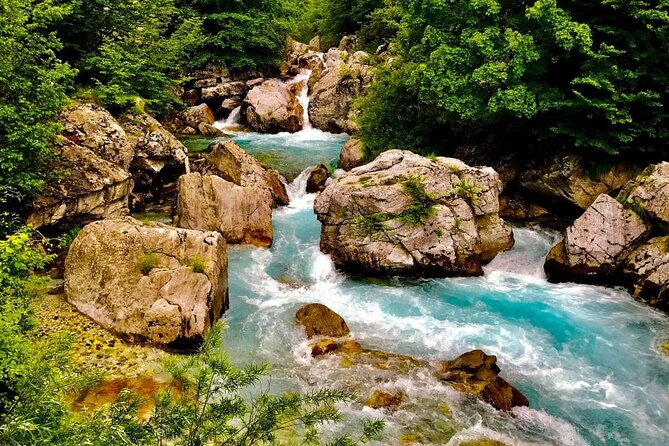
Gjakova gives you another Ottoman-era bazaar, one that dates to the seventeenth century. Its stalls and craft shops make this a practical place to browse for handmade goods. A fifteenth-century mosque adds historical interest, and the visit lasts about an hour.
The day’s main event is the ferry from Fierze across Komani Lake. The three-hour crossing passes through an artificial lake created by hydroelectric projects on the Drin River. The water is known for its opal-green color, while the surrounding mountains rise steeply enough to create a fjord-like view.
This is one of the tour’s most unusual transport segments. You are not simply moving from one hotel to another. The ferry itself becomes part of the sightseeing. Keep a jacket handy, since conditions on the water can feel different from those on the road, and protect your phone for photographs.
Ferry tickets are included, although the itinerary also lists the ferry admission as not included, so this is worth confirming before you pay. After arriving near Koman, you drive to Shkoder.
Shkoder is one of Albania’s most important towns and has roots reaching back to the Illyrian period. The center has colorful buildings and small bars, then you continue to Rozafa Castle.
The castle rises on a rocky hill about 130 meters above sea level. Its walls reflect several periods, including Roman and Ottoman times, and the site includes three main courtyards, an Illyrian wall, and the former Church of St. Stephen, later used as the Sultan Mehmet Fatih Mosque. The two-hour visit combines ruins with wide views.
Day Five: The Roman Amphitheater at Durres and Berat’s Many Windows
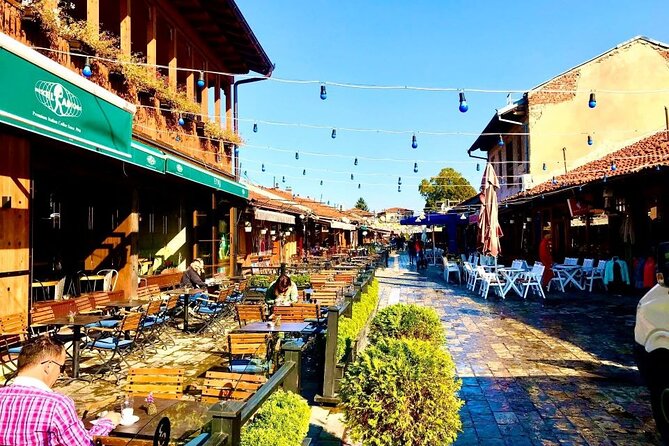
Durres is Albania’s major ancient port city, and its Roman amphitheater is the main reason to stop. Built in the second century during Emperor Trajan’s reign, it was among the largest amphitheaters in the Balkans.
Its construction is unusual because part of the seating used a natural hillside rather than only manmade supports. The site has also preserved substantial layers of earlier settlement. A walk through the city adds 1930s architecture and views of Byzantine walls before you continue toward Berat.
Berat is often called the city of a thousand windows. Its hillside houses, fortress, and old religious buildings make it one of Albania’s most photogenic towns, but it is more than a pretty view.
The tour visits the fortress, Onufri Museum, several churches, and mosques in the center. The Leaden Mosque, King Mosque, Bachelor Mosque, and Alveti Tekke show the range of religious architecture found in this part of Albania.
You have about three hours in Berat, followed by an overnight stay. The fortress is on higher ground, so expect uphill walking. The reward is a clearer view of the old neighborhoods and the river valley.
Day Six: Gjirokaster, the Blue Eye, and Ancient Butrint
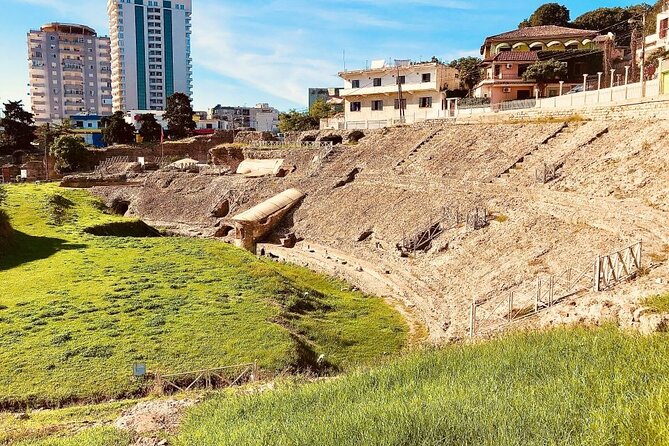
Gjirokaster is known as the city of stone, and its steep streets explain the nickname. The tour allows time to settle into the hotel before exploring the castle, Ottoman bazaar, and a historic wooden house.
The town is described as a city of a thousand steps, which is a useful warning for your legs. The old center is best enjoyed slowly, but the scheduled visit is only about two hours. Lunch in a small local restaurant is included in the plan as an opportunity to try regional dishes, though the meal itself is not listed among the included services.
The Blue Eye is a natural monument known for remarkably clear turquoise water. You can see down toward the bottom and watch pale bubbles rise from the spring. The surrounding protected area includes oak and sycamore forest, giving you a calm break from the road.
Next comes Butrint National Park, one of the tour’s strongest archaeological stops. The ancient city began as a Greek colony and remained occupied through several later periods, leaving layers of different civilizations among dense vegetation.
Admission is included, and you have about three hours to explore. Comfortable shoes will help, since archaeological parks require walking across open ground and uneven surfaces. The day ends in Saranda, with a free afternoon.
Saranda gives you a chance to slow down beside the coast after several demanding sightseeing days. The tour includes an overnight stay, but the free afternoon means the exact balance between rest and independent exploring is yours to decide.
Day Seven: The Albanian Riviera and Vlora
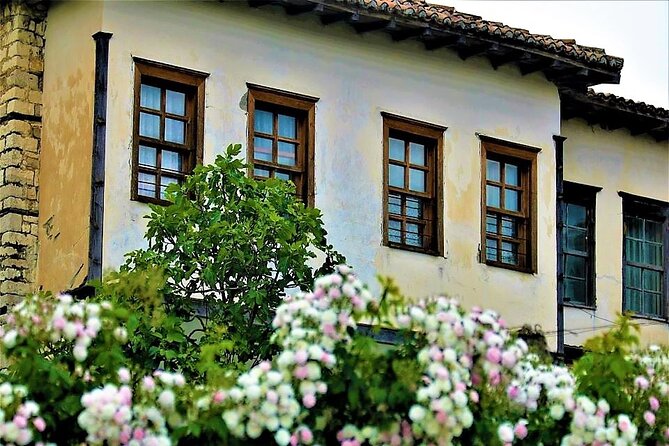
The road from Saranda toward Vlora is one of the scenic highlights. You pass through the Himara region, stop at the water springs of Borshi, and continue to Ali Pasha Castle in Porto Palermo Bay.
The castle is described as a rare example of French military engineering, built during the first decade of the nineteenth century. The setting matters as much as the walls, since the fortress sits in a bay along the Albanian Riviera.
You then climb through Llogara National Park, reaching about 1,100 meters above sea level. From the forested mountain road, you can look across the coastline toward the Greek islands in the Ionian Sea. The park covers 1,010 hectares and includes alpine meadows, steep rock faces, precipices, and dense forest.
This is a day for views, not a long list of indoor museums. Weather can affect what you see at the pass, so keep your expectations flexible. The road also involves mountain curves, something to remember if you are prone to motion sickness.
In Vlora, the tour visits Zvernec Monastery, a church on a small island setting, then continues to the city. Lungomare is the main place suggested for an evening meal, with views toward the Karaburun Peninsula and Sazan Island.
Flag Square connects Vlora to Albania’s national independence movement. The Muradie Mosque adds another historic stop before your overnight stay.
Day Eight: Apollonia, Ardenica, and a Final Afternoon in Tirana
Apollonia Archaeological Park is your first stop. Founded by Greek colonists in the seventh century BC, it became one of the region’s major towns by the fourth century BC and is now one of Albania’s largest archaeological parks.
The museum occupies a fourteenth-century building that once served as the Monastery of St. Mary. Its collection is arranged across seven pavilions, a gallery, and two porticos. The two-hour visit gives you both open-air ruins and museum context.
Ardenica Orthodox Monastery follows. The complex includes the Church of the Mother of God, the Holy Trinity Chapel, a bakery, stable, and entrance gate. It was built by Byzantine Emperor Andronicus II Palaiologos in 1282, and tradition connects the site with Skanderbeg’s 1451 wedding.
Admission to both Apollonia and Ardenica is included. Afterward, you return to Tirana for a free afternoon. This gives you a final chance to revisit the center, shop, or simply rest before the airport transfer.
Who Will Get the Most From This Tour?
I would recommend this trip to you if you want a broad introduction to Albania and Kosovo without renting a car or arranging several hotels. It suits history fans, photographers, couples, families, and independent-minded visitors who prefer a private guide to a large group.
The itinerary is also a good fit if you want variety. In one journey, you see communist-era museums, Ottoman bazaars, Orthodox monasteries, Greek and Roman ruins, mountain gorges, a major lake crossing, and seaside promenades.
I would think twice if you want a slow beach holiday or several free days in each city. The route is full, and some stops last only one or two hours. You should also be comfortable with long road journeys and repeated hotel changes.
The tour has received a perfect overall rating from two published customers. The strongest praise centers on the service, flexibility, and the guide and driver pairing of Mr. Petrit and Mr. Bessy. That personal attention is important on a route this busy. A flexible guide can help adjust the pace when a viewpoint, bazaar, or monastery deserves extra time.
Should You Book the Albania and Kosovo Tour?
Book it if you want the hard work handled and value access to places that are difficult to connect on your own. The combination of private transport, breakfast, accommodation, ferry travel, and a professional guide gives the $2,025.80 price reasonable value, provided you add a clear budget for meals, entrance charges, and taxes.
Before paying, ask for the hotel names, vehicle details, exact ferry inclusion, and the fees required at each attraction. Also confirm how much time you will spend on the longest driving days.
For a first visit, this is a strong route. It is ambitious rather than leisurely, but it reaches the cultural and natural highlights that make Albania and Kosovo such rewarding choices for a less familiar corner of Europe.
FAQ
How long does the tour last?
The tour lasts approximately nine days and includes eight nights of accommodation.
Where does the tour begin?
It begins with pickup at Rinas Airport in Tirana, Albania. The stated start time is 8:30 a.m.
Where does the tour end?
The tour ends with a transfer to Mother Teresa Airport in Tirana after breakfast on Day 9.
Is this a private tour?
Yes. Only your group participates in the private tour or activity.
What transportation is included?
An air-conditioned vehicle and ferry tickets are included. The itinerary includes the ferry crossing on Komani Lake.
Are breakfasts included?
Yes. Eight breakfasts are included with the eight-night stay.
Are lunch and dinner included?
No. Lunches and dinners are not included, giving you flexibility to choose your meals.
Are attraction admission fees included?
Some admissions are included, including the Blue Eye, Butrint National Park, Ali Pasha Castle, Apollonia Archaeological Park, and Ardenica Monastery. All fees and taxes are listed separately as not included, so confirm the exact charges before departure.
What is the cancellation policy?
You can cancel at least 24 hours before the experience start time for a full refund. Cancellations or changes made less than 24 hours before the start time are not accepted for a refund.
Just added in Tirana
- Wine Tasting day in Berat (Visit to the Berat Castle & Lunch included)★ 4.5 · 6 reviews
- From Tirana Wine Tasting & Food tour in Berat★ 5.0 · 5 reviews
- Bovilla and Kruja: Where History Meets Nature★ 5.0 · 2 reviews
- Visit Albania and Montenegro★ 5.0 · 1 review
- Virtual Reality Games and Experiences – Perfect place to drink and have fun!★ 5.0 · 2 reviews
- UNESCO heritage in Albania – 4 days★ 5.0 · 3 reviews
- Exclusive Qafshtama National Park Hiking Tour With Private Transfer★ 5.0 · 1 review
- Transfers Tirana Airport – Sarande – Ksamil – Airport Tirana★ 4.5 · 3 reviews
Trips Across the Border, compared.
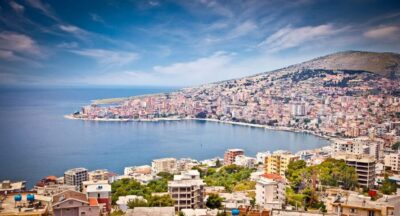
Day Trip to Saranda and Butrint National Park from Corfu
Read our review →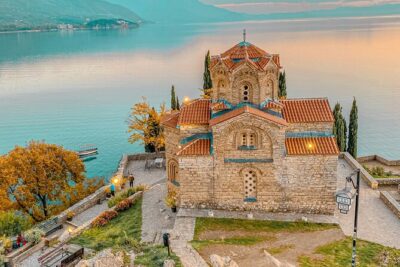
Semi-Private Tour of North Macedonia: Ohrid & Struga from Tirana
Read our review →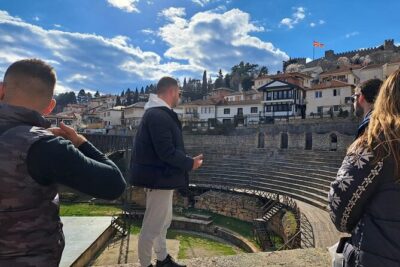
North Macedonia: Ohrid & Saint Naum Day Tour from Tirana
Read our review →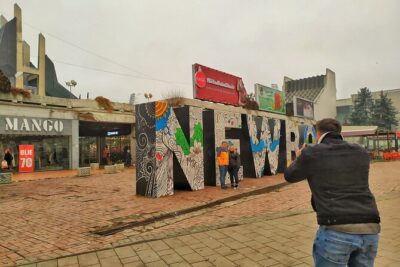
Day Tour of Kosovo from Tirana, Pristina and Prizren
Read our review →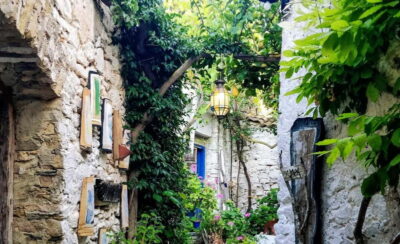
Corfu: Palaiokastritsa Swimming and Loggas Beach Sunset Tour
Read our review →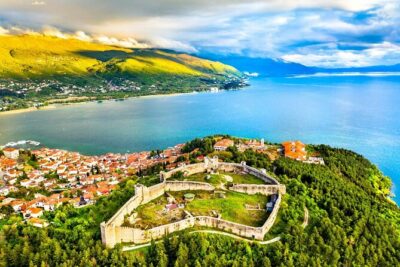
Ohrid – North Macedonia Full Day Tour from Tirana & Durres/Golem
Read our review →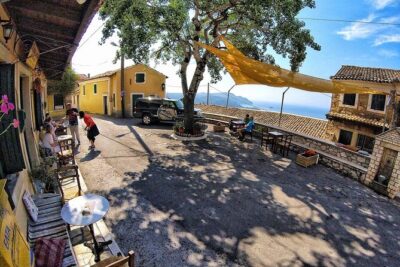
Private Half-Day Jeep Safari in Northwestern Corfu
Read our review →
Semi-Private Day Tour of Montenegro: Budva & Kotor from Tirana
Read our review →Browse the lists this tour appears in