
REVIEW · TRIPS ACROSS THE BORDER
Visit Albania and Montenegro
Small countries, big variety. This 10-day private journey links Albania and Montenegro through ancient ruins, Ottoman towns, Ionian beaches, mountain roads, and four UNESCO World Heritage sites. I like the private vehicle and guide, which save you from piecing together difficult regional transport. I also like the route’s range: one day brings Roman ruins, the next brings a seaside castle or a highland food stop.
The main drawback is the pace. You cover a lot of ground, and several days involve long drives with multiple stops. The $2,268.13 price includes nine nights, breakfast, a private air-conditioned vehicle, a professional guide, and many admissions, but lunches, dinners, and all fees and taxes are extra. You should also confirm exactly which entrance charges are covered before booking.
In This Review
- Key details that shape the trip
- Tirana begins with Albania’s layered past
- Ardenica and Apollonia connect faith with antiquity
- The Albanian Riviera brings the strongest scenery
- Butrint and the Blue Eye are a major highlight
- Berat rewards you with a slower old town
- Durres and Shkodra show Albania’s northern side
- Ulcinj and Budva change the rhythm
- Perast, Kotor, and Montenegro’s mountain route
- Kruja closes the trip with Skanderbeg
- What the $2,268.13 price really covers
- Who should book this private route?
- FAQ
- How long is the Albania and Montenegro tour?
- Where does the tour start?
- Where does the tour end?
- Is this a private tour?
- What is included in the price?
- Are meals included?
- Should you book it?
Key details that shape the trip
- Four UNESCO sites are part of the route, including Butrint, Gjirokastra, Berat, and the natural and cultural setting around the Bay of Kotor.
- A private tour means flexibility, with only your own group in the vehicle rather than a large coach.
- The journey starts in Tirana and ends near Kruja, with airport pickup on arrival and airport transfer on departure.
- Days four and five are especially full, combining Butrint, the Blue Eye, Gjirokastra, and Berat.
- Montenegro brings a different feel, from Ulcinj’s Albanian community to Perast, Kotor, Cetinje, and Njeguši.
- The route suits active sightseers, since old towns, castles, and cobbled streets often require uphill walking.
Tirana begins with Albania’s layered past
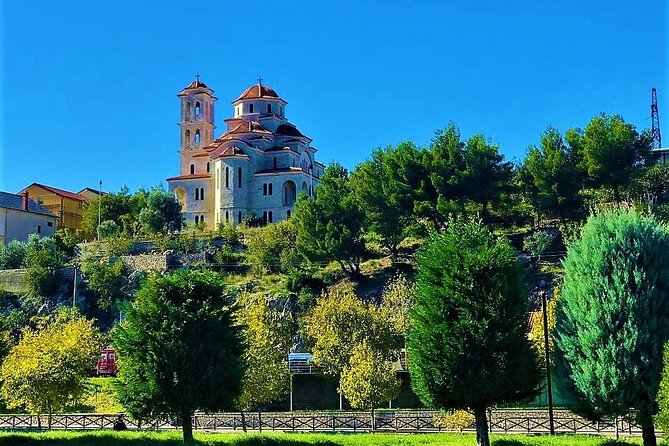
Your first day starts with pickup at Tirana airport and a transfer to your hotel. After a short break, the city tour takes in Skanderbeg Square, the Clock Tower, Et’hem Bey Mosque, the National Historic Museum, the National Art Gallery, the Resurrection of Christ Orthodox Cathedral, and Saint Paul Catholic Cathedral.
Tirana is a useful introduction because its central sights show several parts of Albanian life in a compact area. Et’hem Bey Mosque took about 28 years to complete and was finished in 1821. Its interior decoration and artwork make it one of the country’s more notable mosques.
The National Historic Museum adds political context. Its collection ranges from ancient objects to the period of Enver Hoxha’s rule, so you get more than a quick look at Albania’s classical past. The huge mosaic on the museum facade also makes the building easy to spot.
The first day is listed at about four hours, which leaves you time to recover from your flight. Still, the schedule is dependent on your arrival time, so the precise amount of sightseeing may vary.
More trips over the border:
- Semi-Private Tour of North Macedonia: Ohrid & Struga from Tirana
★ 5.0 · 170 reviews - North Macedonia: Ohrid & Saint Naum Day Tour from Tirana
★ 5.0 · 151 reviews - Day Tour of Kosovo from Tirana, Pristina and Prizren
★ 5.0 · 93 reviews
Ardenica and Apollonia connect faith with antiquity
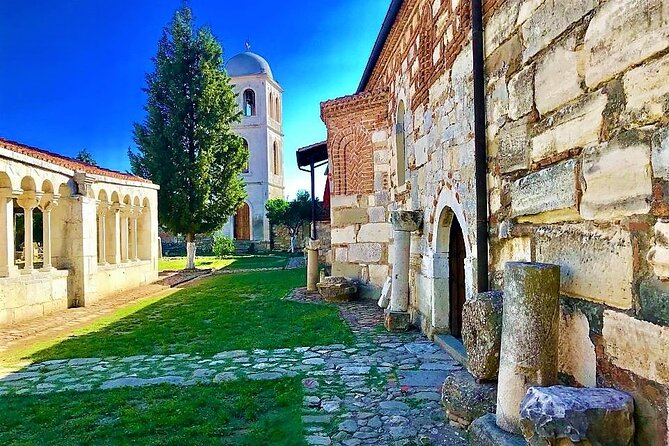
On day two, the route heads south through the countryside to Ardenica Monastery. The monastery dates to 1282 and is associated with the 1451 marriage of Albania’s national hero, Skanderbeg, and Andronika Arianiti.
The Church of Saint Mary contains frescoes by Kostandin and Athanas Zografi. Ardenica also once had a theological school and a library of 32,000 volumes, though a fire destroyed the library in 1932. You only spend about an hour here, but the stop gives the day a quiet start before the larger archaeological site ahead.
About 30 minutes later, you reach Apollonia Archaeological Park. The classical city dates to 588 BC and sits among rolling hills with broad views. Its appeal is the combination of ruins and open countryside, rather than one single monumental building.
The visit is listed at only three minutes, which is clearly too short for a normal sightseeing stop. Treat that figure as a timing error or a very rough estimate, and confirm the actual time available. The site includes the Church of Saint Mary and a wider archaeological area, so you will want enough time to walk and look around.
The day continues to Vlore, an important city in Albania’s independence story. Known in antiquity as Aulona, it later came under Roman, Byzantine, Norman, Venetian, and Ottoman control. The Albanian Declaration of Independence was proclaimed here on November 28, 1912.
You spend the night in Vlora. This overnight stop breaks up the long journey south and puts you in position for the coastal road on day three.
The Albanian Riviera brings the strongest scenery
Day three is one of the route’s most scenic sections. You travel along the Albanian Riviera and over Llogara National Park, stopping at viewpoints before reaching Himare and Porto Palermo.
Ali Pasha Castle sits near the sea and was rebuilt in 1819 with three towers. Ali Pasha of Tepelene used it as a residence until 1820. The setting gives the fortress much of its appeal, with the castle, coast, and mountain road packed into one stop.
The itinerary calls this the best spot in Albania, but that is a matter of taste. I would say it is one of the most memorable stops because it combines a compact fortress with an unusually attractive coastal setting.
The route then reaches Saranda, a popular Ionian Sea resort about 14 kilometers from the Greek island of Corfu. Saranda is known for sunny weather, stony beaches, olive groves, citrus plantations, vineyards, springs, and nearby mountains.
You spend two hours in Saranda, with an overnight stay implied as the base for the next day’s Butrint visit. This is not a beach holiday, though. The schedule gives you a short look at the city, not a long period for swimming or relaxing by the water.
Butrint and the Blue Eye are a major highlight
Day four begins with Butrint National Park, one of the strongest cultural stops on the entire journey. The ancient settlement was mentioned by Hekateus in the sixth century BC and later became part of the kingdom of Epirus.
The site includes a theater, Greek and Roman remains, city walls, and the Church of Saint Mary. Finds from Butrint include a statue of Apollo, the goddess of Butrint, marble heads of Zeus, Agrippina and Livia, plus Greek and Latin inscriptions.
Three hours is a sensible amount of time here. Wear shoes suited to uneven surfaces, since the site is spread out and requires walking. Butrint works especially well for you if you like ruins in a natural setting rather than museums alone.
After Butrint, the road turns inland toward Gjirokastra, with a stop at the Blue Eye. This spring produces intensely blue water from a karst opening more than 50 meters deep. Divers have reached 50 meters, but the full depth remains unclear.
The Blue Eye visit takes about an hour. It is a natural stop rather than a long guided history lesson, so you will appreciate it most as a break from the road and a chance to see one of southern Albania’s distinctive natural features.
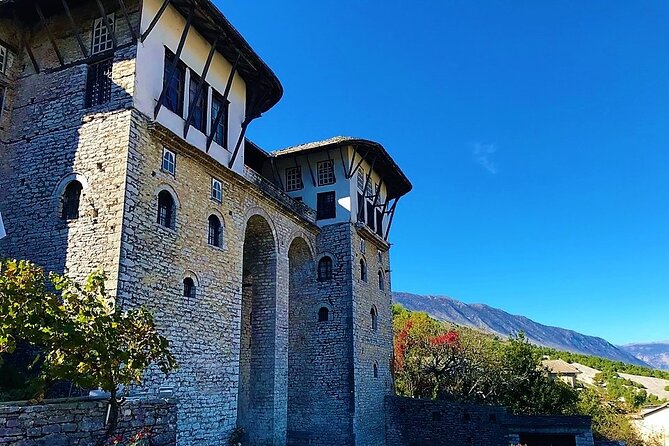
Gjirokastra, known as the Stone City, is another UNESCO site. The old quarter includes a medieval bazaar, narrow cobbled streets, Ottoman-style houses, and artisan workshops where you might find handmade doilies, carved wood, silver work, and other local crafts.
The castle adds a large historic site to the afternoon. You also visit Skenduli House, built around 1700. Its domestic details help explain how an important Ottoman-era house functioned, and they provide a useful contrast to the grander castle.
More trips out of Tirana:
- Hike Gamti Mountain with Bovilla lake view & canyon- From Tirana
★ 5.0 · 1,280 reviews - Berat city UNESCO tour, the Castle & Belshi lake- From Tirana
★ 5.0 · 804 reviews - Walking Tour of Tirana
★ 5.0 · 646 reviews - Kruja castle, the old Bazaar & Sarisalltik- Departure from Tirana
★ 5.0 · 592 reviews
Berat rewards you with a slower old town
Day five moves from one UNESCO city to another. Berat is known as the city of a thousand and one windows, a nickname linked to the closely packed Ottoman houses on the hillside.
The old city is divided into Mangalemi, Gorica, and Kala. Kala is the castle quarter, reached by a steep cobbled path. The climb takes effort, but the views from the top make it worthwhile. If you have knee trouble or dislike uphill walking, allow yourself extra time and take the ascent slowly.
Inside the castle area, you visit the Onufri Museum of Iconography. It is named for the noted fresco and icon painter Onufri and gives the visit a strong artistic focus. Berat is not just a quick photo stop, and the eight-hour schedule reflects that.
The long day can feel tiring after Gjirokastra, especially because both towns involve slopes and stone streets. Still, this is an important part of the itinerary, since you see two different Ottoman-era cities rather than spending the whole trip on the coast.
Durres and Shkodra show Albania’s northern side
Day six begins with Durres, founded in 627 BC and one of Albania’s oldest cities. The stop brings together city walls, a Byzantine Forum, Roman Thermal Baths, and other ancient remains.
You also have time for modern street art and a coffee break on top of the Venetian Tower. The amphitheater and Archaeological Museum add more Roman and Greek material, though the two-hour visit means you will need to keep moving.
The route then continues to Shkodra, a major center of Roman Catholicism and a city with roots reaching back to the Illyrian Kingdom. Rozafa Castle is the key visit, with views over the surrounding area and waterways.
Shkodra’s pedestrian center has Italian influences, and the Catholic cathedral adds another layer to the city’s identity. A visit to a Venetian masks factory gives the day a hands-on craft element.
You spend the night in Shkodra. This stop is useful because it breaks up the northbound drive before crossing into Montenegro.
Ulcinj and Budva change the rhythm
On day seven, you cross into Montenegro and stop first in Ulcinj. About 90 percent of the town’s inhabitants are Albanian, so the border crossing does not mean an abrupt break from Albanian culture.
The visit includes the fortress and Archaeological Museum, with about two hours in town. Ulcinj is a good reminder that cultural borders in the Balkans do not always match political borders.
The road continues through Petrovac toward Budva, with a view of Sveti Stefan along the way. Budva’s old town contains historic monuments and narrow streets inside its fortified setting. You have about four hours here and spend the night in Budva.
This is another full day of stops and driving. Budva is also a popular coastal destination, so the town may feel more resort-oriented than Gjirokastra or Berat. I would enjoy the old town, but I would not expect much unstructured beach time.
Perast, Kotor, and Montenegro’s mountain route
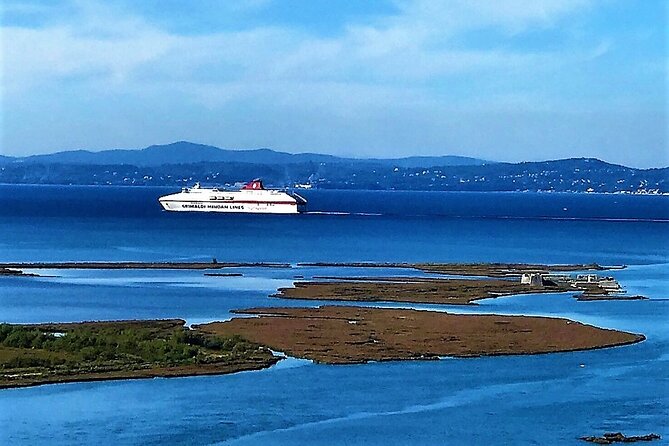
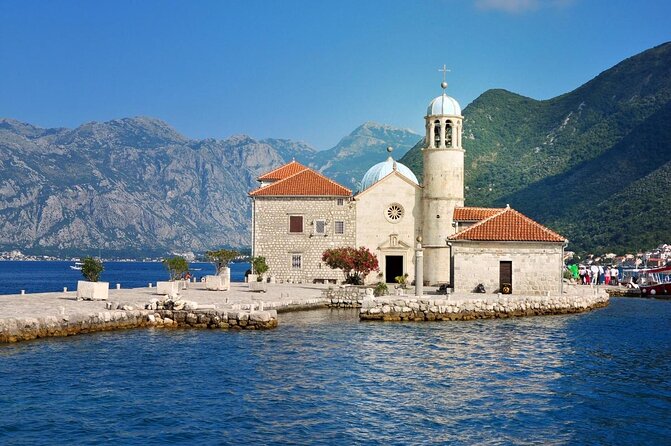
Day eight covers some of Montenegro’s most recognizable places. Perast is a small historic town on the Bay of Kotor, known for its churches and grand stone palaces. Two hours gives you time to walk the waterfront and look closely at the old buildings.
A boat trip takes you to Our Lady of the Rocks, one of two islands across from Perast. The other is Sveti Djordje, also called the island of the dead captains because of a local legend involving a French soldier and a fatal cannon shot. Our Lady of the Rocks is the island visit included in the plan.
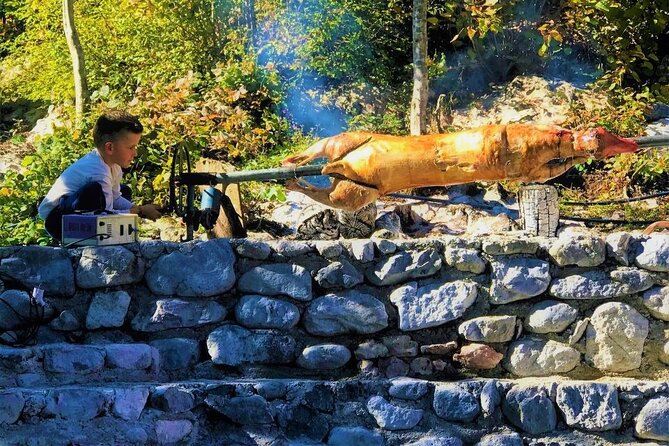
The route then climbs toward Njeguši at about 900 meters above sea level. This mountain settlement is associated with smoked ham, cheese, dried goat cheese, honey, and mead. A tasting stop here is one of the more grounded food experiences on the route, though the cost of food or tasting is not specified.
Cetinje comes next, with visits to the Royal Palace of King Nikola II and the Monastery of St. Petar. The town is a cultural and historic center, and the two-hour visit gives you a look at Montenegro’s former royal and religious life.
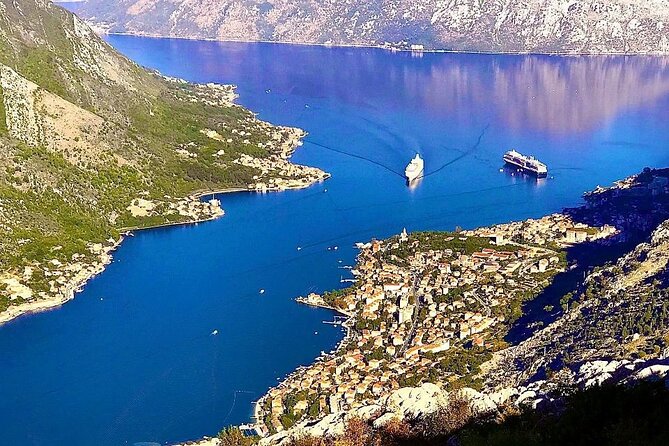
The day ends in Kotor, where you have a free afternoon and spend the night. The listed Kotor visit is only 30 minutes, so the free time is important. Use it for your own walk through the old town rather than expecting a long formal tour.
Kruja closes the trip with Skanderbeg
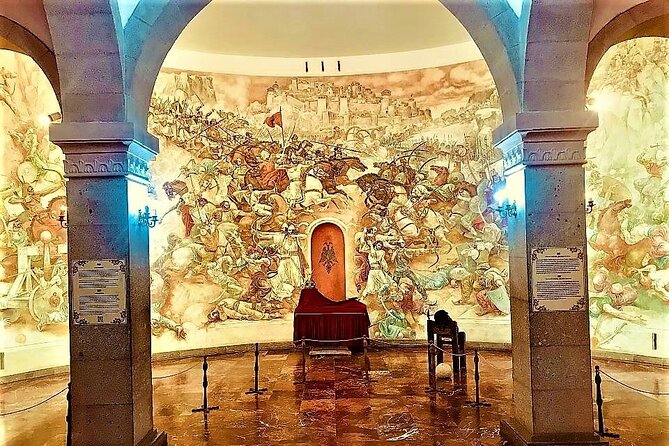
Day nine returns to Albania and heads to Kruja, the center of resistance against the Ottoman Empire. Skanderbeg is the central figure here, having resisted Ottoman forces for 25 years.
Kruja Castle offers broad views, while the Skanderbeg Museum provides the historical framework for the town’s national importance. The Ottoman-style bazaar below the castle is a good place to wander, browse crafts, and enjoy the atmosphere of the cobbled streets.
The six-hour visit is generous compared with some earlier stops. That matters because Kruja works best when you allow time for both the museum and the bazaar, rather than treating the castle as a quick photo stop.
You spend the final night in Kruja. On day ten, the operator transfers you to the airport, ending the service after about 30 minutes. The route starts at Tirana airport and finishes from Kruja, so check your departure airport details carefully before booking.
What the $2,268.13 price really covers
At $2,268.13 per person, this is not a budget independent trip, but it includes services that can be awkward to arrange across two countries. Nine nights of accommodation, nine breakfasts, a private air-conditioned vehicle, a professional guide, airport transfers, and several admissions are included.
The private format is the key value. Only your group participates, so you avoid a large coach and can ask questions as you go. A private vehicle also helps on a route with coastal roads, mountain sections, border crossing, and small historic towns that are not always easy to link by public transport.
You still need to budget for lunches, dinners, and all fees and taxes. Since meals are not included beyond breakfast, ask about the hotel standard, room arrangements, entrance fees, and any boat or food costs before paying.
The available feedback gives one useful clue about the operator’s service. Alba arranged an 11-day private holiday for a couple, while Adam accompanied them throughout and was described as prompt at the start in Kotor. That suggests the company can handle custom arrangements and maintain continuity with one guide, though this 10-day program should be confirmed separately.
Who should book this private route?
I would choose this tour if you want Albania and Montenegro in one organized trip, value a private guide, and prefer historic towns over a single-resort holiday. It is especially suitable for first-time visitors who want the major cultural sites without handling hotels, border crossings, and regional driving alone.
You should be comfortable with frequent hotel changes, long road days, steep cobbled streets, and a full schedule. The route is not ideal if you want slow mornings, long beach afternoons, or extensive free time in every town.
Confirmation arrives at booking, pickup is offered, and the tour starts at 9:00 am. Most people can participate, and the activity is private to your group. Free cancellation is available up to 24 hours before the start time, although changes or cancellations inside that window are not refundable.
FAQ
How long is the Albania and Montenegro tour?
The tour lasts approximately 10 days and includes nine nights of accommodation.
Where does the tour start?
It starts with pickup at Tirana airport. The listed start time is 9:00 am.
Where does the tour end?
The final transfer is from Kruja to the airport on day ten. Confirm the airport arrangements if your flight departs from a location other than Tirana.
Is this a private tour?
Yes. Only your group participates, and transportation is provided by private vehicle.
What is included in the price?
The price includes nine nights of accommodation, nine breakfasts, a professional guide, an air-conditioned vehicle, airport transfers, and listed admissions at several sites.
Are meals included?
Breakfast is included each morning. Lunches and dinners are not included, and all fees and taxes are listed separately.
Should you book it?
Book this tour if you want a broad first look at Albania and Montenegro with the hard planning handled for you. The strongest reasons are the private transport, the steady guide support, and the excellent mix of Butrint, Gjirokastra, Berat, Kotor, coastal scenery, castles, and local food stops.
Before booking, ask for the hotel list, confirm the exact entrance fees, and make sure you are happy with the driving time. If you can accept a brisk pace and some uphill walking, this is a practical way to see two fascinating Balkan countries in one carefully packed journey.
Just added in Tirana
- Wine Tasting day in Berat (Visit to the Berat Castle & Lunch included)★ 4.5 · 6 reviews
- From Tirana Wine Tasting & Food tour in Berat★ 5.0 · 5 reviews
- Visit Albania and Kosovo★ 5.0 · 2 reviews
- Bovilla and Kruja: Where History Meets Nature★ 5.0 · 2 reviews
- Virtual Reality Games and Experiences – Perfect place to drink and have fun!★ 5.0 · 2 reviews
- UNESCO heritage in Albania – 4 days★ 5.0 · 3 reviews
- Exclusive Qafshtama National Park Hiking Tour With Private Transfer★ 5.0 · 1 review
- Transfers Tirana Airport – Sarande – Ksamil – Airport Tirana★ 4.5 · 3 reviews
Trips Across the Border, compared.
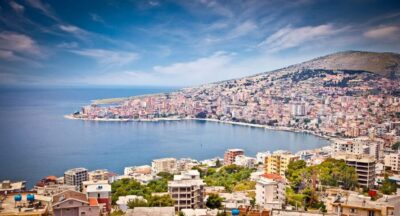
Day Trip to Saranda and Butrint National Park from Corfu
Read our review →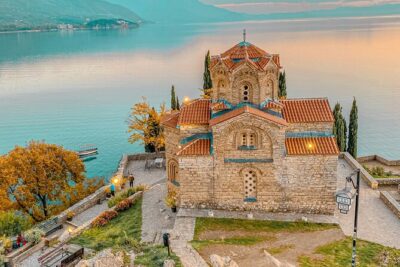
Semi-Private Tour of North Macedonia: Ohrid & Struga from Tirana
Read our review →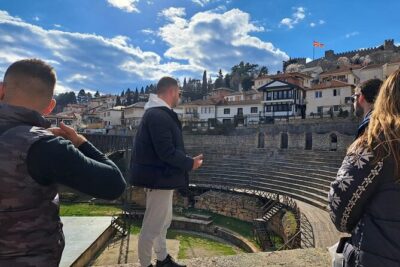
North Macedonia: Ohrid & Saint Naum Day Tour from Tirana
Read our review →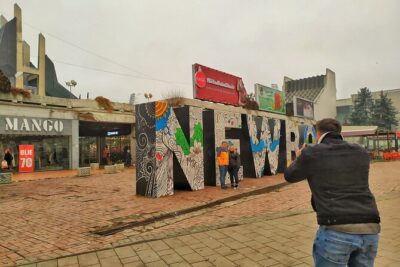
Day Tour of Kosovo from Tirana, Pristina and Prizren
Read our review →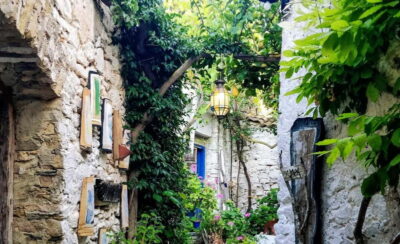
Corfu: Palaiokastritsa Swimming and Loggas Beach Sunset Tour
Read our review →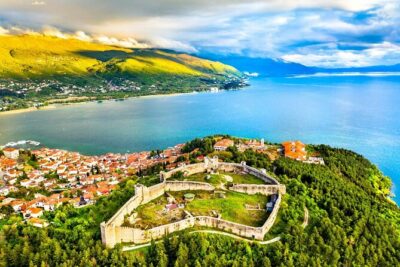
Ohrid – North Macedonia Full Day Tour from Tirana & Durres/Golem
Read our review →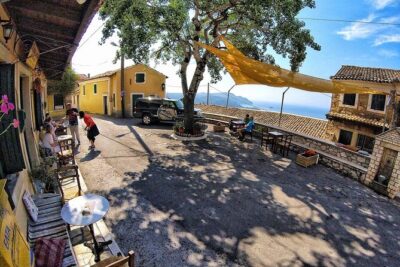
Private Half-Day Jeep Safari in Northwestern Corfu
Read our review →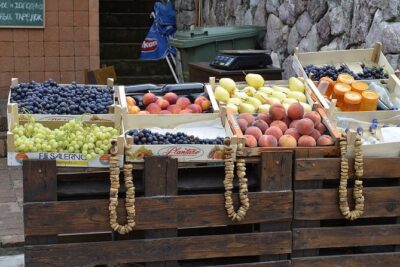
Semi-Private Day Tour of Montenegro: Budva & Kotor from Tirana
Read our review →Browse the lists this tour appears in