
REVIEW · GJIROKASTER TOURS
Walking Tour “The Old Bazaar, Cfake, Dunavat, Ali Pasha Bridge”
Some of Gjirokaster’s best corners sit beyond the usual route. This three-hour walk leaves Cerciz Topulli Square and follows old cobbled lanes beneath the castle, through the former Bazaar quarter, Cfake, Dunavat, and onward toward Ali Pasha Bridge. I like the local neighborhood focus and the chance to see old houses, hills, sheep, and a Bektashi tekke rather than spending the whole morning inside the castle zone.
I also like the human side of the tour. Guides such as Arli, Viki, Marco, and Mario are praised for lively explanations, local knowledge, humor, and personal stories about life in Gjirokaster. The main drawback is clear: the terrain is uncomfortable, and reaching the bridge itself may be difficult. Good sneakers are not optional here.
In This Review
- Key points to know before you book
- Leaving Cerciz Topulli Square for the old neighborhoods
- The Old Bazaar beneath the castle walls
- Crossing Zerzebili Bridge into Cfake
- Hills, sheep, and the route toward Dunavat
- Ali Pasha Bridge and the aqueduct story
- What the guides add to the experience
- Price, timing, and the real value of $18.06
- Who should choose this Gjirokaster walk?
- Should you book it?
- FAQ
- Where does the tour start?
- What time does the tour begin?
- How long does the tour last?
- Where does the tour end?
- What language is the tour offered in?
- What does the price include?
- Are tips included?
- How difficult is the walking?
- How large can the group be?
- Can I cancel for a full refund?
Key points to know before you book
- A different side of Gjirokaster: The route leaves the central tourist path and enters old neighborhoods beneath the castle walls.
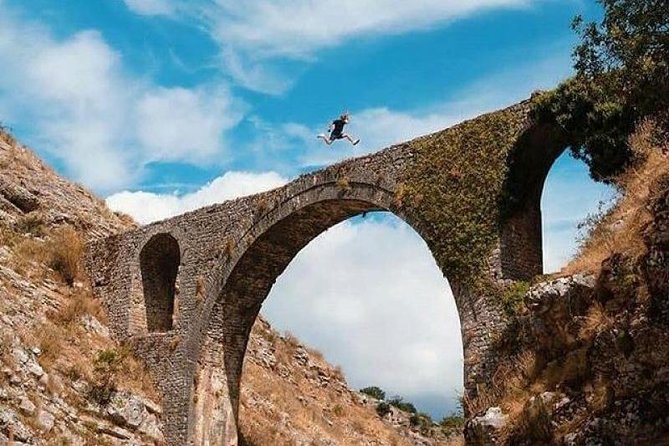
- Ali Pasha Bridge is the final goal: The structure is a surviving section of an aqueduct built more than 200 years ago to carry water to the castle.
- Expect uneven walking: Cobblestones, hills, and rough ground make this a poor choice for anyone wanting an easy, flat stroll.
- Guides add the personality: Arli, Viki, Marco, and Mario have been praised for clear English, humor, local stories, and flexible conversation.
- Small price, solid value: At $18.06 per person, you get about three hours with a guide, though tips are not included.
- Simple morning schedule: The tour starts at 9:30 am, uses a mobile ticket, and returns to the starting point.
Leaving Cerciz Topulli Square for the old neighborhoods
The tour begins at Experience Gjirokastra on Rruga Gjin Zenebisi, close to Cerciz Topulli Square in the old town. Starting here makes sense. You begin in the part of Gjirokaster most people recognize, then quickly move away from the main route and into quieter streets.
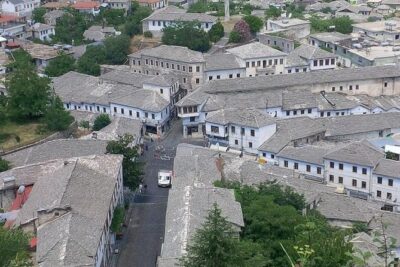
The first idea behind the walk is to see the town beyond its headline sights. Gjirokaster is famous for its castle, steep stone roofs, and Ottoman-era appearance, but its character also lives in the older homes and lanes below the fortress. This route gives those less polished areas room to speak for themselves.
Your guide is important from the first steps. The strongest guides on this walk do more than point at buildings. They explain how the neighborhoods fit together and connect the old architecture with present-day life in Gjirokaster. Viki, who is from the town, has been praised for adjusting the pace and discussion around individual interests. Arli has earned similar praise for explaining the places along the route in clear, lively English.
The group can reach up to 30 people, so the atmosphere may vary. A smaller group should make it easier to ask questions and hear the guide, while a full group could feel less personal on narrow streets. Still, the walk’s setting does much of the work. You are not sitting in a coach or moving between distant sights. You are walking through the town at street level.
More of Gjirokaster:
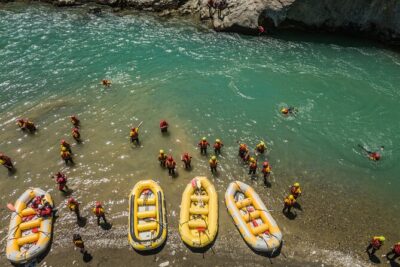
- Rafting Vjosa River Gjirokastër Albania ARG
★ 5.0 · 199 reviews - Gjirokastra- The Stone City & Blue Eye- The monument of Nature.
★ 4.5 · 180 reviews - Gjirokastra UNESCO & Ksamil Beach – From Tirana/Durres/Golem
★ 5.0 · 117 reviews
The Old Bazaar beneath the castle walls
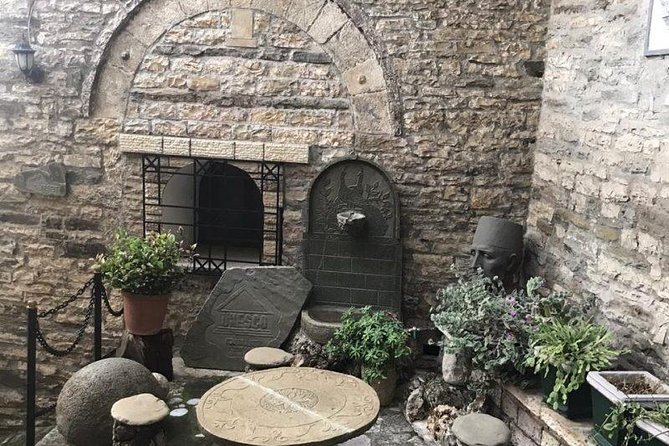
The first neighborhood is called the Old Bazaar, though it is no longer a working bazaar. It lies along the lower edge of the castle walls and forms one of the oldest parts of town outside the fortress itself.
Do not expect a modern market packed with stalls. The appeal is the setting: cobblestone lanes and old houses tucked beneath the castle. The word Bazaar points to the neighborhood’s earlier role, but the present-day experience is more about architecture and atmosphere than shopping.
This is a useful stop because it helps you read Gjirokaster as a town, not just as a castle with a souvenir district attached. The stonework, slope, and older homes show how the settlement developed around the fortress. The route also offers a different view of the castle walls from below, a perspective that can be missed if you only climb up to the main entrance.
The paving is part of the charm and part of the challenge. Cobblestones can be awkward, particularly on sloped sections. You should wear shoes with firm soles and good grip. The tour description is candid about the ground, and you should take that warning seriously.
This part of the walk may suit you best if you enjoy old residential quarters and architectural details. If you want a fast checklist of major attractions, it may feel slower. The guide’s explanations matter here because the neighborhood is not presented as a single grand monument. Its value comes from the connection between many small elements.
Crossing Zerzebili Bridge into Cfake
After the Old Bazaar, the route passes over Zerzebili Bridge and enters Cfake, another ancient neighborhood in Gjirokaster. The bridge marks a change in the walk. You are leaving the better-known center and moving farther into an area where old houses and local religious buildings share space with open hills.
Cfake contains houses classified as first-category monuments. That designation signals their architectural and cultural importance, but the real pleasure is seeing them in their neighborhood setting rather than as isolated museum pieces. A guide can point out what makes these homes significant and explain their place in Gjirokaster’s past.
The walk also includes a tekke connected with the Bektashi Order. This adds a religious and cultural layer to the route. The stop is not simply about another old building. It gives you a chance to understand that Gjirokaster’s identity includes different traditions, communities, and forms of worship.
You should expect the route to feel less formal here. The experience is not arranged as a string of grand entrances with polished signs. It is a walk through an old quarter where homes, paths, religious buildings, and open ground come together. That makes the guide’s storytelling especially useful.
One guide may spend more time on architecture, while another may bring in personal memories and modern life. The strongest feedback points to guides who speak with humor and use their own experience to make the past easier to picture. That personal touch is one reason this walk feels more like time with an informed local than a standard script.
Hills, sheep, and the route toward Dunavat
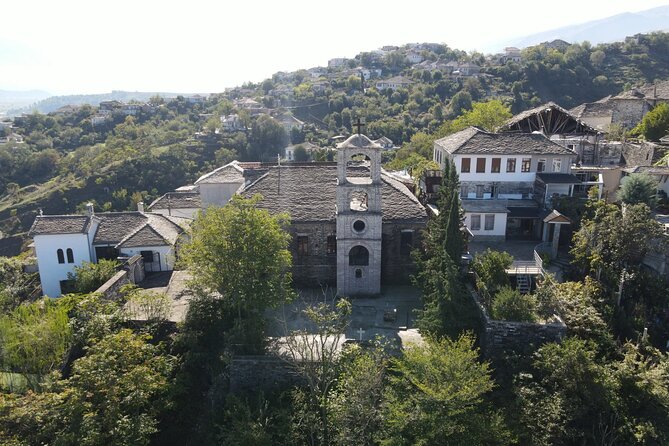
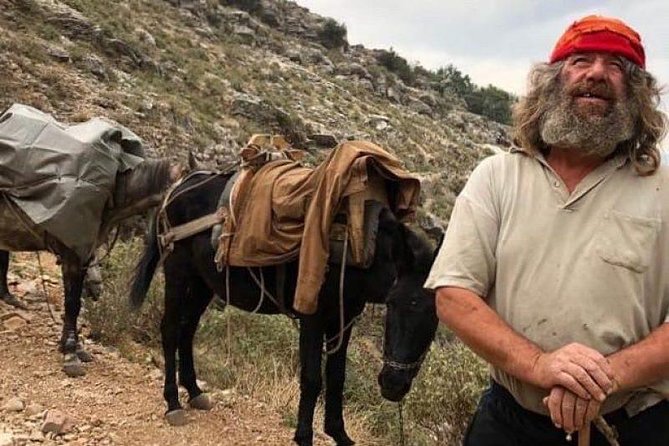
The stretch toward Dunavat brings a striking mix of natural surroundings and old construction. You may see sheep on the hills while walking past old houses, a combination that gives the route a rural edge even though you are still close to Gjirokaster.
This is one of the tour’s most distinctive features. The walk does not keep you inside a carefully preserved historic core. Instead, it shows how old neighborhoods meet the surrounding hills. The result is less polished, but more revealing.
It is also where the physical demands become more important. The ground is not described as comfortable, and the route includes hills. You should be ready for a three-hour outing that involves sustained walking over uneven surfaces rather than a gentle promenade.
The tour’s pace may be shaped by the guide and group. Viki has been praised for tailoring the schedule to personal interests, while Arli has been praised for finding a practical way to show Ali Pasha Bridge when the direct approach was too difficult. That flexibility can make a real difference, especially if weather or ground conditions affect the route.
I would not choose this walk in delicate footwear, and I would think carefully before booking if uneven ground is a serious problem for you. On the other hand, if you enjoy walking through old quarters without needing every path to be perfectly smooth, the roughness is part of the appeal.
More Walking Tours in Gjirokaster:
- Walking Tour Baazar – The Argjiro Castle – Zekate house
★ 4.5 · 18 reviews - Gjirokaster walking Tour The Old Baazar, Cfake, Dunavat, Ali Pasha Bridge
★ 5.0 · 4 reviews - Gjirokastra Private Half-Day Walking Tour
★ 5.0 · 3 reviews - Walking Tour of Tirana
★ 5.0 · 646 reviews
Ali Pasha Bridge and the aqueduct story
The final destination is Ali Pasha Bridge, a surviving part of an aqueduct built more than 200 years ago by Ali Pasha Tepelena. Its original purpose was practical: bringing water to the castle.
That story gives the bridge more meaning than its appearance alone. You are seeing one remaining piece of a system that supported the fortress and town. The bridge is not presented merely as a scenic photo stop. It helps explain how water reached a powerful hilltop stronghold.
There is an important practical detail here. Getting directly to the actual bridge can involve difficult terrain. Arli adapted the route for one group by leading them through neighborhoods to a spectacular view of the bridge rather than forcing an awkward approach.
You should therefore think of the bridge as a destination that may be viewed from a suitable point, not a promise that you will walk across or reach every part of the structure. The exact experience can depend on the ground, weather, and guide’s judgment. That is not a flaw in the tour. It is a realistic part of visiting an old aqueduct in rugged surroundings.
The bridge also makes a satisfying ending because the route has gradually moved from town streets to old quarters, hills, and infrastructure linked to the castle. You finish with a clearer sense of how Gjirokaster’s buildings and water system related to one another.
The tour ends back at the meeting point, so you do not need to arrange a separate return transfer. That is useful after a tiring walk, especially if you have plans later in the day.
What the guides add to the experience
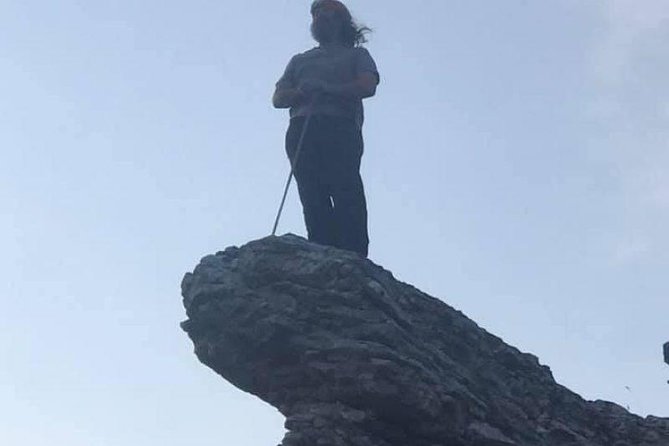
This walk depends heavily on the guide. The stops are worthwhile, but many of them are neighborhood streets and old structures without large displays or detailed signs. Good interpretation turns a pleasant walk into a meaningful one.
Arli is praised for explaining the neighborhoods and the historical role of the bridge while making a sensible adjustment to the difficult approach. Viki is praised for her clear information, courteous manner, local connection, and willingness to shape the schedule around interests.
Marco and Mario have been praised for creating the feeling of walking with informed friends. Their approach included both Gjirokaster’s past and what it is like to live there today. One guide also spent extra time showing additional sites, which suggests that the experience may have some flexibility when time and group size allow.
You should not assume a particular guide will lead every departure, but these names give you a useful sense of the standard to expect. The shared strengths are clear English, lively delivery, humor, local perspective, and a willingness to answer questions.
The tour is offered in English. That makes the guide’s communication style important. The positive feedback points to explanations that are not dry or overly formal, which suits a walk through residential neighborhoods better than a long lecture.
Price, timing, and the real value of $18.06
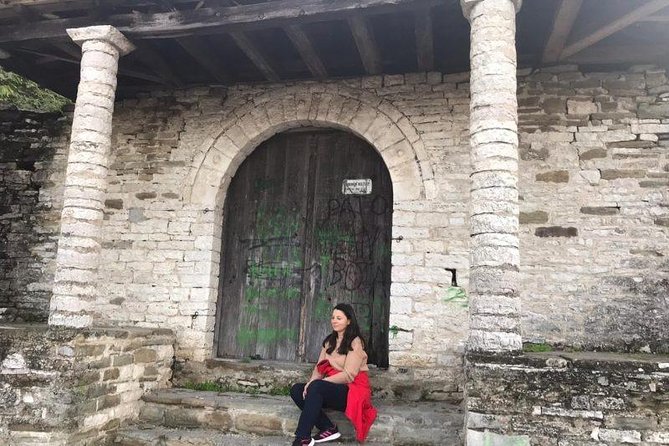
At $18.06 per person, this is an inexpensive way to spend a morning in Gjirokaster. The fee covers the guide and about three hours of walking. There are no listed entrance fees for the route, and tips are not included.
The value is strongest if you want context that you would be unlikely to get from wandering alone. You could walk through parts of the Old Bazaar, Cfake, Dunavat, and the surrounding hills independently, but you might miss why the old houses matter, what the tekke represents, and how the aqueduct served the castle.
The 9:30 am start is practical. It leaves much of the day free and places the walk in the morning, though the required good weather means conditions can affect departures. The experience is often booked 46 days in advance, so you should not leave it until the last minute if your schedule is fixed.
A group of up to 30 people is allowed. That is not especially small, so ask yourself how much personal attention you want. The route’s local character and the guides’ flexible style may work best when the group is well below the maximum.
You receive confirmation at booking and can use a mobile ticket. The meeting point is near public transportation, and service animals are allowed. Most people can take part, but the uneven ground remains the main physical consideration.
Free cancellation is available if you cancel at least 24 hours before the 9:30 am start. Changes or cancellations inside that window are not refunded. If poor weather or an insufficient number of bookings forces cancellation, you can choose another date or experience, or receive a full refund.
Who should choose this Gjirokaster walk?
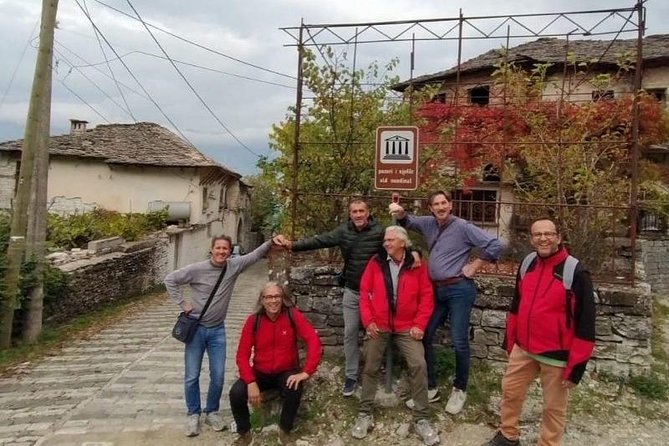
I would recommend it to you if you enjoy:
- Old residential quarters more than polished attractions
- Walking tours with local stories and personal detail
- Architecture, religious history, and old infrastructure
- Views from hills and unusual angles beneath the castle
- A moderately active morning outdoors
- Seeing how a town works beyond its main sight
It is a particularly good choice for a second look at Gjirokaster. If you have already seen the castle and want to understand the town around it, this route fills in the picture.
I would be cautious if you want a flat, easy route, a formal museum experience, or guaranteed access directly onto the bridge. The terrain may be uncomfortable, and the final bridge view can require a practical route adjustment.
Should you book it?
Book this tour if you want Gjirokaster away from the standard castle circuit and you are happy to walk over cobblestones, hills, and rough ground. At $18.06, three hours with an English-speaking local guide is strong value, especially when the guide brings humor, personal stories, and useful historical context.
Skip it if uneven walking would spoil your morning. For everyone else, wear sturdy sneakers, keep your expectations flexible around Ali Pasha Bridge, and give the old neighborhoods time to unfold. This is not a grand monument tour. It is a close look at how Gjirokaster’s old houses, religious traditions, hills, and waterworks fit together.
FAQ
Where does the tour start?
The tour starts at Experience Gjirokastra, Rruga Gjin Zenebisi, in Gjirokaster, near Cerciz Topulli Square.
What time does the tour begin?
The start time is 9:30 am.
How long does the tour last?
The walk takes approximately three hours.
Where does the tour end?
The activity ends back at the meeting point.
What language is the tour offered in?
The tour is offered in English.
What does the price include?
The price includes a guide.
Are tips included?
No. Tips, listed as gratuities, are not included.
How difficult is the walking?
You should expect uncomfortable terrain, cobblestones, and hills. Sneakers are recommended.
How large can the group be?
The tour can have a maximum of 30 participants.
Can I cancel for a full refund?
Yes. You can cancel at least 24 hours before the start time for a full refund. Cancellations or changes made less than 24 hours before the start are not refunded.
More Markets in Gjirokaster
- Kruja castle, the old Bazaar & Sarisalltik- Departure from Tirana
★ 5.0 · 592 reviews - Kruja, Old Bazaar, Museum,Sari Saltik tour from Tirana
★ 4.5 · 33 reviews - Guided Tour to Kruja, Holy Mountain & Old Bazaar from Durres
★ 5.0 · 29 reviews - 5-hour Tour Kruja Castle and Old Bazaar from Tirana
★ 4.5 · 16 reviews
Just added in Gjirokaster
- Southern Albania: from Tirana to Butrint, Saranda and Gjirokaster★ 4.0 · 2 reviews
- Gjirokastra Day Tour from Tirana★ 5.0 · 1 review
- Private Day Trip to Gjirokastra from Tirana w/Lunch★ 5.0 · 6 reviews
- Full Day trip to Stone City of Gjirokastra & Blue Eye★ 5.0 · 2 reviews
- Gjirokaster Guided tour – from Tirana★ 5.0 · 1 review
- Gjirokastra, Full Day Trip from Tirana★ 5.0 · 2 reviews
- Gjirokaster Guided tour – from Durrës★ 5.0 · 1 review
- “Two-Day UNESCO Heritage Tour: Berat, Gjirokastra & Butrint”★ 5.0 · 3 reviews
Gjirokaster Tours, compared.
The Stone City & Blue Eye- The monument of Nature.
Read our review →
Gjirokastra UNESCO & Ksamil Beach – From Tirana/Durres/Golem
Read our review →
Gjirokastra, Blue Eye, Ksamil & Saranda – Day Tour from Tirana
Read our review →
Blue Eye, Gjirokaster & Lekures | Private & Small Group Tours
Read our review →
Private Day Tour of Saranda Gjirokaster and Butrint from Tirana
Read our review →
Gjirokastra & Bylis Illyrian City Day tour Tirana/Durres/Golem
Read our review →Browse the lists this tour appears in