
REVIEW · ALBANIAN RIVIERA TOURS
4-Days UNESCO Towns and Albanian Riviera Tour
Albania packs a lot into four days. This route links Tirana, Berat, Gjirokaster, Butrint, Saranda, the Ionian coast, Vlore, and Durres in one compact loop, giving you a useful first look at southern Albania without arranging every hotel, transfer, and sightseeing stop yourself. I especially like the mix of Ottoman towns and ancient ruins, along with the easy change of pace from inland streets to seaside promenades.
I also like the small maximum group of eight, which should make a long driving tour more manageable and give you more room to ask questions. Guide Genci has been praised for his relaxed, well-informed approach, prompt planning, and useful restaurant suggestions. The main drawback is the pace: four days cover a large part of the country, so some stops are short, and the coastal day leaves limited time for lingering at the beach.
In This Review
- At a glance: what makes this Albanian route useful
- Why this four-day route works
- Day one: Tirana’s symbols, Belsh’s lakes, and Berat’s castle
- Day two: Gjirokaster’s houses and Butrint’s ancient stones
- Day three: Qeparo, Porto Palermo, and the Ionian road
- Day four: Roman Durres and the city walls
- The value of $806.76 per person
- Pace, transport, and practical details
- Who should book this tour?
- Should you book the UNESCO towns and Riviera route?
- FAQ
- Where does the tour start?
- How many people can join the group?
- Is transportation provided?
- Is accommodation included?
- Are meals included?
- Which UNESCO-related places are included?
- Is admission included at the sights?
At a glance: what makes this Albanian route useful
- Two UNESCO-listed places in one trip: Gjirokaster and Butrint bring Ottoman architecture and ancient archaeology into the same journey.
- A real cross-section of Albania: You see the capital, rural lake country, historic towns, beaches, mountain roads, and Roman remains.
- Small-group transport: The vehicle is air-conditioned, and the group is limited to eight people.
- Beach time with variety: Qeparo offers shallow water and fine sand, while the Riviera road supplies broad sea views and photo stops.
- Included practical comforts: Accommodation and some meals are included, reducing the daily work of planning.
- Airport and port pickup: Pickup is usually arranged from Tirana Airport or the port, with other meeting points possible by prior agreement.
Why this four-day route works
This is not a slow village holiday. It is a sightseeing circuit designed for you to cover much of southwestern Albania in a short window. That makes it useful if you have only a few days and want more than Tirana, but it also means you will spend substantial time on the road.
The route has a pleasing rhythm. Day one begins with Tirana and central Albania, then moves toward Berat. Day two heads farther south to Gjirokaster, Butrint, and Saranda. Day three follows the Ionian coast, with beaches, a fortress, a mountain pass, and Vlore. Day four turns north toward Durres and its ancient remains.
I like that the trip does not treat Albania as only a beach destination. You get time in old stone towns, a glimpse of communist-era Tirana, archaeological sites, and coastal communities. The result is more informative than a resort stay, though you should expect a fairly active schedule.
More of the Albanian Riviera:
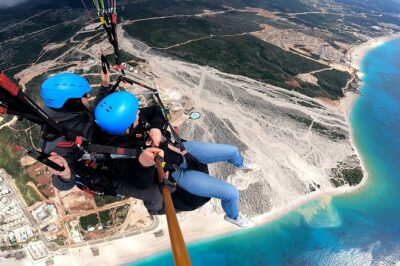
- Tandem paragliding Albania (Llogara)
★ 4.0 · 22 reviews - Albanian Riviera in 3 Days;Semi–Private Tour with Tour Leader&Car
★ 5.0 · 16 reviews - Visit Vlore & Himare Beaches includes lunch
★ 4.5 · 13 reviews
Day one: Tirana’s symbols, Belsh’s lakes, and Berat’s castle
The tour begins at 8:00 a.m., usually with pickup at the airport or port. In Tirana, the opening sightseeing includes Skanderbeg Square, the central boulevard, the mosque, the Gallery of Arts, Mother Teresa Square, the Blloku area, Tirana’s national park, and the Mosaic of Tirana.
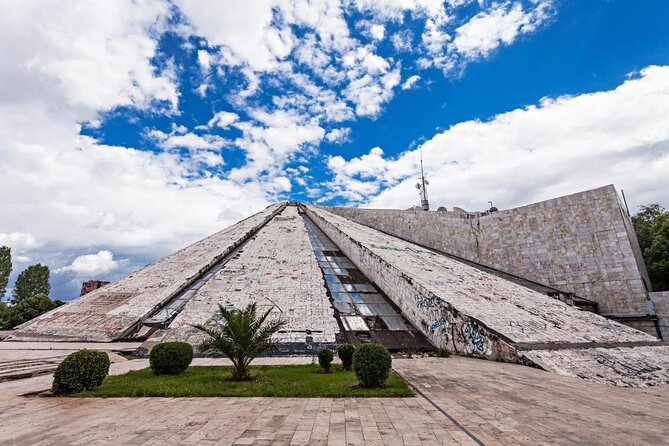
This opening hour is a quick orientation rather than a full museum day. Skanderbeg Square gives you the capital’s main civic setting, while Blloku offers a look at a part of town known for cafés, restaurants, and nightlife. The former Enver Hoxha Pyramid receives only about 10 minutes for an explanation and photographs. That is enough to understand its unusual story, but not enough to explore the building at length.
The pyramid was completed in 1988 as a museum dedicated to communist leader Enver Hoxha. It was designed by his daughter and son-in-law, later used as a convention center and nightclub, and now has a worn, graffiti-covered appearance. It is an awkward but revealing piece of Tirana’s recent past. If you want to visit the National Historical Museum, that is presented as an optional possibility, so confirm with your guide how it fits the day.
Next comes Belsh, a small agricultural town surrounded by lakes. It is not a headline attraction in the way Berat or Butrint is, and that is precisely its value. You get a look at an ordinary part of central Albania, where farmland and small bodies of water shape daily life.
The stop lasts about two hours, though the precise use of that time may depend on the day’s driving conditions and your group. Belsh works best as a quiet pause between major historic sites. Do not expect a packed collection of monuments. Come for the rural setting and a break from the busier tourist route.
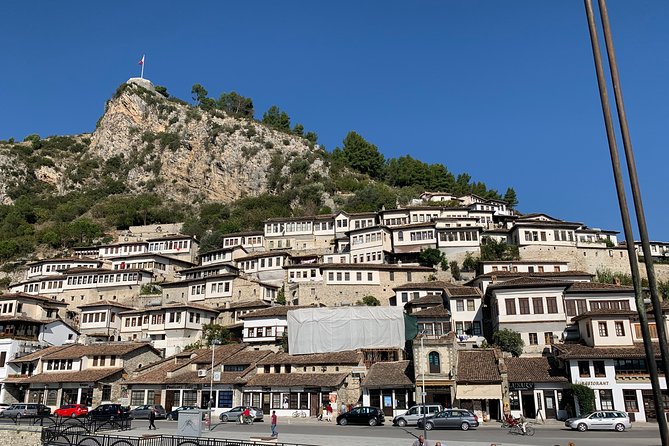
The day ends in Berat, famous for its castle and historic character. Two hours here provide an introduction, but you will not see every corner. Berat’s castle area is the key reason for the stop, with old stone streets and views across the town. The first day gives you a lot of contrast: capital-city landmarks, a little-known lake district, and one of Albania’s best-known historic towns.
Day two: Gjirokaster’s houses and Butrint’s ancient stones
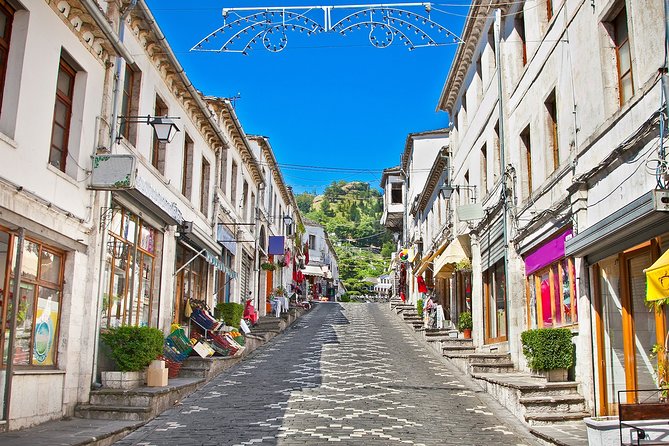
Gjirokaster is one of the strongest parts of the trip. The town is known for its Ottoman-era buildings and steep stone streets, and the Skenduli House offers a more personal way to understand that architecture.
The house dates from the early 1700s and was partly rebuilt in 1827. It has remained with the same family for generations, apart from several years when the communist government took it over. A family member may help show you around, and a guide accompanies the visit.
Look for the wedding room with its 15 windows, some fitted with stained glass. Details like this make the house more useful than a quick walk past old façades. You see how domestic life, family ceremony, and architecture fitted together. The visit is scheduled for about an hour.
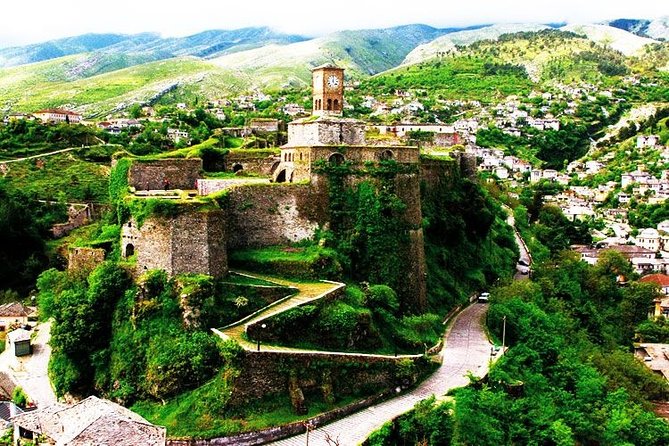
The Gjirokaster portion also includes the bazaar area and time connected with the castle. The castle rises above the town on a high hillside, with a long stone form that gives it a powerful presence. The castle area is allotted around two hours including the walk there and back, while the bazaar stop itself is listed at about 30 minutes.
The timing deserves attention. Gjirokaster is steep and paved with stone, so comfortable shoes matter. The schedule allows you to see the main sights, but you may want more time for browsing, photographs, or a relaxed café stop. If old houses and castle towns are your main reason for visiting Albania, this is the day you may wish were longer.
After lunch, the route continues to Butrint National Park. Butrint began as an ancient Greek city, later became a Roman colony and a bishopric, and was eventually abandoned after a major earthquake caused flooding. The site combines ruins with a setting of water and greenery, creating a different mood from the high stone towns of the interior.
You will see the main archaeological area, with remains connected to the Greek, Roman, and later periods. Admission is included. The listed visit is about an hour, which is enough for a guided introduction but not a leisurely archaeological study. If you enjoy ancient sites, pay close attention to the guide’s explanation because the significance of Butrint is spread across many periods rather than concentrated in one perfect monument.
The evening brings hotel check-in and free time in Saranda. Saranda is the unofficial capital of the Albanian Riviera, with a seaside promenade, beaches, nightlife, and a strong summer crowd from Tirana. This is your chance to slow down after a full sightseeing day.
Day three: Qeparo, Porto Palermo, and the Ionian road
Day three is the coastal highlight. Qeparo Beach receives about three hours, giving you the longest single pause of the trip. Unlike many rocky beaches farther south, Qeparo has fine sand and shallow water for the first few meters. That makes it a practical choice if you want to swim without immediately stepping into deep water.
There is also an old pier built across large rocks. The beach is described as a family favorite, but you do not need to be traveling with children to appreciate the gentler entry into the sea. Three hours is enough for a proper rest, though facilities and beach conditions can vary by season. Bring what you need for sun and swimming since the tour information does not specify beach equipment or chair rentals.
The road from Himara toward Qeparo is only about 13 kilometers, yet the coastal views are a major part of the experience. This is a good example of why the vehicle matters. You can watch the Ionian coast pass by without worrying about navigation or parking on your own.
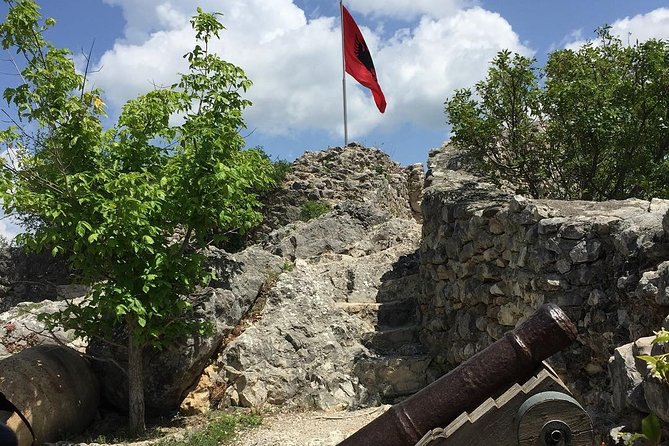
Porto Palermo Castle follows, near Himara in a picturesque bay. Also called the Castle of Ali Pasha, the fortress dates from the 19th century. Inside, it feels dark and severe, while the battlements open to excellent sea views.
The stop is allotted about two hours and admission is included. That is generous compared with several other entries on this trip, so you should have time to walk around rather than simply photograph the exterior. The fortress is not polished into a neat museum experience. Its appeal comes from the stark rooms, defensive walls, and position above the water.
A short stop at Llogara Pass provides photographs from the Ceraunian Mountains. The pass connects the Dukat Valley in the north with Himara in the south, and the road is one of the memorable transitions of the tour. The stop is brief, so treat it as a viewpoint rather than a mountain walk.
The day ends with a short visit to Vlore’s historic center. The Independence Monument sits in Flag’s Plaza near the building where Albania’s first government worked in 1913. The scheduled stop is only about 10 minutes for this central landmark, so you will receive context and a photograph rather than a long city tour.
This coastal day is scenic and varied, but it is not a dedicated beach vacation. Qeparo supplies the main rest period. Porto Palermo, Llogara Pass, and Vlore keep the day moving.
More trips out of Tirana:
- Hike Gamti Mountain with Bovilla lake view & canyon- From Tirana
★ 5.0 · 1,280 reviews - Berat city UNESCO tour, the Castle & Belshi lake- From Tirana
★ 5.0 · 804 reviews - Walking Tour of Tirana
★ 5.0 · 646 reviews - Kruja castle, the old Bazaar & Sarisalltik- Departure from Tirana
★ 5.0 · 592 reviews
Day four: Roman Durres and the city walls
The final day turns to Durres, one of Albania’s major historic cities. Its Roman amphitheater is the main attraction, and about an hour is set aside for the visit. The structure is regarded as one of the great ancient amphitheaters, though it was only uncovered in 1966.
Its discovery has an entertaining local story. Archaeologist Vangjel Toçi noticed a fig tree that had fallen a few meters below ground level. That clue led to excavation and the recovery of the long-buried amphitheater. The site helps you picture Durres as an important ancient center, not merely a modern port and beach city.
The Venetian Tower and city walls provide another hour of sightseeing. The walls visible today include major Byzantine work associated with Emperor Anastasius I in the fourth century, with later reinforcement under Justinian. Their original scale helped protect the city from attack.
Durres is a fitting final stop because it brings together several layers of Albanian history in a compact urban setting. You see Roman entertainment architecture, Byzantine defenses, and the later Venetian influence suggested by the tower. As with the rest of the tour, the time is enough for a focused introduction, not a complete exploration of the city.
The value of $806.76 per person
At $806.76 per person, this is not a budget bus trip. The price makes more sense when you consider what is bundled: four days of transport in an air-conditioned vehicle, accommodation, some meals, guided sightseeing, and visits that include several admission fees.
The group limit of eight is important here. A larger coach tour could lower the price, but it would also make airport pickup, old-town streets, and short photo stops less personal. The small format should help if you want to ask about food, history, or practical details along the way.
The value also depends on your alternative. If you would otherwise book several hotels, arrange intercity transport, find a way to Butrint and Porto Palermo, and coordinate a one-way route through southern Albania, the package saves planning time. You are paying for convenience as much as for the sights.
Meals are only partly included, so budget for additional lunches, dinners, drinks, and snacks. Genci has provided restaurant suggestions for meals outside the tour price, which is useful in a country where local recommendations can save both time and guesswork.
The tour is often booked about 39 days ahead, though one booking was arranged only the week before an October trip. I would still reserve earlier if your dates are fixed, particularly in the summer.
Pace, transport, and practical details
The 8:00 a.m. start helps the group cover long distances, but early mornings and full sightseeing days are part of the bargain. You will change locations often, and some stops last only 10 to 30 minutes. Pack light, keep water within reach, and wear shoes that handle uneven stone streets.
Pickup is usually from Tirana Airport or the port. The guide waits with a sign showing the company name, and other pickup locations can be arranged if requested in advance. Confirmation is provided at booking, and the activity is offered in English.
The vehicle is air-conditioned, a valuable feature on southern Albania’s warmer coastal roads. Public transportation is nearby at points, but this experience is built around private touring rather than independent local buses.
Most people can participate, but the old areas of Berat and Gjirokaster include slopes and stone paving. The tour information does not provide a detailed accessibility assessment, so ask before booking if stairs, steep streets, or uneven surfaces are a concern.
Cancellation is flexible up to three full days before the start time for a full refund. Changes or cancellations inside that period are not accepted and are not refunded.
Who should book this tour?
I would choose this trip if you want a broad first taste of Albania and prefer someone else to handle the route. It suits you particularly well if your priorities include:
- UNESCO sites and old towns
- Ancient Greek and Roman archaeology
- Coastal views with some beach time
- Small-group touring
- Included hotels and selected meals
- A guide who can explain local history and recommend places to eat
I would think twice if you want to settle into one seaside town, spend long afternoons swimming, or explore every museum at a relaxed pace. The program is active, and the southern coast is only one part of it.
Should you book the UNESCO towns and Riviera route?
Book it if you have four days and want Albania’s greatest variety in one organized trip. The combination of Gjirokaster, Butrint, Qeparo, Porto Palermo, and Durres gives you far more than a simple city break, while the eight-person limit keeps the experience from feeling like a mass tour.
The strongest reason to choose it is the balance between major sights and less obvious stops such as Belsh. The main caution is time. You will see a great deal, but you will not linger everywhere.
For the best fit, reserve this tour when you want efficient coverage, included logistics, and cultural variety. If your ideal Albanian holiday is slow, beach-centered, and self-directed, spend those four days in fewer places instead.
FAQ
Where does the tour start?
The tour begins at 8:00 a.m. Pickup is usually available from Tirana Airport or the port, with other locations possible if arranged in advance.
How many people can join the group?
The maximum group size is eight people.
Is transportation provided?
Yes. The tour uses an air-conditioned vehicle for the route.
Is accommodation included?
Yes, accommodation is included for the four-day experience.
Are meals included?
Some meals are included. Meals outside the package price are not specified as included, and the guide can recommend places to eat.
Which UNESCO-related places are included?
The route includes Gjirokaster and Butrint, along with other historic places such as Berat and Durres.
Is admission included at the sights?
Admission is included at Skenduli House, Butrint National Park, Porto Palermo Castle, and the Durres Amphitheatre. Several other stops are listed as free, while the National Historical Museum in Tirana is optional.
Just added in Tirana
- Wine Tasting day in Berat (Visit to the Berat Castle & Lunch included)★ 4.5 · 6 reviews
- From Tirana Wine Tasting & Food tour in Berat★ 5.0 · 5 reviews
- Visit Albania and Kosovo★ 5.0 · 2 reviews
- Bovilla and Kruja: Where History Meets Nature★ 5.0 · 2 reviews
- Visit Albania and Montenegro★ 5.0 · 1 review
- Virtual Reality Games and Experiences – Perfect place to drink and have fun!★ 5.0 · 2 reviews
- UNESCO heritage in Albania – 4 days★ 5.0 · 3 reviews
- Exclusive Qafshtama National Park Hiking Tour With Private Transfer★ 5.0 · 1 review
Albanian Riviera Tours, compared.
Albanian Riviera in 3 Days;Semi–Private Tour with Tour Leader&Car
Read our review →
Private Tour from Tirana, Gjirokastër , Saranda and South Riviera
Read our review →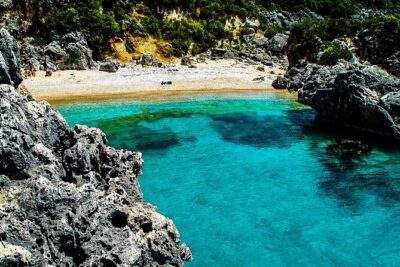
2 Day Tour of the Riviera, Gjirokastra UNESCO city and Blue Eye,
Read our review →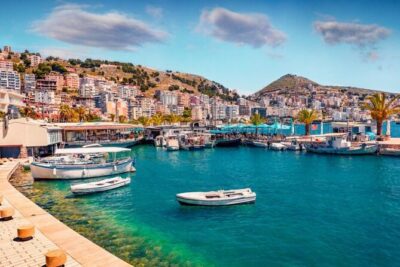
Small Group Tour of Albanian Riviera; Saranda, Ksamil & Dhermi
Read our review →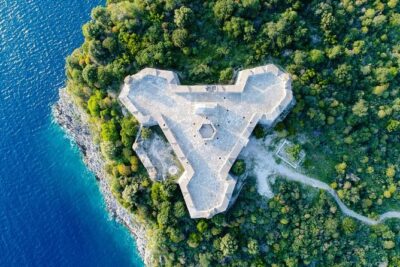
The Albanian Riviera, Porto Palermo, Qeparo Village, And A Big Ol’ Kalaja.
Read our review →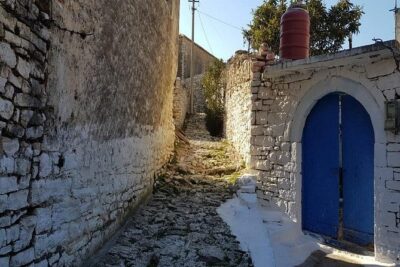
Browse the lists this tour appears in