
REVIEW · BERAT TOURS
Berat, Durres, Elbasan in one Day – Religious Harmony in Albania
Three Albanian cities, one long day. This private tour links Durres, Berat, and Elbasan through ancient ruins, medieval fortifications, churches, mosques, and stories of religious coexistence. I like the way it connects famous sights with a wider question: how did Catholic, Orthodox, Protestant, Muslim, Bektashi, and Jewish communities live alongside one another over the centuries?
I also like the private transport for one to four people, which gives your group more room to ask questions and adjust the pace. The guide, Tauland, is described as informative, flexible, and effective, and he even made an effort to speak Italian for one guest. The main drawback is clear: this is an ambitious eight-hour route, so visits are brief and the day includes plenty of driving.
The price is $103.14 per person. For a solo visitor or a couple, that is not a bargain-basement outing, especially since meals, drinks, entrance fees, and taxes are extra. For a small group of four, though, private transport and a certified English-speaking national guide make the cost easier to justify. You see three important cities without having to arrange several separate transfers.
In This Review
- Key points to know before booking
- Why this one-day route works
- Durres Castle and the Venetian Tower
- The Roman Amphitheater: Durres at full scale
- Berat Castle and its living layers
- Onufri Museum and the language of icons
- The Solomon Museum and Berat’s Jewish past
- The King Mosque and Islamic Albania
- Elbasan and the Via Egnatia
- The guide and the private vehicle
- Is $103.14 per person fair?
- Who should book this tour?
- Should you book Berat, Durres, and Elbasan in one day?
- FAQ
- Where does the tour start?
- How long does the tour last?
- Is this a private tour?
- Is a guide included?
- Are entrance fees and meals included?
- Can I cancel for a full refund?
Key points to know before booking
- Durres brings ancient Albania to life: You see the Venetian Tower and the Roman amphitheater, with the seaside city providing a striking opening to the day.
- Berat is the main event: Its castle, hillside setting, religious buildings, and UNESCO-listed character give the tour its strongest visual and cultural appeal.
- The Onufri Museum adds real depth: Sixteenth- to twentieth-century icons and church objects show how Orthodox worship shaped the region.
- The Solomon Museum tells an important Jewish story: Its focus on Jewish life and coexistence in Berat gives the religious-harmony theme a human scale.
- Elbasan connects faith with the Via Egnatia: The city’s early Christian churches and basilicas help explain how Christianity spread through the Balkans.
- The schedule is tight: Most stops last 15 to 30 minutes, so this suits you if you prefer a broad introduction over a slow, detailed visit.
Why this one-day route works
Albania rewards a tour that moves beyond Tirana. In a single day, you reach the Adriatic coast, a historic hilltop town, and a city linked to the ancient Roman road system. That variety gives you a useful first look at the country’s past and present.
The religious theme helps hold the route together. You are not simply ticking off castles and ruins. You are hearing how Illyrian beliefs, Christianity, Islam, Catholic traditions, Orthodox practice, Protestant communities, Bektashi customs, and Jewish life fit into Albania’s story.
The subject is especially meaningful because the tour includes Albania’s conduct during the Second World War. Albanians did not surrender Jews to Nazi authorities and instead saved and sheltered them. The Solomon Museum in Berat gives that point a physical place, rather than leaving it as a passing fact in a guide’s commentary.
This is also a private activity, so only your group takes part. That matters on a long day. You can ask Tauland to explain a church icon, pause over a view, or clarify a point about local traditions without trying to catch up with a large bus group. Still, private does not mean leisurely here. The route covers a lot of ground in about eight hours.
More of Berat:
- Berat city UNESCO tour, the Castle & Belshi lake- From Tirana
★ 5.0 · 804 reviews - Berat-Durres and Belsh Lake, day tour from Tirana
★ 4.5 · 274 reviews - Berat Tour Osumi Canyons Exploration Lunch Transfer
★ 4.5 · 212 reviews
Durres Castle and the Venetian Tower
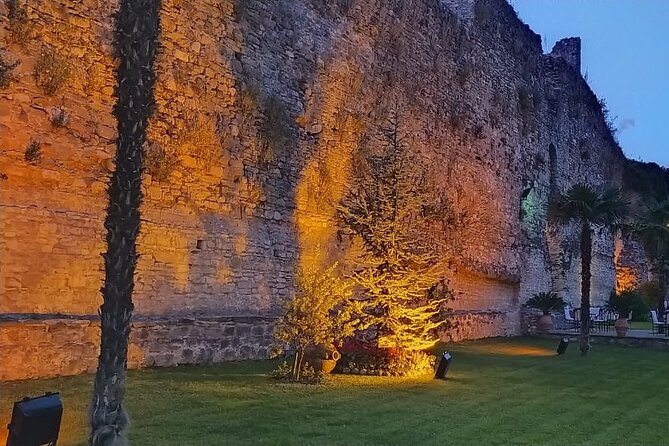
The first stop is the Venetian Tower, part of the fortified old city of Durres. The surrounding castle walls began in the late fifth century and were repaired and strengthened during the Middle Ages and later periods.
You receive about 15 minutes here, with no admission charge listed. That is enough for a quick look at the surviving fortifications and a short introduction to Durres as a defended port city. The stop works best as a scene setter, preparing you for the older remains that follow.
Do not expect a long castle visit. The time is limited, and the tour’s purpose is to connect the walls to the broader history of Durres rather than explore every corner. I would use this moment to ask about the city’s changing rulers and the relationship between its coastal position and its defenses.
The Roman Amphitheater: Durres at full scale
The Durres Amphitheatre is the strongest ancient sight on the route. Built around AD 100 under Emperor Hadrian, it once held as many as 20,000 spectators and was used for roughly three centuries. It was only rediscovered in the 1960s, a reminder that major archaeological remains can sit beneath an ordinary modern city for generations.
You have about 20 minutes here, and the entrance fee is not included. The short visit lets you grasp the size and purpose of the structure, but it is not enough for a slow archaeological study. If ancient Roman sites are a major reason you are visiting Albania, keep that in mind when deciding how much time you want at each stop.
The amphitheater also gives the day a useful starting point. Before you hear about Christian basilicas, Ottoman mosques, or Jewish protection during the war, you see the scale of the Roman world that shaped much of the Western Balkans.
Berat Castle and its living layers
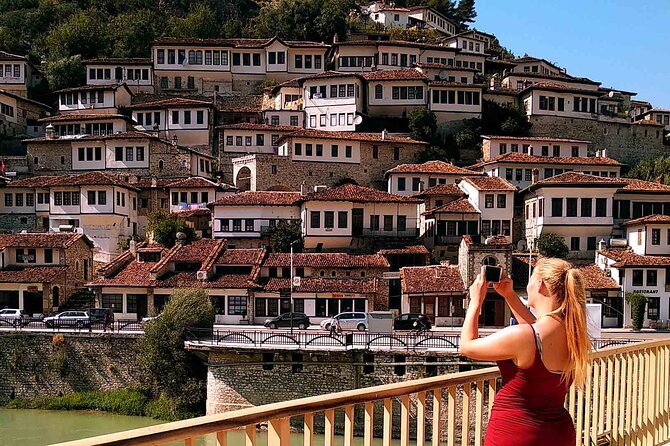
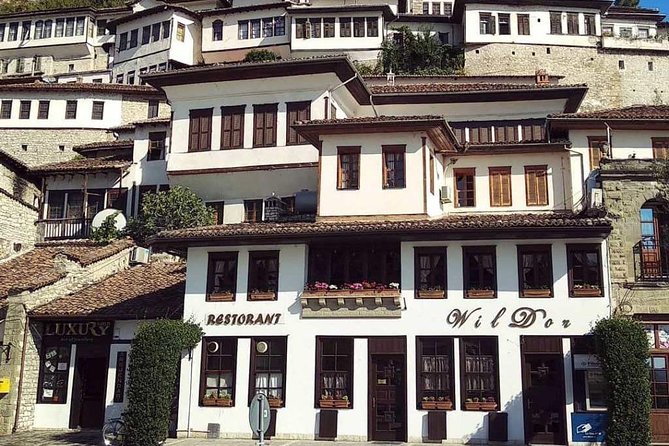
Berat is the heart of the tour. The castle is one of Albania’s largest inhabited fortifications and brings together Roman, Byzantine, Albanian, and Ottoman elements. That mixture is not just a list of architectural labels. It explains why Berat feels like a place built in chapters, with each period leaving something behind.
The castle visit lasts about 30 minutes, which is enough to see the setting and key features but not enough to wander at length. The hillside position gives you the kind of broad view that makes the drive worthwhile, and the surrounding scenery adds one of the tour’s most appealing visual moments.
The fact that people still live within the castle area matters. You are seeing a historic place with an ongoing community, not only a preserved monument. At the same time, uneven historic streets and the uphill setting may make the visit more demanding for some people. The tour states that most participants can take part, but it does not provide a detailed accessibility description, so ask the operator if mobility is a concern.
More of Durres:
- Durres: Off Road ATV Kallmi Tour
★ 4.5 · 51 reviews - Kruja & Durres; Semi – Private Day Tour from Tirana
★ 5.0 · 33 reviews - Kruja Castle ,Sari Salltik & Durrës fromTirana
★ 4.5 · 30 reviews - Private Day Tour of Berat and Durres from Tirana
★ 5.0 · 30 reviews
Onufri Museum and the language of icons
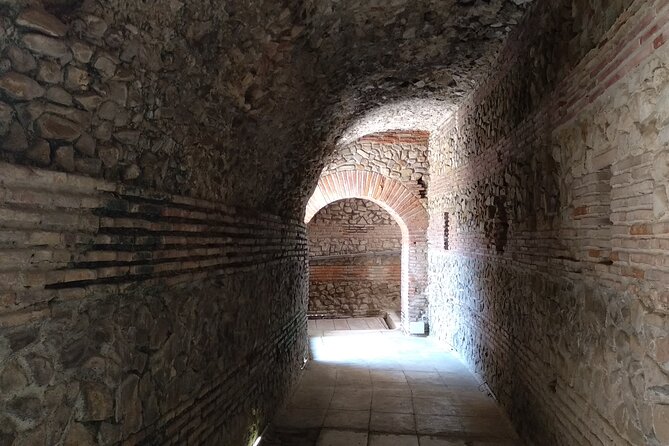
The National Iconographic Museum Onufri holds 200 artworks, icons, and liturgical objects from the sixteenth through twentieth centuries. These pieces came from churches and monasteries around the region.
You have 30 minutes here, making it one of the longer scheduled stops. That is sensible. Religious art can look unfamiliar if you have not studied Orthodox traditions, and a guide can help you read the figures, colors, and symbols instead of simply walking past them.
This museum gives the religious theme a concrete form. The story of Christianity in Albania begins much earlier, with churches appearing from the first century AD, but here you can see later centuries preserved through painted icons and church objects. The visit also balances the Ottoman-era sites later in the day, showing that Albania’s religious story cannot be reduced to a single faith.
If sacred art is not your usual interest, 30 minutes may feel long compared with the quick castle stop. I would still give the museum a fair chance. It is one of the places where the tour’s historical subject becomes easiest to understand.
The Solomon Museum and Berat’s Jewish past
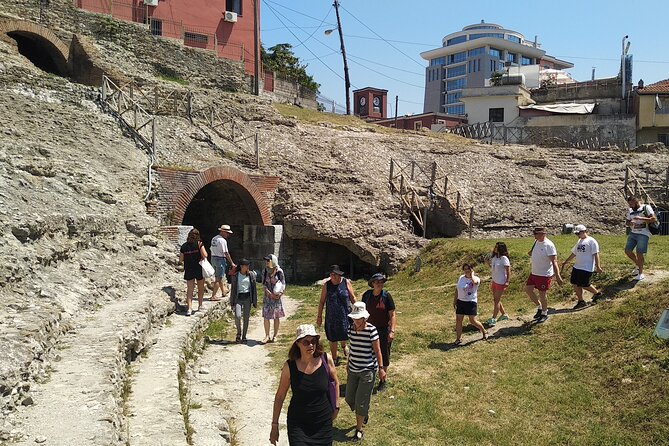
The Solomon Museum is devoted to Berat’s Jewish history and to coexistence among Jewish, Muslim, Orthodox, and Catholic inhabitants over the past 500 years. It is scheduled for 20 minutes, with admission extra.
This is a particularly valuable stop because it widens the conversation. Religious harmony is often discussed in broad, cheerful phrases, but a museum focused on Jewish life gives the subject names, places, and memory. The museum also connects directly to the account of Albanians sheltering Jews during the Second World War.
Do not expect a large museum visit in 20 minutes. Think of it as a focused introduction, one that may leave you wanting more time to study Berat’s Jewish community after the tour. Its importance comes from the subject matter, not from the length of the stop.
For me, this is where the day’s central idea becomes most distinctive. Many Albania tours cover castles and Ottoman buildings. Fewer make space for the country’s record of protecting Jewish families and for the long coexistence of several religious communities.
The King Mosque and Islamic Albania
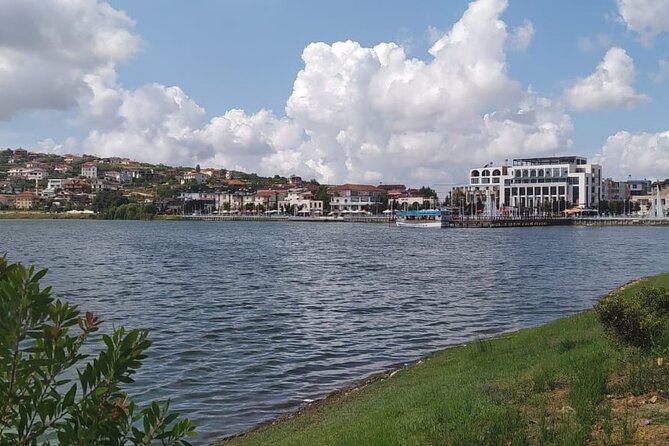
The King Mosque, also called the Sultan’s Mosque or Sultan Bayezid Mosque, is a protected cultural monument in Berat. You have about 20 minutes here, and the entrance fee is not included.
The mosque helps explain how Islam took root in Albania during the medieval period. The tour also addresses Muslim and Bektashi communities, placing the building within a larger religious and cultural setting rather than treating it as an isolated Ottoman monument.
As with the churches and museum, the value comes from comparison. You have already considered Orthodox traditions at Onufri and Jewish life at the Solomon Museum. At the King Mosque, you can see another part of Berat’s religious identity and ask Tauland how different communities shaped the city over time.
The itinerary does not specify the exact interior access or any dress guidance. Since this is a religious site, practical conditions can vary, so modest clothing is a sensible choice. Your guide can clarify the current visiting arrangements on the day.
Elbasan and the Via Egnatia
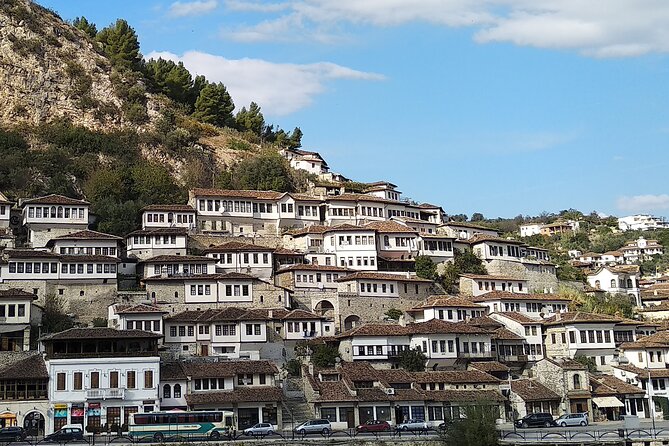
The final major stop is Elbasan, with about 30 minutes of sightseeing and no admission charge listed. The city took part in the spread of Christianity along the Via Egnatia and had a bishop, cathedral, and basilicas by the fifth century.
That makes Elbasan an important bridge between the ancient road network and the tour’s Christian history. You are not simply visiting a third city because it happens to lie between Berat and Tirana. Elbasan helps show how ideas, people, and religious practice moved across the Balkans.
Thirty minutes gives you an introduction rather than a full city tour. After a full day, that may be welcome. You can take in the main points, hear the historical explanation, and enjoy the transition back toward Tirana without another long museum visit.
The tradeoff is that Elbasan may feel less developed as a sightseeing stop than Berat. Its value depends heavily on the guide’s explanation. Tauland’s flexibility and clear communication are therefore especially useful here, since context makes the city more rewarding.
The guide and the private vehicle
The experience includes private transport for one to four people and a certified national tourist guide in English. This setup suits couples, families, or a small group of friends who want one vehicle and one guide rather than a large shared coach.
Tauland receives particular praise for being informative, flexible, and effective. One guest also noted that he made an effort to speak Italian, which may help if someone in your group is more comfortable with Italian than English. The available feedback is limited, but those comments point to the human side of the tour: a good guide matters greatly when the schedule moves quickly.
The starting time is 8:00 a.m. That early departure is necessary. Durres, Berat, and Elbasan are not next-door sights, and the tour promises all three in roughly eight hours. You should expect a full day with road time between visits, not eight hours spent walking among monuments.
The listed features include pickup and mobile ticketing, but the exact pickup arrangement is not spelled out in the details provided. Confirm your pickup point when you book. Confirmation is issued at booking, and the activity is private for your group only.
Is $103.14 per person fair?
At $103.14 per person, the tour needs to deliver more than transportation. Its value rests on four things: a private vehicle, a certified national guide, three cities, and a clear cultural theme.
For one person or two people, the price may feel high once you add museum and monument fees, lunch, drinks, and any other costs. The tour does not include meals, drinks, entrance fees, or taxes. You need to budget for those separately.
For four people, the calculation looks better. You are sharing the private vehicle and guide among your own group while avoiding the work of organizing a multi-city day independently. You also get direct explanations at places where signs alone may not explain the religious and political context.
I would book it for convenience and breadth, not for bargain admission. If you want to spend half a day in Berat alone, this is the wrong format. If you want a well-packed introduction to several important parts of central Albania, the price is easier to defend.
Who should book this tour?
I would recommend it to first-time visitors based in Tirana who want to see beyond the capital in a single day. It is also a good match for anyone interested in religious history, Jewish heritage, Roman archaeology, Ottoman architecture, and UNESCO-recognized Berat.
Families and small groups may appreciate the private format. You can keep the group together, ask questions freely, and avoid the social strain of a large coach. The tour may also suit visitors with limited time in Albania, since it offers a broad sample rather than requiring separate day trips.
I would hesitate if you dislike early starts, long road days, or quick visits. The 15-minute Durres castle stop and the 20-minute amphitheater visit leave little room for lingering. You should also be comfortable with the possibility of walking around historic fortifications and an uphill castle area.
Weather matters. The experience can be canceled for poor weather, in which case you are offered another date or a full refund. If the minimum number of participants is not met, the operator offers another date or experience, or a full refund. You can cancel for a full refund up to 24 hours before the start time, but changes or cancellations inside that window are not accepted.
Should you book Berat, Durres, and Elbasan in one day?
Book it if you want range, context, and private guidance more than a slow pace. The route gives you Roman Durres, layered Berat, and Christian Elbasan, while the museums and religious buildings support a thoughtful look at Albania’s long tradition of coexistence.
Skip it if Berat is your main goal and you want several relaxed hours there. In that case, a dedicated Berat day would give you more time inside the castle and museums.
For everyone else, this is a strong introduction to central Albania. The most memorable parts are likely to be Berat Castle, the Onufri Museum, and the Solomon Museum, while the amphitheater gives the day an impressive ancient anchor. Tauland’s reported flexibility is an added advantage, especially on a tightly timed route. Just budget for admissions and food, accept the early start, and treat the day as a broad cultural portrait rather than a slow museum crawl.
FAQ
Where does the tour start?
The tour starts in Tirana at 8:00 a.m. Pickup is offered, but the provided details do not specify the exact pickup locations.
How long does the tour last?
The experience lasts approximately eight hours.
Is this a private tour?
Yes. Private transportation is provided for groups of one to four people, and only your group participates in the activity.
Is a guide included?
Yes. The tour includes a certified national tourist guide in English. The guide named in the available information is Tauland.
Are entrance fees and meals included?
No. Meals, drinks, entrance fees, and taxes are not included in the tour price.
Can I cancel for a full refund?
Yes. You can cancel at least 24 hours before the experience start time for a full refund. Cancellations or changes made less than 24 hours before the start time are not accepted.
Just added in Tirana
- Wine Tasting day in Berat (Visit to the Berat Castle & Lunch included)★ 4.5 · 6 reviews
- From Tirana Wine Tasting & Food tour in Berat★ 5.0 · 5 reviews
- Visit Albania and Kosovo★ 5.0 · 2 reviews
- Bovilla and Kruja: Where History Meets Nature★ 5.0 · 2 reviews
- Visit Albania and Montenegro★ 5.0 · 1 review
- Virtual Reality Games and Experiences – Perfect place to drink and have fun!★ 5.0 · 2 reviews
- Exclusive Qafshtama National Park Hiking Tour With Private Transfer★ 5.0 · 1 review
- UNESCO heritage in Albania – 4 days★ 5.0 · 3 reviews
Berat Tours, compared.
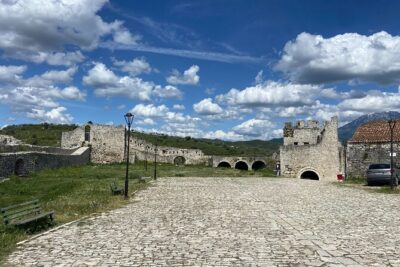
Berat city UNESCO tour, the Castle & Belshi lake- From Tirana
Read our review →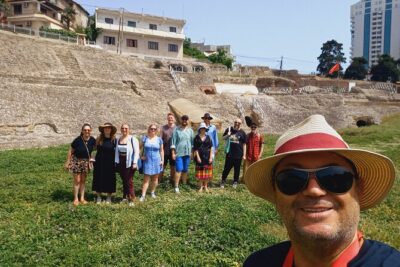
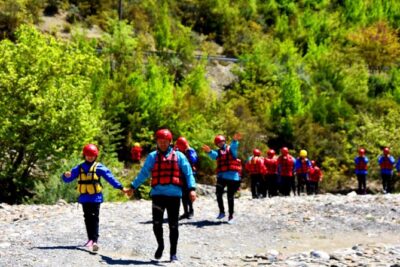
Berat Tour Osumi Canyons Exploration Lunch Transfer
Read our review →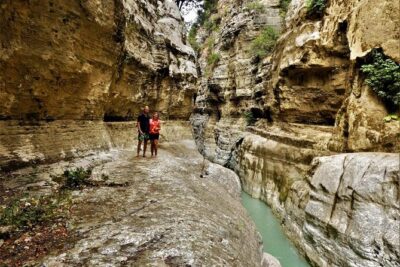
Osumi Canyons and Bogova Waterfall from Berat – Tour by 1001 Albanian Adventures
Read our review →
Berat Cooking Class- Traditional Albanian Cooking Class /By Vato
Read our review →
Browse the lists this tour appears in