REVIEW · TIRANA TOURS
Communist Traces in Tirana
Tirana’s past is written underground. This half-day tour links Bunk’Art, museums, and former power centers with a walking route through central Tirana, giving you both the official story and the personal side of Albania’s communist years. I like the mix of indoor exhibits and city streets, and I like that the guide adds lived experience rather than stopping at dates and names. The main drawback is that the route covers a lot in five to six hours, and the Bunk’Art details need confirming before you book.
The tour also suits anyone who wants a clear introduction to Albania before exploring alone. You’ll see the old center, the former leaders’ district, and Hoxha’s house, then finish with coffee and raki in a bar decorated in the style of the communist period. Expect walking, stairs, and emotionally heavy material, especially in the bunkers.
In This Review
- Key points to know before booking
- Why Tirana needs more than a quick city walk
- Skanderbeg Square and the symbols of old Tirana
- The National Historical Museum from prehistory to communism
- Bunk’Art and the physical reality of fear
- Rruga Murat Toptani and the city’s changing center
- Bulevardi Dëshmorët e Kombit and the public face of power
- Blloku, from forbidden quarter to modern nightlife
- Coffee, raki, and a bar designed like the communist era
- What the $116.31 price includes
- Timing, comfort, and the people this tour suits
- Should you book Communist Traces in Tirana?
- FAQ
- Where does the tour begin?
- What time does the tour start?
- How long does the experience last?
- Where does the tour end?
- What is included in the price?
- Is the raki included?
- Which Bunk’Art museum will I visit?
- How large is the group?
- Can I cancel for a full refund?
Key points to know before booking
- Bunkers reveal the regime from the inside: Underground rooms, tunnels, and displays show how Albania prepared for threats that never came.
- The route moves from old Tirana to communist power: Skanderbeg Square, the main boulevard, the Pyramid, government buildings, and Blloku all fit into one story.
- Blloku was once closed to ordinary people: Hoxha’s former neighborhood now has a very different role in city life.
- The guide can add personal context: Eni is specifically praised for explaining Albania’s people, culture, and communist era with memorable detail.
- The final raki stop gives the tour a human ending: Coffee at Bar Komiteti is included, while the traditional liquor helps turn history into conversation.
- Check the Bunk’Art number: The tour description refers to Bunk’Art 1, while one itinerary section names Bunk’Art 2.
Why Tirana needs more than a quick city walk
Tirana can look young, colorful, and fast-changing at first glance. Yet its streets are shaped by decades of strict communist rule under Enver Hoxha, a period marked by isolation, surveillance, political imprisonment, and fear. A normal city tour may show you the Pyramid or Blloku without explaining why those places matter.
This experience puts those sights into a political and social story. You begin with the symbols of old Tirana, move through national history, enter a bunker museum, and then walk along the route of state power. By the time you reach Blloku, the city’s modern cafés and shops carry a different meaning.
I like that structure. You are not simply collecting monuments. You are moving from public symbols to private power, then ending in a setting designed to recall everyday life under the former system.
The tour begins at 9:00 am at Sheshi Skënderbej 1, in Skanderbeg Square. It lasts about five to six hours and ends back at the meeting point. The group size is limited to 15 people, which should make it easier to ask questions than on a large coach excursion.
More trips out of Tirana:
- Hike Gamti Mountain with Bovilla lake view & canyon- From Tirana
★ 5.0 · 1,280 reviews - Berat city UNESCO tour, the Castle & Belshi lake- From Tirana
★ 5.0 · 804 reviews - Walking Tour of Tirana
★ 5.0 · 646 reviews
Skanderbeg Square and the symbols of old Tirana
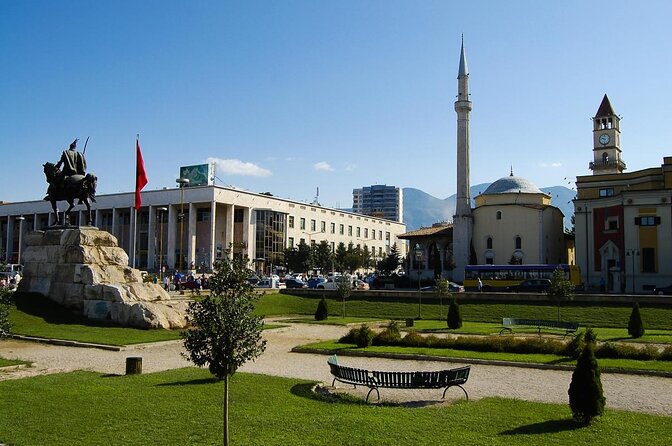
The first stop takes about 30 minutes and is free to enter. Your guide introduces the center around Skanderbeg Square, including the Et’hem Bey Mosque and the Clock Tower.
The Et’hem Bey Mosque is presented as the oldest building in Tirana and one of the city’s key symbols. Its decorations give you an early reminder that Tirana’s story did not begin with communism. Nearby, the Clock Tower once held the title of the city’s tallest building, a small detail that helps you picture the scale of old Tirana before the capital expanded.
From here, the guide points out the National Bank of Albania, the National Museum, Hotel Tirana, the Palace of Culture, and Tirana Municipality. These buildings help establish the civic center before the tour turns toward the twentieth century.
This opening is useful because it gives you a visual map. You learn where religion, government, culture, finance, and public ceremony meet. You also get a quick look at how different periods sit beside one another in modern Tirana.
The short timing is both a strength and a limit. You get a brisk orientation, but the mosque and Clock Tower are not treated as long interior visits. If you want slow architectural study, return to the square later.
The National Historical Museum from prehistory to communism
The museum portion lasts about one hour and is included in the price. The supplied details identify this stop as the National Historical Museum, although one itinerary label calls it the Bank of Albania Museum. Confirm the exact museum name and current access arrangements before setting out.
Inside, the route covers Albania from prehistoric settlement through the Hellenistic and Roman periods, then continues through independence, the kingdom, and the communist era. That broad range matters. You see that communist Albania was one chapter in a much longer national story, not the beginning or end of it.
For a first visit, this museum can give you useful names and dates before the bunker visit. The guide’s explanations should help you connect the displays to the streets you will see later. The communist section has particular value because it prepares you for the harsher material at Bunk’Art.
Do not expect one hour to cover every room with equal attention. The museum has a wide historical scope, and the tour has another major museum ahead. I would treat this stop as a guided framework rather than a complete museum visit.
One account of the tour gives special praise to Eni for explaining not only political history but also Albania’s people and culture. That is important here. A museum can show objects, but a good guide explains how public events affected ordinary lives.
Bunk’Art and the physical reality of fear
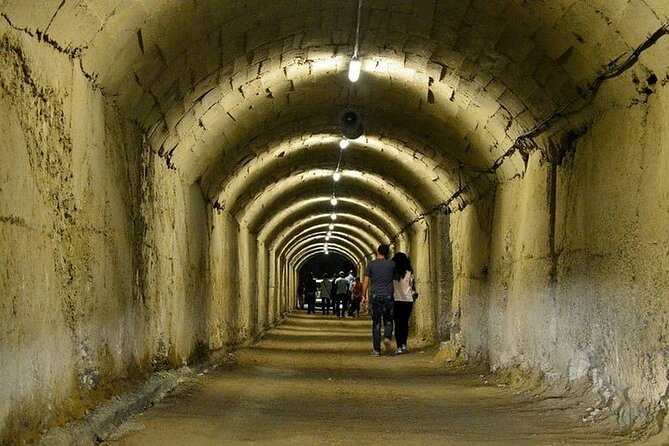
The bunker museum is the emotional center of the day. The description presents Bunk’Art 1 as the main museum for understanding the physical conditions of Albania’s communist period. You go underground through tunnels and three levels, including rooms associated with senior officials.
Another part of the tour information names Bunk’Art 2 instead. These are different museums, so check which one your booking includes. The included entrance ticket is described as being for Bunk’Art 1, while the itinerary lists Bunk’Art 2. This is the one detail I would clarify before paying.
Either way, the bunker setting gives the subject a weight that a regular gallery cannot. You are not only looking at photographs and documents. You are moving through a built environment designed for fear, secrecy, and protection from attack.
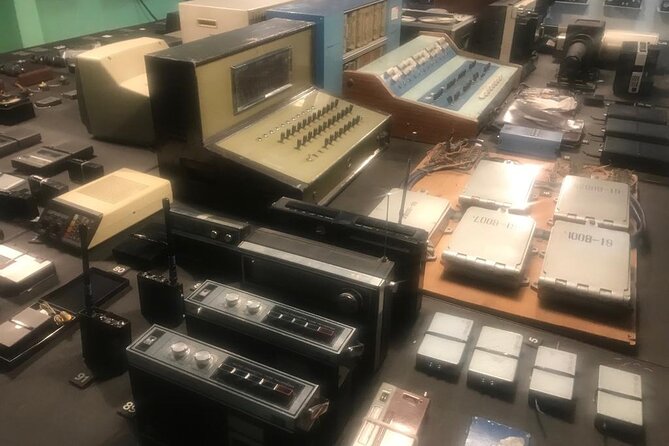
The reference to personal rooms used by high-ranking officials is especially revealing. It lets you compare the protected world of the leadership with the restrictions placed on the wider population. The underground rooms become evidence of how power operated, not just a backdrop for exhibits.
The visit is scheduled for about one hour. Expect dark spaces, tunnels, and a serious tone. This is not a light historical attraction, and the subject includes atrocities committed by the regime. If you prefer a gentle introduction to history, you may find the bunker visit intense.
The guide’s role matters most here. Dates alone cannot explain the atmosphere of political repression. Personal stories and details about life under the system can help you understand why the regime remains such a painful subject in Albania.
Something completely different:
- Kruja castle, the old Bazaar & Sarisalltik- Departure from Tirana
★ 5.0 · 592 reviews - Albanian Night Show: Traditional Music, Dance & Dinner in Tirana
★ 5.0 · 431 reviews - From Tirana- Hiking Tour to Bovilla Lake & Gamti Mountain
★ 5.0 · 358 reviews - Shala river & Komani lake -Day trip departure from Tirana/Shkodra
★ 5.0 · 309 reviews
Rruga Murat Toptani and the city’s changing center
After the bunker, the route continues along Rruga Murat Toptani for about 30 minutes. This section passes the Bunk’Art site, the Castle of Toptani, and the former residence associated with the prince. You also pass the House of Parliament and the large new mosque, described as still under construction in the tour information.
This is a connecting walk, but it adds useful contrast. The city is not frozen in its communist past. Older buildings, state institutions, religious sites, and new construction all occupy the same central zone.
You may appreciate this pause after the underground museum. It gives you time to process what you have seen while the guide points out how Tirana’s center has changed. The free outdoor stops also keep the tour from becoming a series of paid admissions.
Walking is central to the experience. The tour includes private transportation, but much of the city portion is on foot. Wear practical shoes and expect a full day of movement rather than a seated sightseeing trip.
Bulevardi Dëshmorët e Kombit and the public face of power
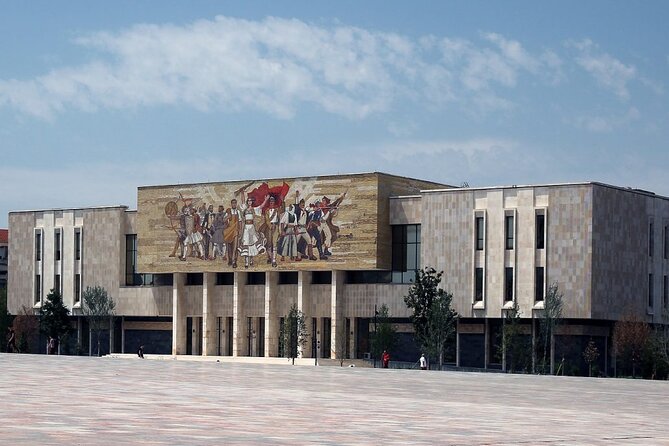
The walk along Bulevardi Dëshmorët e Kombit lasts about 45 minutes. This is one of the tour’s strongest city sections because the boulevard brings together many of the institutions that shaped public life.
You pass the Pyramid, the former dictator’s museum after his death, the Prime Ministry, the Presidency, Parliament offices, the University, the Academy of Arts, and the National Stadium. The guide explains the history of these buildings and how they fit into the communist period and its aftermath.
The Pyramid is particularly useful as a symbol. Its original connection to Hoxha’s legacy has changed over time, and its place on the boulevard makes it hard to ignore. Seeing it alongside government buildings gives you a direct lesson in how architecture can express political power.
The stop is free, but the value lies in the explanation. Without context, the boulevard can feel like a pleasant central avenue with a mixture of official buildings. With a guide, it becomes a route through Albania’s public institutions.
The timing is compact, so pay attention to the outdoor commentary and save questions for places that interest you most. You will not get an extended visit inside each government building. The benefit is seeing many important sites in one continuous walk.
Blloku, from forbidden quarter to modern nightlife
The final main walking stop is Blloku, with about 45 minutes allocated. During the communist period, this was the residential district of the political leadership. Ordinary citizens were not allowed to enter freely.
The tour passes by Enver Hoxha’s former house, where he lived while ruling communist Albania. That single address gives the neighborhood a clear focus. You are looking at the private setting of a leader whose policies affected the entire country.
Blloku’s present-day identity makes the contrast even sharper. It is now described as one of the most lively and impressive areas of Tirana, a place associated with restaurants, cafés, and nightlife. The tour helps you understand that this was once a closed zone, not simply another attractive city district.
I like this stop because it puts political privilege into physical space. The difference between a restricted neighborhood for leaders and its current public energy says a great deal without needing a long lecture.
Keep in mind that the visit is primarily an exterior walk. You pass Hoxha’s house, but the tour information does not promise entry. If seeing the inside matters to you, ask before booking.
Coffee, raki, and a bar designed like the communist era
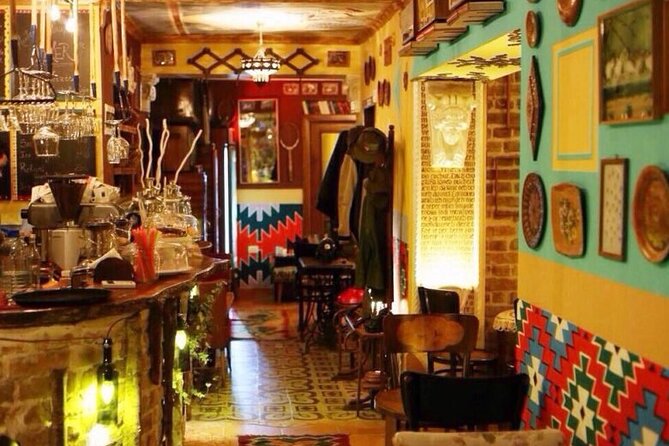
The day ends at Bar Komiteti, where coffee is included. The bar is furnished in a style meant to recall the communist period, creating a more informal setting for the final conversation.
Raki, Albania’s strong traditional liquor, is part of the experience described in the tour overview. The inclusion of coffee is confirmed, while the details of any raki tasting should be clarified if that is a major reason for booking.
This ending works because it shifts the mood. After museums, tunnels, official buildings, and stories of repression, you can sit down and talk about what the period meant for Albanian families and society. It also gives you a chance to ask the guide about anything that felt unclear or especially striking.
Do not think of the bar as a full meal stop. Food and other purchases are not listed as included. Plan for the included coffee, then budget separately for anything else you order.
What the $116.31 price includes
At $116.31 per person, this is not a bargain-priced walking tour. The value depends on how much help you want connecting several places that would otherwise require separate planning.
The price includes a certified guide, private transportation, entrance tickets to Bunk’Art 1 and the National Historical Museum, and coffee at Bar Komiteti. It also brings together central Tirana, the bunker museum, the main boulevard, Blloku, and the former leader’s home in one morning and afternoon.
That package can make sense if you want a focused explanation of Albania’s communist past rather than a general city overview. Museum tickets and transport are already handled, and the small maximum group of 15 should allow for conversation.
The value is weaker if you mainly want to wander at your own pace or spend long periods inside museums. The schedule moves quickly, and several locations are outdoor pass-bys rather than extended visits.
Group discounts may reduce the per-person cost for some bookings. Guide gratuity and anything not specifically included are extra. Private transportation is included, but the central portions still involve a substantial amount of walking.
Timing, comfort, and the people this tour suits
You meet at 9:00 am and return to the same meeting point after roughly five to six hours. The tour requires good weather, and a minimum number of participants is required for it to operate.
Most people can take part, and service animals are allowed. The activity is not recommended for people with physical disabilities, so consider the tunnels, stairs, museum movement, and long city walk before booking.
I would choose this tour if you:
- Want Albania’s communist period explained in plain language
- Prefer a guide to connect museums with real city locations
- Have only one day in Tirana and want a structured introduction
- Are interested in political history, architecture, and personal stories
- Enjoy small-group tours with time for questions
- Want to see Blloku and Hoxha’s former home with context
I would look elsewhere if you want a relaxed food tour, a broad modern Tirana introduction, or a museum visit with no difficult subject matter. The emphasis here is political history and the human cost of the regime.
The single best practical tip is to confirm the Bunk’Art museum before departure. The description includes both Bunk’Art 1 and Bunk’Art 2 in different places. That detail affects what you see and should not be left vague.
Free cancellation is available up to 24 hours before the 9:00 am start time for a full refund. Changes or cancellations within 24 hours are not accepted, and poor weather or an insufficient minimum group may lead to a new date or a refund.
Should you book Communist Traces in Tirana?
Book it if you want Tirana’s communist past to be the main subject of your day. The combination of an underground bunker, the National Historical Museum, the main boulevard, Blloku, Hoxha’s former house, and a final drink creates a clear story with strong contrasts.
The tour’s greatest strength is the guide-led explanation, especially if Eni is leading. The most praised quality is the ability to connect political events with Albania’s culture and everyday life, making the day feel personal rather than merely academic.
Before booking, confirm the Bunk’Art location, prepare for walking, and accept that the subject can be heavy. If those points suit you, the $116.31 price buys a well-organized introduction to a part of Albanian history that is easy to miss when you only look at Tirana’s modern surface.
FAQ
Where does the tour begin?
It begins at Sheshi Skënderbej 1 in Tirana, at Skanderbeg Square.
What time does the tour start?
The start time is 9:00 am.
How long does the experience last?
The tour lasts approximately five to six hours.
Where does the tour end?
It ends back at the original meeting point.
What is included in the price?
The price includes private transportation, a certified guide, entrance tickets to Bunk’Art 1, the National Historical Museum, and coffee at Bar Komiteti.
Is the raki included?
Coffee at Bar Komiteti is included. The tour description mentions trying raki, but it does not clearly state that the raki itself is included, so confirm this before booking.
Which Bunk’Art museum will I visit?
The tour information refers to Bunk’Art 1 in the overview and inclusions, but one itinerary section names Bunk’Art 2. Confirm the exact museum with Albania My Way before the tour.
How large is the group?
The experience has a maximum of 15 participants.
Can I cancel for a full refund?
Yes. You can cancel at least 24 hours before the local start time for a full refund. Cancellations or changes made less than 24 hours in advance are not accepted.
Just added in Tirana
- Wine Tasting day in Berat (Visit to the Berat Castle & Lunch included)★ 4.5 · 6 reviews
- From Tirana Wine Tasting & Food tour in Berat★ 5.0 · 5 reviews
- Visit Albania and Kosovo★ 5.0 · 2 reviews
- Bovilla and Kruja: Where History Meets Nature★ 5.0 · 2 reviews
- Visit Albania and Montenegro★ 5.0 · 1 review
- Virtual Reality Games and Experiences – Perfect place to drink and have fun!★ 5.0 · 2 reviews
- UNESCO heritage in Albania – 4 days★ 5.0 · 3 reviews
- Exclusive Qafshtama National Park Hiking Tour With Private Transfer★ 5.0 · 1 review
Tirana Tours, compared.
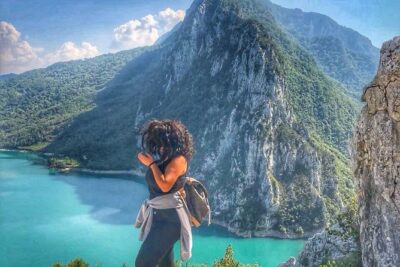
Hike Gamti Mountain with Bovilla lake view & canyon- From Tirana
Read our review →
Berat city UNESCO tour, the Castle & Belshi lake- From Tirana
Read our review →
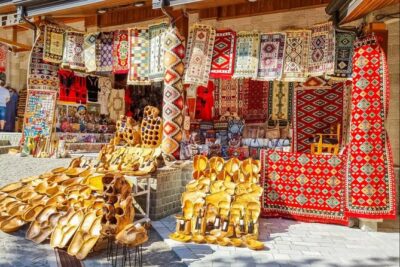
Kruja castle, the old Bazaar & Sarisalltik- Departure from Tirana
Read our review →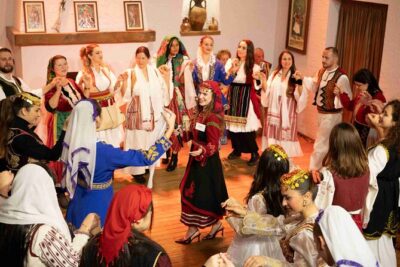
Albanian Night Show: Traditional Music, Dance & Dinner in Tirana
Read our review →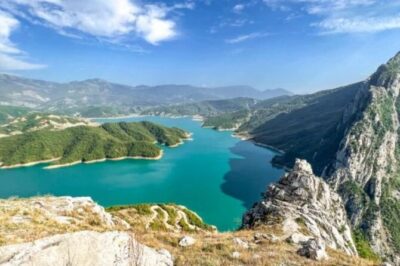
Shala river & Komani lake -Day trip departure from Tirana/Shkodra
Read our review →