REVIEW · TOURS
Small Group Tour; Pearls of Albania in 8 Days (3 UNESCO Sites)
Albania packs a lot into one road trip. I like the small maximum of 10 people and the fact that private transport, a tour leader, breakfasts, hotels, and entry tickets are handled together. You also reach three UNESCO sites, mountain villages, old Ottoman towns, and the coast without having to plan every transfer yourself.
I especially like the mix of places: Berat and Gjirokaster for history, then Ksamil, Himare, Dhermi, and Vlore for sea views. The main consideration is pace. Eight days cover much of Albania, so some stops feel brief and several days involve substantial road time. The itinerary suits you best if you want a broad first look rather than a slow stay in one region.
In This Review
- Key points before you book
- What this eight-day Albania tour does well
- Day 1: Shkodra and Rozafa Castle
- Day 2: Theth National Park and the road over Qafa e Thores
- Day 3: Berat, the town of 1,001 windows
- Day 4: Gjirokaster, a stone city with authentic homes
- Day 5: The Blue Eye, Ksamil, and Butrint
- Day 6: Himare, Dhermi, and the Albanian Riviera
- Day 7: Vlore, the Flag’s Square, and Durres
- Day 8: Tirana and the story of communist Albania
- Accommodation, meals, and practical value
- Who should choose this tour?
- Final verdict: a strong first route through Albania
- FAQ
- How long is the Pearls of Albania tour?
- What is the price per person?
- Where does the tour start?
- What time does the tour start?
- How many people can join the group?
- Which UNESCO sites are included?
- What accommodation is included?
- Can I request a single room?
- Are meals included?
- Is travel insurance included?
Key points before you book
- Three UNESCO sites in one trip: Explore Berat, Gjirokaster, and Butrint, Albania’s most important cultural stops.
- A group capped at 10 people: A smaller vehicle and group can make hotel pickup, short walks, and local guiding easier.
- A striking north-to-south route: Go from Shkodra and the Albanian Alps to the Ionian coast and back to Tirana.
- Breakfast and entry tickets included: Seven breakfasts, accommodation, transport, and listed admissions are covered.
- Guide Eduart received special praise: One detailed review singled out his work and the quality of the accommodations.
- Expect a full schedule: The tour includes mountain roads, historic towns, beaches, museums, and several short sightseeing visits.
What this eight-day Albania tour does well
This is a country-spanning tour. It begins in Tirana, heads north to Shkodra and Theth, crosses to Berat and Gjirokaster, follows the southern coast, then returns through Vlore and Durres before finishing in the capital.
That route gives you a useful sense of Albania’s variety. You see northern mountains, Ottoman-era towns, communist-era reminders, archaeological ruins, and beaches in one package. I like that the schedule does not reduce Albania to only its coastline. The inland towns are just as important to understanding the country.
The private vehicle is a major practical benefit. Albania’s roads connect the main towns, but arranging this route independently would mean combining hotel bookings, transfers, parking, site tickets, and regional buses. Here, a professional tour leader remains with the group, and hotel pickup and drop-off in Tirana are included.
The group limit is 10 people. That is not a private tour, but it is small enough to avoid the feel of a large coach. You should still expect the day to follow a set plan, with limited freedom to linger at each stop.
The tour is listed at $2,278.09 per person. That price is based on double, twin, triple, or quadruple room occupancy in three-star accommodation. It includes seven breakfasts, private transport, petrol, road and tourist taxes, the tour leader, hotel transfers, and admission tickets for the scheduled sites.
Lunch, dinner, drinks, snacks, souvenirs, personal purchases, and travel insurance are extra. A single room costs an additional 45 euros per night in three-star accommodation. The value is strongest if you appreciate convenience and want a guide-led route through several regions. It is less compelling if you prefer budget guesthouses, public transport, or long free periods.
More trips out of Tirana:
- Hike Gamti Mountain with Bovilla lake view & canyon- From Tirana
★ 5.0 · 1,280 reviews - Berat city UNESCO tour, the Castle & Belshi lake- From Tirana
★ 5.0 · 804 reviews - Walking Tour of Tirana
★ 5.0 · 646 reviews
Day 1: Shkodra and Rozafa Castle
Your tour leader picks you up at your Tirana hotel in the morning, with the stated start time at 9:00 a.m. The first destination is Shkodra, one of Albania’s oldest cities and a useful introduction to the country’s northern character.
Shkodra sits near the lake that carries its name, the largest lake in the Balkans. Its position helped make it a trading center, and its architecture reflects contact with Venice and other cultures. The city has also been known for handmade Venetian-style carnival masks, particularly during its February carnival.
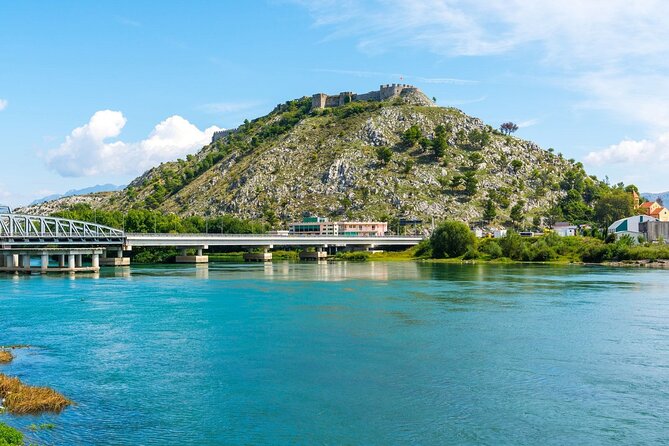
The main historical stop is Rozafa Castle. The fortress sits above the meeting point of three rivers and offers wide views toward the lake and the Adriatic. The castle’s oldest wall dates to the first millennium BCE, giving the site a long and complicated story rather than a single historical identity.
You have about an hour at the castle and time to walk through Shkodra itself. The itinerary lists a first Shkodra visit of two hours, followed by a later one-hour city visit. You should expect a combination of guided orientation and free walking rather than a full museum day.
Overnight accommodation is in Shkodra. This first night keeps the route from becoming a rushed northbound day trip from Tirana.
Day 2: Theth National Park and the road over Qafa e Thores
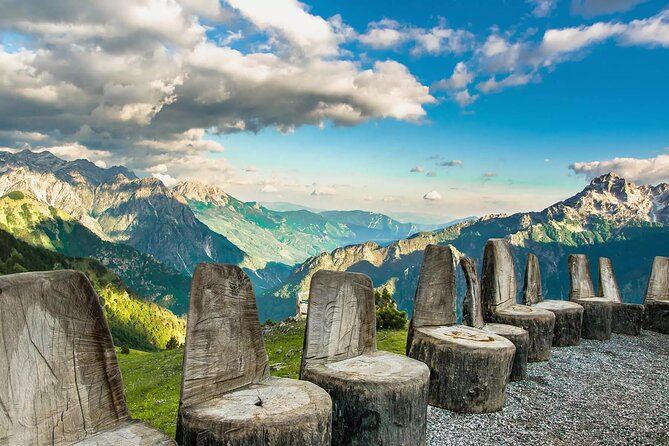
Day two shifts from city streets to mountain country. The drive toward northern Albania brings views of fields, rivers, Shkodra Lake, and rugged peaks. The route becomes more rural as you turn toward Theth.
One of the scenic points is Qafa e Thores, at roughly 1,700 meters above sea level. The road reaches the pass through a steep hillside, and the view toward the Albanian Alps is a highlight of the day. This is the kind of stop where a short pause can be more memorable than a long museum visit.
Theth is known for medicinal herbs, and the tour notes that May and June can bring lavender fields. That seasonal detail matters. If you travel at another time of year, you should not expect the same flowers, but the mountain setting remains the main attraction.
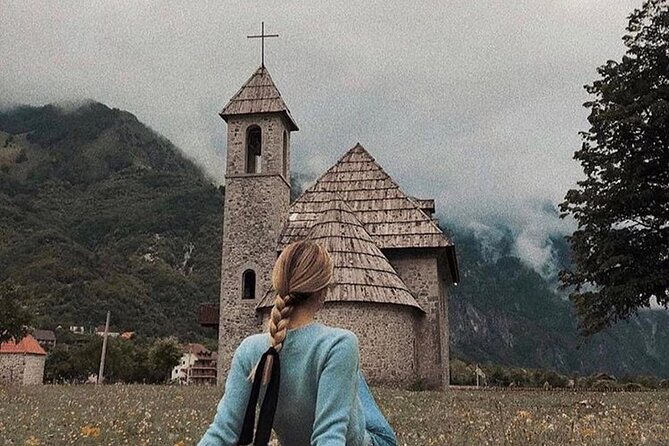
In Theth, the group visits the old church and the Lock-in Tower. The tower is linked to centuries of local stories and customary law. It is a small, focused visit, but it adds cultural meaning to the mountain scenery.
The schedule lists about two hours in Theth National Park, with an overnight in Shkodra afterward. That return arrangement may appeal if you prefer not to change hotels every night, though it also means a long mountain outing followed by more road time. Ask about the day’s driving plan if mountain roads are a concern.
Day 3: Berat, the town of 1,001 windows
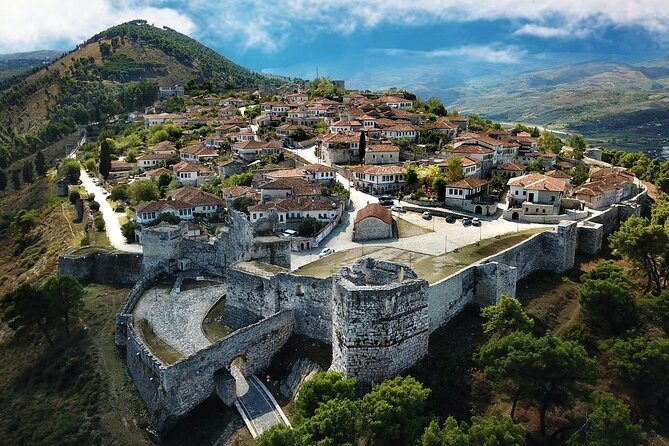
After breakfast, the route heads south to Berat, one of Albania’s three UNESCO sites on this tour. Berat is famous for white Ottoman-era houses climbing the hillsides, with rows of windows that appear stacked above one another.
The old town is best understood on foot. Narrow stone streets lead through neighborhoods where historic homes remain part of daily life. Berat is not only a preserved monument. Residents still live inside the castle area, which gives the old city a lived-in quality.
Berat Castle is the central visit. It contains churches, mosques, old houses, museums, and views over the town. The castle began as an Illyrian settlement and later became the city known as Antipatrea. Its walls and steep setting show why the place mattered for defense.
The National Iconographic Museum Onufri is another worthwhile stop. It honors the painter Onufri, known for religious works and a distinctive reddish color. The museum gives you a closer look at Albania’s church art, rather than only its architecture.
The day ends with the Gorica neighborhood and its old stone bridge. The bridge connects the historic districts across the river and gives you a different angle on Berat’s hillside houses.
The listed visits are generally around one hour each. That is enough for orientation and photographs, but not enough for an exhaustive museum visit. I would treat Berat as a strong introduction, with time to walk and take in the setting rather than inspect every display.
Something completely different:
- Kruja castle, the old Bazaar & Sarisalltik- Departure from Tirana
★ 5.0 · 592 reviews - Albanian Night Show: Traditional Music, Dance & Dinner in Tirana
★ 5.0 · 431 reviews - From Tirana- Hiking Tour to Bovilla Lake & Gamti Mountain
★ 5.0 · 358 reviews - Shala river & Komani lake -Day trip departure from Tirana/Shkodra
★ 5.0 · 309 reviews
Day 4: Gjirokaster, a stone city with authentic homes
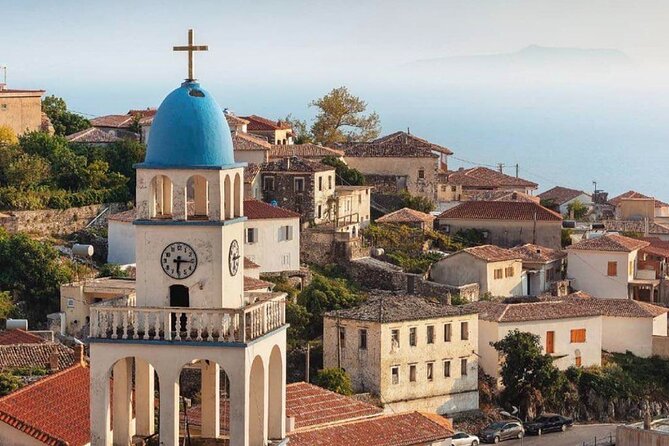
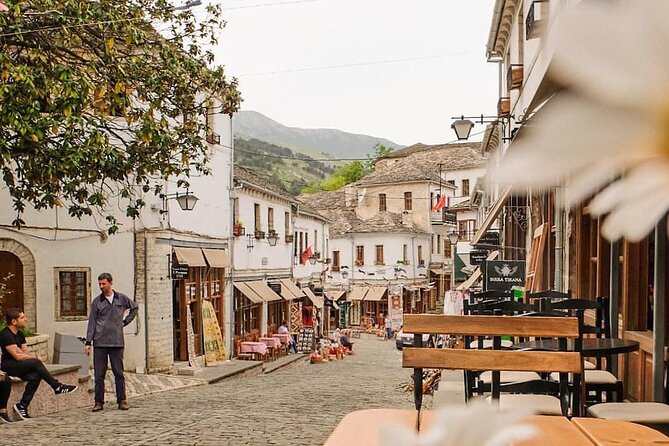
Gjirokaster is the second UNESCO site on the route. The city is often called the Stone City because its old homes and streets use local stone, and many houses have the appearance of small fortresses.
Gjirokaster Castle is the main attraction. Its origins reach back to the fourth century AD, and the fortress remains one of the best-preserved medieval town centers in the Balkans. The elevated position gives the castle a commanding view over the surrounding area.
Before entering the castle, you pass through the old bazaar. The streets are narrow and steep, with local crafts and handmade goods. This is a good place to buy a small souvenir if you want one that connects to the region, though purchases are not part of the tour price.
The Skenduli House adds a more personal view of Gjirokaster. It is one of the city’s best-preserved traditional homes, with original features still in place. A castle explains power and defense. A house explains how people lived inside that setting.
The schedule gives about an hour to each main stop. Gjirokaster’s stone streets can be tiring, especially on slopes, so comfortable shoes are important. The tour includes much sightseeing on foot, even though private transport connects the towns.
Gjirokaster also hosts a major folklore and traditional music festival every five years. The tour does not promise that the festival will be taking place during your visit, so consider it a bonus rather than a reason to choose a particular departure.
Day 5: The Blue Eye, Ksamil, and Butrint
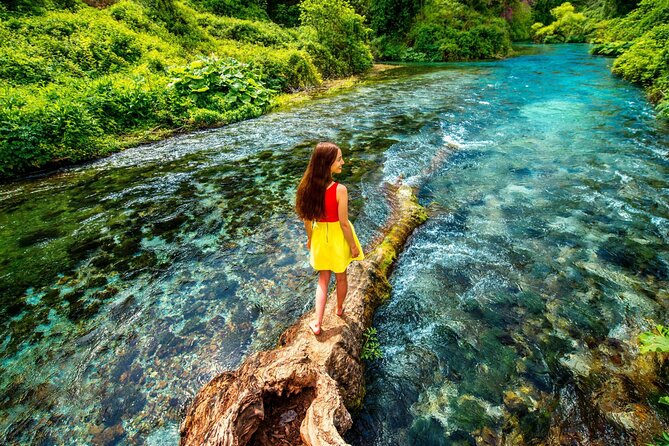
Day five brings one of the tour’s strongest changes of mood. From Gjirokaster, you head toward the coast and stop at the Blue Eye, a spring surrounded by evergreen trees.
The water appears intensely blue and rises from a source whose full depth has not been found. The temperature remains below 10 degrees Celsius. Your visit is scheduled for about 30 minutes, which is enough to see the spring and its setting, but not enough for a long nature walk.
Next comes Ksamil, one of the best-known beach areas on the Albanian Riviera. White sand, clear water, and views toward four islands give the place a tropical feel. The stop is only about an hour, so think of it as a scenic coastal pause rather than a full beach day.
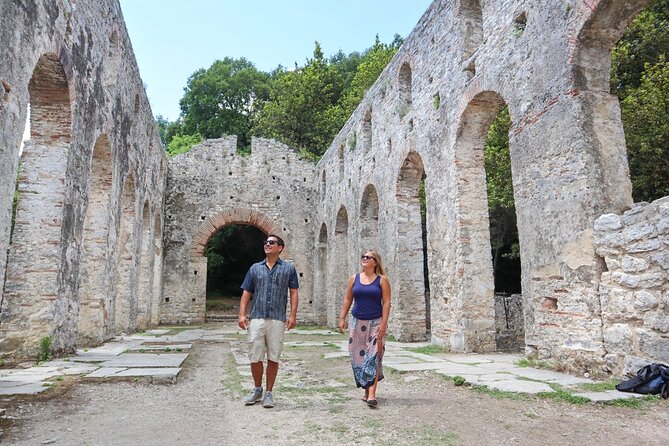
The main historical stop is Butrint National Park, Albania’s third UNESCO site on this route. Butrint is the country’s most important archaeological site, with ruins set among natural surroundings. The combination is what makes it special: you are not looking at isolated stones in a city block, but an ancient site framed by trees and water.
The listed visit lasts about an hour. That provides a useful overview, but Butrint can reward more time than the schedule allows. If ancient sites are your priority, this is one place where you may wish the program had slowed down.
Day 6: Himare, Dhermi, and the Albanian Riviera
The road follows the Riviera, passing beaches and villages near Llamani, Dhermi, and Palasa. The route is part of the experience. Small settlements cling to rocky slopes near the sea, with stone walls, grapevines, fig trees, and walnut trees along the way.
Himare is the first main stop. It combines mountain scenery, clear water, beaches, and a seaside promenade. You have time to walk, sample local food with Greek influence, buy handmade items, or stop for fresh fruit juice.
Dhermi follows, with about an hour for free time near one of Albania’s best-known beaches. The area is associated with coves, pebbled beaches, and clear water. The tour does not include meals, drinks, or beach rentals, so budget for anything you want during the coastal stops.
Overnight accommodation is near Vlore. This is a sensible position for the next day, but the itinerary gives you only short periods at each beach area. If your dream is several uninterrupted days by the sea, this tour will feel too busy. If you want to sample the Riviera while continuing through the country, it works well.
Day 7: Vlore, the Flag’s Square, and Durres
The day begins along Vlore’s Lungomare, the seaside promenade where the Adriatic and Ionian Seas meet. You have free time for a walk, coffee, and views toward Sazani Island and the Karaburun Peninsula.
Vlore also has a central place in Albanian national history. Independence was declared here on November 28, 1912, and the city is known as the City of the Flag. The visit includes Flag’s Square and the Independence Monument.
At the Muradie Mosque, you see an Ottoman building completed in 1537. It is an Albanian National Monument and one of the country’s notable preserved religious structures. The stop helps balance the coastal scenery with a look at the region’s Ottoman past.
The final city visit is Durres. The route passes the amphitheater, Roman remains, and Venetian Tower before continuing to the Vollga seaside promenade. You can stop for coffee and try traditional ice cream before returning to Tirana.
Again, most visits are listed at about an hour. The day connects several places, but it does not offer the time for a detailed archaeological study of Durres. It works best as a broad final look at the coast and Albania’s major urban centers.
Day 8: Tirana and the story of communist Albania
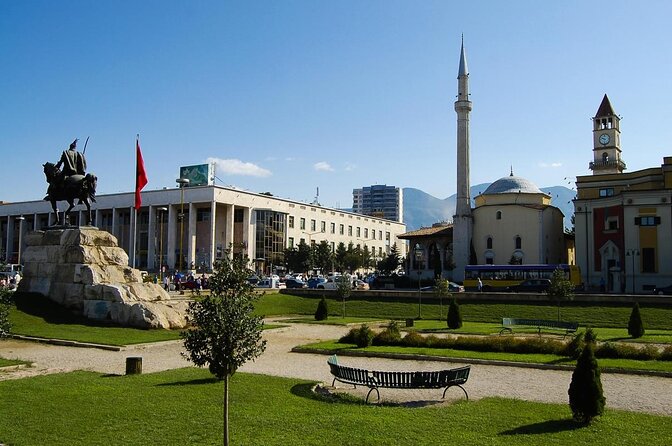
The final day explores Tirana, a capital where Ottoman, Italian, and communist architecture meet modern city life. The first orientation walk includes Skanderbeg Square, named for Albania’s national hero, Gjergj Kastrioti Skanderbeu.
The square is surrounded by the National Museum, Opera House, Bank of Albania, Skanderbeg Statue, Ethem Beu Mosque, and cafes. It is a useful place to understand how the capital has changed while still keeping its national symbols close at hand.
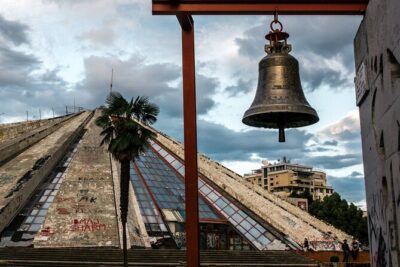
Bunk’Art 2 provides the most direct look at the communist period. The museum occupies a bunker originally intended to shelter Enver Hoxha and senior party members during the Cold War. The bunker was kept secret until 2016, when it became a museum about the communist army and everyday life under the regime.
This visit gives the trip a serious final note. After castles, churches, beaches, and ancient ruins, you confront Albania’s more recent past. The museum is listed for about an hour, enough to introduce the subject without taking over the whole day.
The route continues along Rruga Murat Toptani toward Tirana Castle, now a pedestrian area where traditional features and newer shops meet. The final stop is Blloku, once associated with the communist leadership and now known for restaurants, cafes, street food, and nightlife.
The tour ends back at the Tirana meeting point. Hotel drop-off in Tirana is included, making the final transfer simple.
Accommodation, meals, and practical value
Accommodation is bed and breakfast in three-star hotels, with seven breakfasts included. One detailed account praised the hotels as clean, friendly, and connected to the history or folklore of each area. That description suggests the lodging aims for local character rather than anonymous chain hotels, though the exact property can vary.
You pay separately for lunch, dinner, drinks, snacks, and personal purchases. This gives you some control over food costs, but the price is still substantial. At $2,278.09, you are paying for a private vehicle, a full route, a tour leader, admissions, fuel, taxes, and the planning behind a multi-region trip.
The accommodation price assumes shared rooms. If you want a single room, the stated supplement is 45 euros per night. All participants need their own health and travel insurance. Tips are not required, but the operator recommends tipping the tour leader and driver for good service.
The schedule can change because of weather, strikes, public holidays, temporary closures, renovation, or other conditions outside the company’s control. The experience is non-refundable and cannot be changed after booking, so you should be confident about your dates before paying.
Who should choose this tour?
I would choose this tour if you want to see Albania’s main regions in one organized trip and prefer not to drive. It suits people who enjoy a mixture of history, scenery, beaches, and short guided walks.
It is also a good fit if you value a small group, included admissions, and hotels with breakfast. The route is especially useful for a first visit, since it introduces northern Albania, the central UNESCO towns, the southern coast, and Tirana.
I would hesitate if you want a relaxed beach holiday, long museum visits, or the freedom to change plans each morning. The days are full, the roads can be mountainous, and several stops last only one hour. You should also check the room arrangement if you do not want to share.
Final verdict: a strong first route through Albania
I recommend this tour for a first, wide-ranging visit to Albania. Its best features are the small group, private transport, three UNESCO sites, and the balance between famous sights and more local places such as Skenduli House, the Muradie Mosque, and Theth.
The price is not low, and the schedule is not leisurely. Still, arranging this route yourself would take considerable time, especially across the northern mountains and southern coast. Book it if convenience and coverage matter more to you than slow travel, and confirm the room setup, seasonal conditions, and daily driving expectations before committing.
FAQ
How long is the Pearls of Albania tour?
The tour lasts approximately eight days, with seven overnight stays and seven included breakfasts.
What is the price per person?
The listed price is $2,278.09 per person.
Where does the tour start?
The stated meeting point is Choose Balkans, Albania Tour Operator, on the third floor of Tower 2 at the Twin Towers on Bulevardi Deshmoret e Kombit in Tirana.
What time does the tour start?
The stated start time is 9:00 a.m. Hotel pickup in Tirana is offered.
How many people can join the group?
The tour has a maximum of 10 participants.
Which UNESCO sites are included?
The route visits Berat, Gjirokaster, and Butrint National Park.
What accommodation is included?
Bed-and-breakfast accommodation is included for all overnight stays in three-star hotels. Prices are based on double, twin, triple, or quadruple room occupancy.
Can I request a single room?
Yes. Single room occupancy is available for an additional 45 euros per night in three-star accommodation.
Are meals included?
Seven breakfasts are included. Lunches, dinners, drinks, and snacks are not included.
Is travel insurance included?
No. Each participant is responsible for arranging personal health and travel insurance.
Just added in Tirana
- Wine Tasting day in Berat (Visit to the Berat Castle & Lunch included)★ 4.5 · 6 reviews
- From Tirana Wine Tasting & Food tour in Berat★ 5.0 · 5 reviews
- Visit Albania and Kosovo★ 5.0 · 2 reviews
- Bovilla and Kruja: Where History Meets Nature★ 5.0 · 2 reviews
- Visit Albania and Montenegro★ 5.0 · 1 review
- Virtual Reality Games and Experiences – Perfect place to drink and have fun!★ 5.0 · 2 reviews
- UNESCO heritage in Albania – 4 days★ 5.0 · 3 reviews
- Exclusive Qafshtama National Park Hiking Tour With Private Transfer★ 5.0 · 1 review
Tours, compared.
Berat city UNESCO tour, the Castle & Belshi lake- From Tirana
Read our review →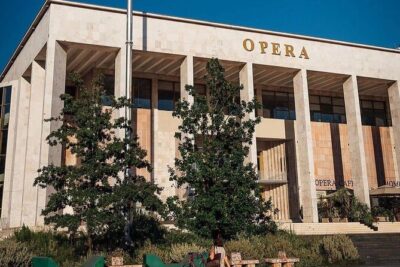
Berat Tour Osumi Canyons Exploration Lunch Transfer
Read our review →
Osumi Canyons and Bogova Waterfall from Berat – Tour by 1001 Albanian Adventures
Read our review →