REVIEW · TOURS
STUDENT TOUR PACKAGE IN ALBANIA (6 Nights) by ADRIATIK TOURS LLC
Albania rewards curious students. This private program links Ottoman towns, mountain roads, old churches, beaches, and national heroes across four busy sightseeing days. I like the wide geographic range, from Cape Rodon to the Albanian Riviera, and I like the strong focus on places that explain Albania’s past, especially Kruja and Berat. The main caution is the confusing duration: the package is described as six nights, yet the published schedule shows four tour days.
I also like that pickup is offered and that only your group participates, which gives a school group more control than a large coach tour. The price, $2,123.92 per person, could be reasonable if accommodation, meals, transport, and admissions are included, but those inclusions are not clearly spelled out here. You should confirm exactly what the fee covers before paying.
In This Review
- Key points at a glance
- What this Albanian program is really offering
- Day one at Rodoni Castle and St. Anthony Church
- Day two in Kruja, Albania’s mountain stronghold
- Shopping and daily life in the Old Bazaar
- Day three in Berat, from fortress churches to wine
- The optional Çobo Winery visit
- Day four through Vlora and the Llogara mountains
- Llogara National Park above the Riviera
- Is $2,123.92 per person good value?
- Who will like this tour most?
- Should you book this Albanian student package?
- FAQ
- How long is the Albania student tour?
- Where does the tour start?
- Where does the tour end?
- Is pickup offered?
- Is this a private tour?
- What physical fitness level is required?
- Is admission to Rodoni Castle included?
- Is admission to the Ethnographic Museum of Kruja included?
- Is the Çobo Winery visit required?
- What is the cancellation policy?
Key points at a glance
- Cape Rodon begins the program with a coastal hike to the remains of Scanderbeg’s castle and the Roman-Gothic Church of St. Anthony.
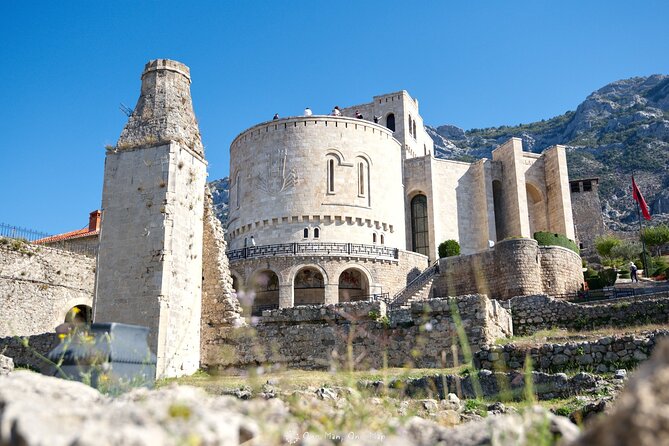
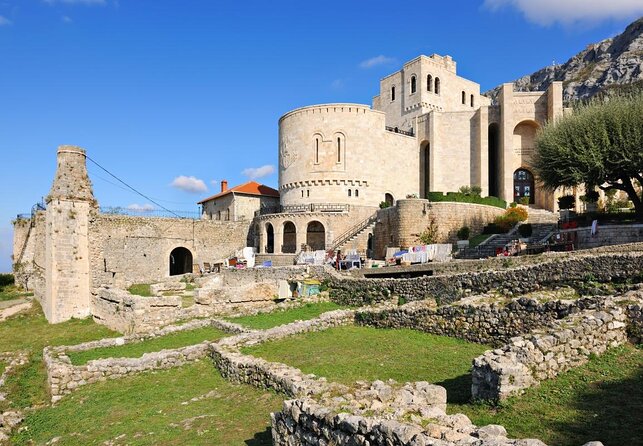
- Kruja puts Albania’s national story front and center, with its castle, Skanderbeg Museum, old bazaar, and ethnographic house.
- Berat combines a hilltop fortress with religious art, Ottoman-era buildings, the Gorica Bridge, and a possible wine tasting.
- Vlora adds Albania’s independence story, including the Independence Monument and Muradie Mosque.
- Llogara National Park brings mountain scenery above the Riviera, with forests, high ridges, herders, and possible wildlife sightings.
- The schedule is culturally strong but tightly packed, and the six-night description does not match the four-day itinerary provided.
What this Albanian program is really offering
I see this as a history-and-geography trip rather than a simple beach holiday. Albania’s coastline gets attention, but the strongest part of the program is the way it connects medieval resistance, Ottoman rule, religious traditions, communist-era separation from Europe, and modern national identity.
The route also gives you several different settings in a short period. You move from the Adriatic coast to Kruja’s mountain foothills, then to Berat, Vlora, and Llogara National Park. That variety is useful for students because Albania becomes more than a collection of monuments. You can see how its mountains, ports, religious communities, and trade routes shaped the country.
The schedule lists approximately four days of touring. It does not provide a full six-night day-by-day plan, so I would treat the package length as something to clarify. The meeting point is the Adriatik Hotel, BW Premier Collection, on Rruga Pavaresia in Durrës, and the activity returns there at the end. Pickup is offered, but the exact pickup area and transfer arrangements should be confirmed.
Because this is a private activity, your group is the only group taking part. That is a real advantage for a student program. You can ask for a little more time at a museum or keep the group moving when energy drops. The tradeoff is that a private tour can feel expensive unless the cost includes lodging and substantial transport services.
More trips out of Tirana:
- Hike Gamti Mountain with Bovilla lake view & canyon- From Tirana
★ 5.0 · 1,280 reviews - Berat city UNESCO tour, the Castle & Belshi lake- From Tirana
★ 5.0 · 804 reviews - Walking Tour of Tirana
★ 5.0 · 646 reviews
Day one at Rodoni Castle and St. Anthony Church
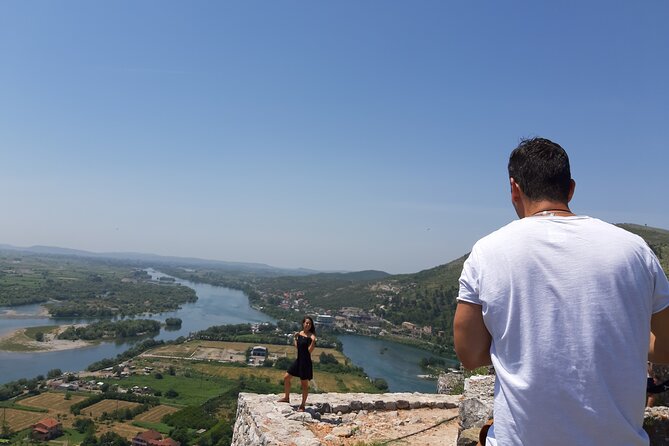
The first day heads to Cape Rodon, on Albania’s Adriatic coast. It is described as the country’s largest cape, with the Ishmi River flowing to its north. The setting gives you an early look at Albania’s less-developed coast, where the historical sites are tied closely to open sea and rugged ground.
The main activity is a hike toward Rodoni Castle, also called the Castle of Scanderbeg. George Kastrioti, known as Skanderbeg, built it in 1451 and 1452. His forces used the castle to watch the Adriatic and defend against Venetian invasion. The original walls were reported to be 10 to 12 meters high and 3 to 6 meters wide, though you should expect ruins rather than a complete fortress.
The two-hour stop is listed with admission included. I would allow for uneven ground and a moderate level of fitness. The tour specifically asks for moderate physical fitness, and this is the clearest reason why. Comfortable shoes matter more here than formal clothes or polished sightseeing footwear.
The Church of St. Anthony follows the castle. Built in the 14th or 15th century, it is one of four monasteries that existed in the area before the castle was built. Its Roman-Gothic design is easy to spot in the pointed arches. The visit lasts only 15 minutes, so I would see it as a compact architectural stop rather than a long church tour.
This opening day has a good rhythm, but it is not designed for people who want to linger by the sea. You get coastal scenery, a short hike, and medieval remains. If your group expects a full beach day, this schedule may feel too historical and too brief.
Day two in Kruja, Albania’s mountain stronghold
Kruja is one of the most important stops for understanding Albania’s national identity. Its castle was the center of Skanderbeg’s 15th-century resistance to the Ottoman Empire. The schedule allows 30 minutes at the castle itself, followed by the National Museum dedicated to Gjergj Kastrioti Skanderbeg.
Thirty minutes is enough for a quick orientation, but not enough to explore every corner of a large fortress area. The castle visit works best when paired with the museum, because the museum gives the political and military story a clearer shape.
The Skanderbeg Museum opened in 1982 and was designed by Pirro Vaso and Pranvera Hoxha. Its architecture resembles a northern Albanian tower and functions as a memorial to the national hero. The visit is also listed at 30 minutes with admission included.
For students, this pairing is the heart of the Kruja day. The castle gives you place and atmosphere. The museum gives you names, dates, and national symbolism. I would encourage you to pay attention to how the building itself presents Skanderbeg, not just to the objects inside. It was created as a memorial, so the experience is intentionally patriotic.
Shopping and daily life in the Old Bazaar
The Old Bazaar of Kruja dates to the 17th century and was once home to about 200 shops. Its covered storefronts form a long arcade between the city hall area and the castle entrance. Traditional trades included leatherwork, silk, pottery, wood carving, furniture making, tailoring, and kitchen utensils.
This is the part of the day that can feel most lived-in. You can browse crafts and pause at a cafe, rather than moving only between formal monuments. I would still keep your expectations sensible. A historic bazaar is also a shopping area, and the experience depends on which shops are open and how much time the group gets.
The Ethnographic Museum of Kruja adds a more domestic view. It occupies an urban building from 1764, recognized as a first-class cultural monument. Its 15 or 16 rooms display household objects and crafts connected with life in Kruja.
Admission to this museum is not included, unlike the castle and Skanderbeg Museum. That is a small but important cost detail for a student group. Ask the operator if the optional entry can be arranged in advance, especially if the group has a fixed schedule.
Something completely different:
- Kruja castle, the old Bazaar & Sarisalltik- Departure from Tirana
★ 5.0 · 592 reviews - Albanian Night Show: Traditional Music, Dance & Dinner in Tirana
★ 5.0 · 431 reviews - From Tirana- Hiking Tour to Bovilla Lake & Gamti Mountain
★ 5.0 · 358 reviews - Shala river & Komani lake -Day trip departure from Tirana/Shkodra
★ 5.0 · 309 reviews
Day three in Berat, from fortress churches to wine
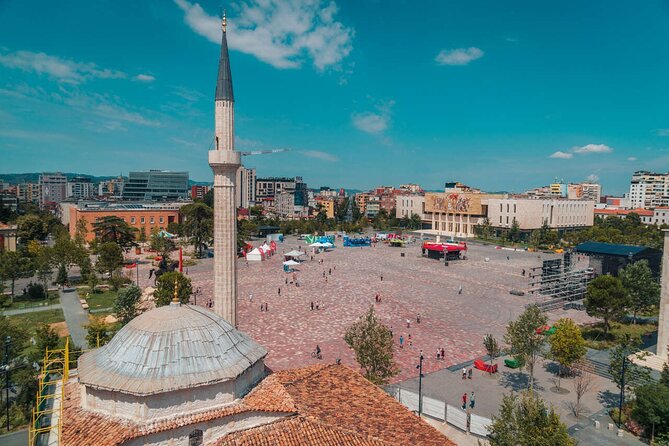
The drive from the Adriatik Hotel to Berat takes approximately two hours, with departure scheduled for 8:30 a.m. That early start is sensible because Berat has several separate areas to visit, and the castle sits above the city.
Berat Castle dates to the 4th century BC and remains one of Albania’s largest inhabited castle areas. It contains Byzantine churches and Ottoman-era mosques, reflecting the city’s long religious and political changes. The published schedule gives only one minute for this stop, which is almost certainly a timing error or an overly compressed entry in the program. You should ask how much actual time is planned inside the castle.
The National Iconographic Museum Onufri is located inside the Cathedral of Saint Mary, renovated in the 18th century. The carved iconostasis and icons by the Albanian painter Onufri are the key attractions. A 40-minute visit gives you enough time to see the main works, though a school group may want a guide or teacher preparation to make the art easier to understand.
The castle walk then leads toward the old quarters of Mangalem and Gorica. These districts connect across the Osumi River by the Gorica Bridge. The bridge was first built of wood, rebuilt in stone in 1780 under Ahmet Kurt Pasha, and reconstructed again between 1920 and 1930.
I like this part of the route because it shifts the focus from rulers and battles to the shape of the city itself. The bridge is not merely a photo stop. It explains how the two historic quarters relate to one another and gives you a view of Berat from the river.
The King Mosque, also known as the Sultan’s Mosque or Sultan Bayezid Mosque, dates to the 15th century. It is recognized as a cultural monument of Albania. Along with the churches in the castle, it shows how several religious traditions occupy the same compact urban setting.
The optional Çobo Winery visit
On the way back to the hotel, the program offers an optional stop at Çobo Winery. The visit includes an overview of winemaking and an explanation of the family’s history and the origins of its wines.
This can be a pleasant addition for adult students or older school groups, but it is not equally suitable for every class. Since it is optional, ask whether the tasting has an extra charge and whether non-drinkers or younger participants can take part in the educational portion without tasting wine.
Day three is probably the most demanding day by distance and content. You have an early departure, a two-hour journey each way, a hilltop castle, museums, bridges, a mosque, and a possible winery visit. The reward is one of the most complete cultural days in the program. The weakness is that the listed timings do not appear fully realistic, particularly the one-minute castle entry.
Day four through Vlora and the Llogara mountains

The fourth day turns south toward Vlora, a major coastal city where the Adriatic and Ionian seas meet. The route adds religious buildings, independence history, island scenery, and a national park.
The first stop is St. Mary’s Monastery on Zvërnec, a small island near Vlora. This Byzantine monastery is dedicated to the Virgin Mary and is described as roughly 20 minutes from the city center. The visit lasts 30 minutes, and admission is free.
The island setting gives this stop a different mood from Kruja and Berat. You are not simply looking at another fortress or museum. You are visiting an old religious site separated from the city by the coast. The provided information does not state how the island crossing is arranged, so confirm the access details before departure.
Back in Vlora, the Independence Monument sits in Flag’s Plaza near the building where Albania’s first government worked in 1913. The monument commemorates the declaration of independence and was created by Albanian sculptors Muntaz Dhrami and Kristaq Rama.
This is a valuable stop for students because it connects the earlier military story of Skanderbeg with the birth of the modern Albanian state. It also gives the Vlora portion a clear purpose beyond seaside sightseeing.
The Muradie Mosque is another important Vlora landmark. It is a cultural monument, and its present structure incorporates Byzantine architectural features, including the dome, arched windows, polygonal support, and distinctive brickwork. The building was initially a Byzantine church, making it a useful example of how religious architecture can change across different periods.
Llogara National Park above the Riviera
The final listed stop is Llogara National Park, high above the Albanian Riviera. The route promises mountain views, clouds moving down over the peaks, shepherds guiding herds, and thick forest where deer, wild boar, and wolves are found.
You get one hour here, with no admission charge listed. I would treat this as a scenic pause rather than a full park expedition. The program does not describe a long trail or a wildlife tour, so do not book it expecting guaranteed animal sightings. Weather may also affect the views.
Llogara is an excellent closing stop because it shows how quickly Albania changes from coastal city to mountain country. For a student group, it can also break up the steady sequence of museums and monuments. The road portion may be as memorable as the stop itself, though the schedule does not give travel times from Vlora or between the other fourth-day sites.
Is $2,123.92 per person good value?
The price is difficult to judge without a full list of inclusions. At $2,123.92 per person, this is a serious investment for a student program. The fee may represent strong value if it includes six nights of accommodation, private transportation, pickup, guide services, meals, and the listed admissions. It looks much less attractive if lodging and most meals are separate.
Admissions are included at Rodoni Castle, Kruja Castle, the Skanderbeg Museum, Berat Castle, and the Onufri Museum. The Ethnographic Museum is not included, and the Çobo Winery stop is optional. Free entry is listed for St. Anthony Church, Zvërnec Monastery, and Llogara National Park.
Before booking, ask for a written breakdown covering:
- The meaning of six nights compared with the four sightseeing days
- Hotel names and room arrangements
- Meals and drinks
- Private vehicle and fuel
- Pickup and return transfers
- Guide services
- Optional museum and winery costs
- Any fees for reaching Zvërnec island
The private format has real value for school groups. You are not sharing the schedule with strangers, and the operator can potentially adapt the pace to your class. Still, the price needs to be compared with what is actually delivered, not just with the number of destinations.
Who will like this tour most?
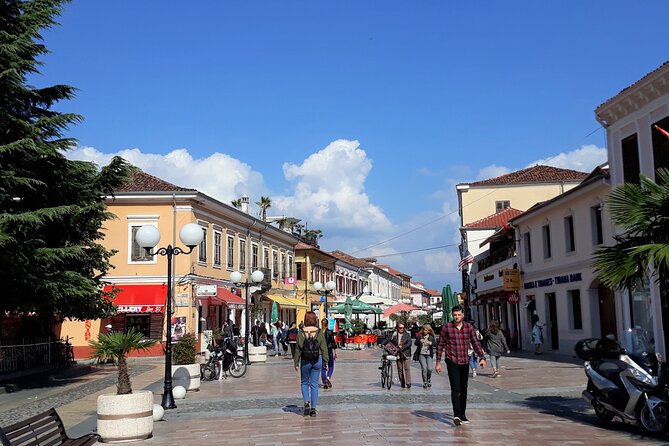
I would recommend it to a student group that wants a broad introduction to Albania in a short period. It suits classes interested in history, architecture, religious studies, geography, and national identity.
You should be comfortable with road time, castle walks, uneven paths, and early starts. The moderate fitness requirement is important, especially at Cape Rodon and Berat Castle. The program is less suitable if your main goal is swimming, nightlife, or unstructured time on the coast.
The route also suits a group that values privacy. Since only your party participates, teachers or group leaders can ask about timing and keep students together more easily. The available written comment about Vlora praises the city’s beaches, mountains, islands, churches, monasteries, and multi-religious character, which fits the program’s strongest quality: it presents Vlora as more than a seaside stop.
Free cancellation is available if you cancel at least 24 hours before the experience begins. Changes or cancellations inside that window are not accepted for a refund.
Should you book this Albanian student package?
I would book it only after resolving the six-night and four-day mismatch and getting a complete price breakdown. The route itself is appealing, especially the combination of Kruja, Berat, Vlora, and Llogara. It offers more cultural substance than a coast-only program and gives students a useful first look at Albania’s complicated past.
The best reasons to choose it are the private format, the range of destinations, and the strong connection between monuments and national history. The main reasons to hesitate are the high price, compressed timings, and missing details about accommodation, meals, transport, and the Zvërnec visit.
If those details are included in writing, this could be a rewarding school itinerary. If they are not, you may be paying a premium for a schedule that leaves too little time at its most important sites.
FAQ
How long is the Albania student tour?
The package is described as six nights, but the published sightseeing schedule covers four days. Confirm the complete duration before booking.
Where does the tour start?
The meeting point is Adriatik Hotel, BW Premier Collection, Plazh, Rruga Pavaresia, Durrës 2000, Albania.
Where does the tour end?
The activity ends back at the meeting point.
Is pickup offered?
Yes, pickup is offered. The exact pickup arrangements are not specified, so confirm the pickup area and time.
Is this a private tour?
Yes. Only your group participates in the activity.
What physical fitness level is required?
A moderate level of physical fitness is recommended. The itinerary includes hiking toward Rodoni Castle and visits to castle areas.
Is admission to Rodoni Castle included?
Yes, admission to Rodoni Castle is included.
Is admission to the Ethnographic Museum of Kruja included?
No. Admission to the Ethnographic Museum is not included.
Is the Çobo Winery visit required?
No. The winery stop is optional.
What is the cancellation policy?
You can receive a full refund if you cancel at least 24 hours before the experience start time. Cancellations and changes made less than 24 hours in advance are not accepted.
Just added in Tirana
- Wine Tasting day in Berat (Visit to the Berat Castle & Lunch included)★ 4.5 · 6 reviews
- From Tirana Wine Tasting & Food tour in Berat★ 5.0 · 5 reviews
- Bovilla and Kruja: Where History Meets Nature★ 5.0 · 2 reviews
- Visit Albania and Kosovo★ 5.0 · 2 reviews
- Visit Albania and Montenegro★ 5.0 · 1 review
- Virtual Reality Games and Experiences – Perfect place to drink and have fun!★ 5.0 · 2 reviews
- UNESCO heritage in Albania – 4 days★ 5.0 · 3 reviews
- Exclusive Qafshtama National Park Hiking Tour With Private Transfer★ 5.0 · 1 review
Tours, compared.
Berat city UNESCO tour, the Castle & Belshi lake- From Tirana
Read our review →
Berat Tour Osumi Canyons Exploration Lunch Transfer
Read our review →
Osumi Canyons and Bogova Waterfall from Berat – Tour by 1001 Albanian Adventures
Read our review →