REVIEW · TIRANA TOURS
The truest face of Communism
Communist Tirana reveals its secrets slowly. This private tour links Skanderbeg Square, Blloku, and Bunk’Art 1 into a clear story about Albania’s dictatorship, isolation, and uneasy move into modern life. I like the mix of major sights and personal history, and I like that guides such as Leo, Dio, Aldo, Eni, Mimi, and DC have made the experience feel warm rather than purely academic.
The main thing to check before booking is transportation. The tour includes an air-conditioned vehicle and hotel pickup, but one excellent account described the day as entirely on foot, covering nearly five miles. That could be a pleasant surprise for walkers, but a problem if you expect door-to-door driving between every stop.
In This Review
- Key points to know before booking
- Why Communist history gives this Tirana tour its shape
- Skanderbeg Square, where Tirana’s public story begins
- The Pyramid and the awkward afterlife of Enver Hoxha
- Postbllok, a compact memorial with heavy meaning
- Blloku, from forbidden district to Tirana’s social center
- Bunk’Art 1, the strongest stop on the route
- The guides are central to the experience
- Is the $90.11 price good value?
- Timing, walking, and practical details
- Who should book the Truest Face of Communism tour?
- Final verdict: book it for context, not just sightseeing
- FAQ
- Where does the tour start?
- What time does the tour begin?
- Where does the tour end?
- Is hotel pickup available?
- How long does the tour last?
- Is this a private tour?
- Is Bunk’Art 1 included?
- Is lunch included?
- Are drinks included?
- Can I cancel for a full refund?
Key points to know before booking
- Bunk’Art 1 is the main attraction: Expect about an hour inside a huge underground shelter built for a possible nuclear attack.
- The tour connects places with a clear political story: Squares, monuments, elite neighborhoods, bunkers, and museums all show a different side of Communist Albania.
- This is a private experience: Only your group participates, making it easier to ask questions and discuss sensitive subjects.
- Personal stories add weight: Guides including Leo, Dio, Aldo, and Eni have been praised for explaining how ordinary Albanian families lived under the regime.
- Food and drinks are part of the day: Coffee or tea, rakia, and a stop for traditional food near Blloku are included, but lunch is not.
- Plan for a half-day with walking: The scheduled time is four to five hours, though the route can feel longer if much of it is done on foot.
Why Communist history gives this Tirana tour its shape
Albania’s Communist period was not a brief footnote. Enver Hoxha led the country’s Communist Party from 1944 until his death in 1985, and his rule brought severe isolation, political repression, and fear of attack from abroad.
This tour works because it does not leave that story trapped inside a museum. You begin in the city center, pass through the former political elite’s private district, see a memorial made from prison-camp materials, and finish in a bunker designed for catastrophe. The route gives you physical evidence of a system that shaped everyday life.
I especially like that the itinerary includes both official symbols and uncomfortable reminders. The Pyramid was created to honor Hoxha. Postbllok remembers those harmed by the regime. Bunk’Art 1 shows how much effort and concrete went into preparing for a war that never came.
The private format matters here. Albania’s Communist past can bring up family memories, political pain, and strong opinions. A guide who can answer questions in clear English gives the day more value than simply walking past buildings and reading plaques.
More trips out of Tirana:
- Hike Gamti Mountain with Bovilla lake view & canyon- From Tirana
★ 5.0 · 1,280 reviews - Berat city UNESCO tour, the Castle & Belshi lake- From Tirana
★ 5.0 · 804 reviews - Walking Tour of Tirana
★ 5.0 · 646 reviews
Skanderbeg Square, where Tirana’s public story begins
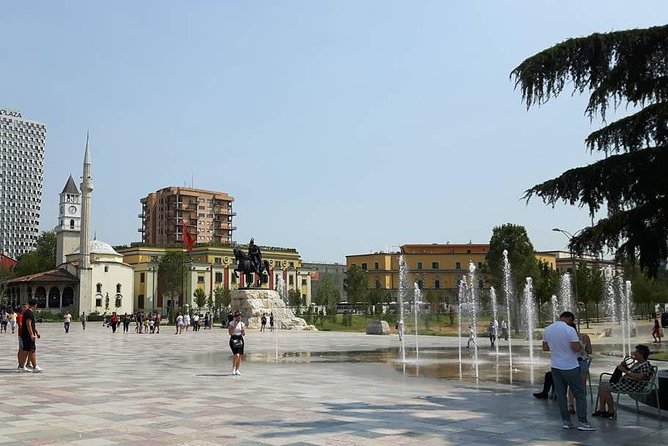
The morning starts at Skanderbeg Square, the broad central space of Tirana. Hotel or accommodation pickup can also be arranged at an agreed departure point in the city, with the advertised start time set for 9:00 a.m.
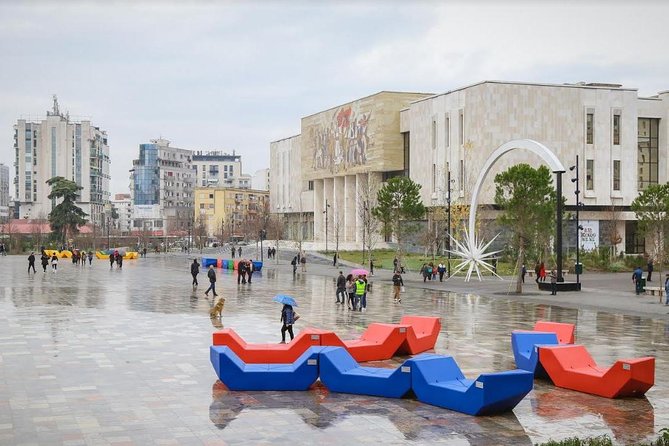
You get about 30 minutes around the square. The stop includes the Et’hem Bey Mosque, the Clock Tower, the National Theater of Opera and Ballet, the National Bank of Albania, and the Tirana International Hotel, one of the city’s most recognizable older hotels.
The opera building has an unusual Cold War connection. Nikita Khrushchev, the former leader of the Soviet Union, put down the first brick. That detail helps explain Albania’s place in the Communist world, while also showing that its political relationships changed over time.
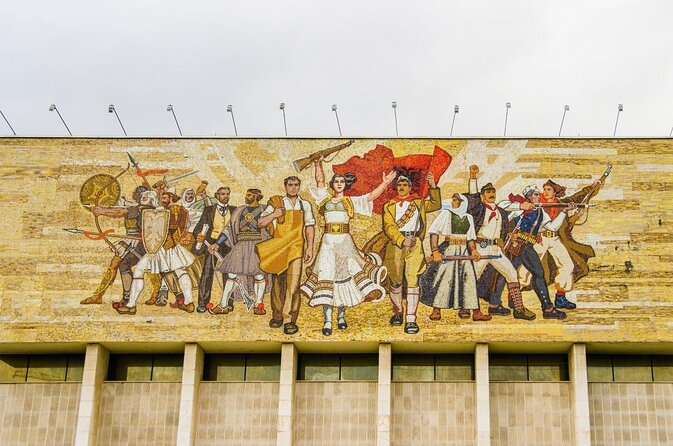
The square is useful as an opening lesson because it brings several eras into one view. Ottoman religious architecture, state institutions, Communist planning, and modern city life all meet here. You are not just checking off a central plaza. You are learning how Tirana presents its past in public.
Admission to the square and its surrounding sights is free. The practical issue is pace. Thirty minutes is enough for an orientation and exterior views, but it is not enough for a full visit to every building. Think of this as your introduction to Tirana’s center, not a museum stop.
The Pyramid and the awkward afterlife of Enver Hoxha
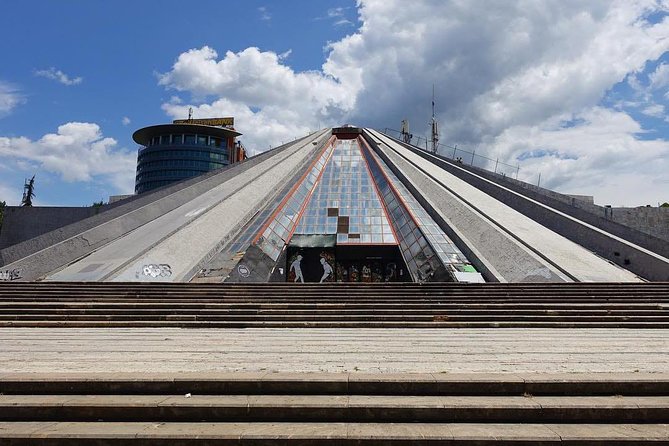
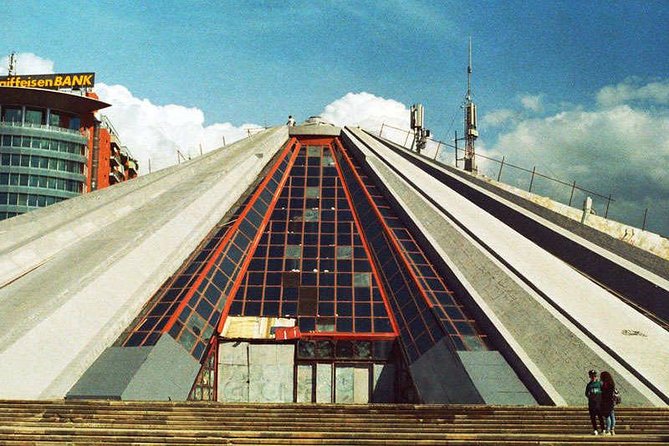
The Enver Hoxha Pyramid receives a short 15-minute stop. It was built as a museum dedicated to Hoxha and opened in 1988, three years after his death. His daughter helped design it, giving the building an unusually personal connection to the dictator’s public image.
The Pyramid later served as a cultural center and a national television office. It also survived a proposal to destroy it. Today, its meaning is less fixed. Some people see a monument to dictatorship, while others see a strange leftover that has been repurposed by a new generation.
The short stop makes sense if you want context and photographs. It is not enough for a detailed interior visit, and the itinerary does not promise admission. I would pay attention to the guide’s explanation here, since the building’s changing uses tell you much about how Albania has tried to handle its Communist inheritance.
The Pyramid also gives you a useful pause between the formal center and the more reflective memorials that follow. It is a reminder that old symbols do not simply vanish when a political system falls.
Postbllok, a compact memorial with heavy meaning
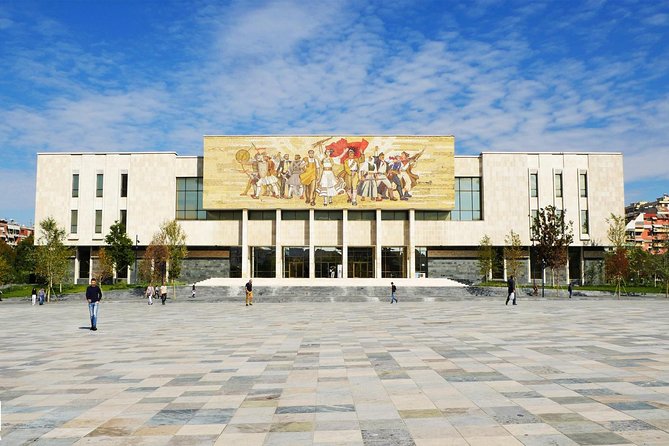
Postbllok, or the Checkpoint Monument, takes about ten minutes. It is a small stop, but its three parts carry a lot of weight.
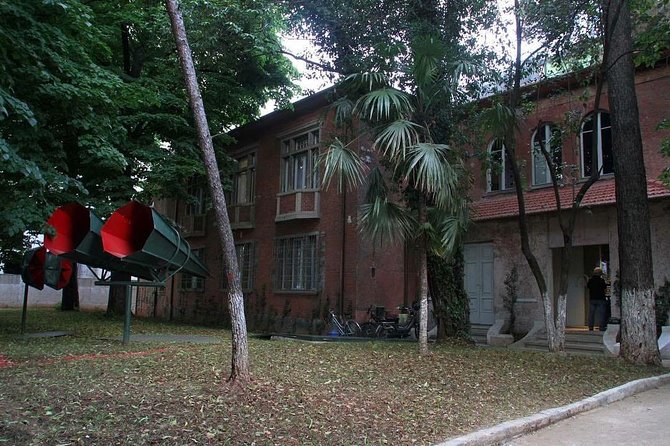
You will see a concrete bunker, the kind of defensive structure built across Albania during the dictatorship. The country constructed thousands of bunkers, with the stated purpose of protecting people from a nuclear or world war. In practice, they became one of the most visible signs of a society organized around fear.
The memorial also uses concrete supports from the Spaç labor camp, where political prisoners suffered between 1968 and 1990. A brightly painted piece of the Berlin Wall completes the installation. Together, these objects connect Albania’s internal prison system with the wider division of Cold War Europe.
This is one place where a guide’s voice makes a real difference. The objects are easy to photograph, but their meaning is not always obvious at first glance. A short explanation can turn a bunker from a curious piece of street furniture into evidence of the pressure placed on ordinary families.
Ten minutes is enough for the site itself. It may feel brief if you want time to reflect, but the tour uses the memorial as a bridge to the next stop rather than treating it as a full museum visit.
Something completely different:
- Kruja castle, the old Bazaar & Sarisalltik- Departure from Tirana
★ 5.0 · 592 reviews - Albanian Night Show: Traditional Music, Dance & Dinner in Tirana
★ 5.0 · 431 reviews - From Tirana- Hiking Tour to Bovilla Lake & Gamti Mountain
★ 5.0 · 358 reviews - Shala river & Komani lake -Day trip departure from Tirana/Shkodra
★ 5.0 · 309 reviews
Blloku, from forbidden district to Tirana’s social center
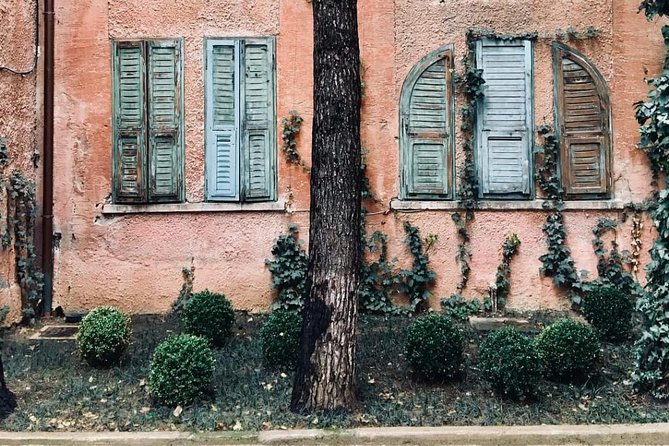
Blloku gives the tour its sharpest contrast. During the Communist period, this neighborhood was reserved for the political leadership. Ordinary people could not simply enter and socialize there, and even maps left the area out.
Today, Blloku is known for boutiques, coffee shops, cocktail bars, pubs, and street art. It is one of Tirana’s most fashionable areas, which makes the old political boundary hard to imagine. That contrast is exactly why the stop works.
You pass the former villa of Enver Hoxha. It can only be viewed from outside, and the property remains unused and untouched according to the tour information. Seeing the home in the middle of a modern neighborhood gives you a direct reminder of the separation between Albania’s rulers and everyone else.
The stop lasts about 50 minutes and includes traditional food and rakia at a nearby restaurant. Coffee or tea is also included, depending on the arrangements. Rakia is a strong Albanian spirit, so take the warning seriously and sip rather than treating it like a casual drink.
One account praised the combination of raki, coffee, and byrek, a traditional savory pastry. Another described lunch as excellent, although lunch itself is not included in the stated price. If you are hungry after the tasting stop, ask your guide what food is covered and what would cost extra.
Blloku is also where the tour feels most social. The setting is modern and relaxed, but the subject is not. You get a chance to ask about private life under the dictatorship while sharing food in a neighborhood once reserved for the top political class.
Bunk’Art 1, the strongest stop on the route
Set aside about an hour for Bunk’Art 1. This underground museum occupies nearly 3,000 square meters of rooms, corridors, and spaces spread across several levels. The bunker was built in the 1970s and remained secret for much of its existence.
It was designed to survive a nuclear attack and could shelter more than 100 people. Some rooms were intended for the country’s elite, which adds another layer to the building’s story. The shelter was never used for the disaster it anticipated, but its corridors now hold material about Albania’s Communist period.
This is likely to be the most memorable part of the day. The underground setting is not just a container for exhibits. The concrete walls, narrow passageways, and repeated rooms help you understand the scale of the state’s fear and preparation.
A guide is particularly useful inside Bunk’Art 1. You can read displays on your own, but a good guide can connect them to the wider route and explain what the bunker meant to Albanian society. Aldo was praised for combining historical facts with stories about his family’s life during the period. Eni was also praised for sharing a personal family story and for making every stop engaging.
The museum can feel heavy. You are dealing with political prisoners, isolation, surveillance, and the threat of war. That seriousness is part of its value, but you should not expect a light sightseeing stop.
The guides are central to the experience
The guide can make or break a history tour, and this one has earned especially strong praise in that area. Leo has been described as polite, personal, and careful with the tour. Dio has been praised for his clear English and command of Albanian history. Aldo’s family stories helped explain what Communist rule felt like at home, while Eni brought warmth and detail to each location.
Mimi and DC were also praised for going beyond the basic route, helping with extra requests, and sharing food and drinks during the day. The praise is consistent in one important way: the guides do more than recite dates.
Because the tour is private, you can ask direct questions. You can also spend more time on a subject that interests you, within the limits of the schedule. That is a real advantage over a large group walking tour.
The main caution is that guide quality and route style can vary. The experience is offered as a private tour, yet one account described a small group and another described an entirely walking route. Confirm the transport plan, group arrangement, and expected walking distance before the morning begins.
Is the $90.11 price good value?
At $90.11 per person, this is not the cheapest way to walk around central Tirana. The price makes more sense when you consider what is bundled: hotel pickup, an air-conditioned vehicle, admission fees for the included paid stops, coffee or tea, rakia, a private guide, and roughly four to five hours of instruction and sightseeing.
Bunk’Art 1 admission is included, as is the food stop near Blloku. Lunch is not included, so budget separately if you want a full midday meal.
For a first visit lasting only 48 hours, the value is strong. The route covers several major places in one morning or early afternoon, and you do not have to piece together the political background on your own. The tour also helps you see the connection between locations that might otherwise feel unrelated.
The value is weaker if you prefer to explore slowly, spend long periods inside museums, or use public transport independently. The 15-minute Pyramid stop and ten-minute Postbllok stop are brief. If you want a leisurely photographic tour, this schedule may feel brisk.
Timing, walking, and practical details
The published duration is approximately four to five hours, beginning at 9:00 a.m. and ending back at the meeting point at Skanderbeg Square. Pickup is offered from a hotel, hostel, or another agreed location in Tirana.
The inclusion of an air-conditioned vehicle suggests that some transfers may be driven. However, one account reported walking nearly five miles and described the tour as entirely on foot. That is the most important practical question to settle in advance.
Wear comfortable shoes and be prepared for a mix of outdoor stops, city walking, and underground corridors. If you have limited stamina, ask exactly how much driving is planned. Most people can participate, and service animals are allowed. The tour is also near public transportation, though the package includes pickup arrangements.
The experience requires good weather. If poor weather causes cancellation, you can choose another date or receive a full refund. You can cancel free of charge up to 24 hours before the start time, but changes or cancellations inside that window are not accepted.
Who should book the Truest Face of Communism tour?
I would choose this tour if you want Tirana’s modern history explained by a local guide rather than encountered as a series of disconnected sights. It suits first-time visitors, people with limited time, and anyone curious about how dictatorship shaped ordinary life.
It is especially good for private groups who want to ask questions without holding back. The personal stories, Blloku food stop, and Bunk’Art visit give the day more feeling than a simple city highlights tour.
I would hesitate if you want a slow architectural tour, dislike political history, or expect every part of the route to be driven. I would also confirm what the meal stop includes, since lunch is not part of the advertised package.
Final verdict: book it for context, not just sightseeing
Book this tour if you want to understand Tirana through the remains of its Communist past. The strongest parts are Bunk’Art 1, the guide-led explanations, the personal family stories, and the striking change in Blloku from restricted political quarter to fashionable city district.
Before paying, confirm the vehicle arrangements and walking distance. If that detail suits you, the $90.11 price buys a focused private introduction to Albania’s recent past, with admission fees, pickup, drinks, and a small taste of local food included. For a short stay in Tirana, that is a practical and worthwhile use of half a day.
FAQ
Where does the tour start?
The scheduled meeting point is Skanderbeg Square in Tirana, Albania.
What time does the tour begin?
The stated start time is 9:00 a.m.
Where does the tour end?
The experience ends back at the meeting point at Skanderbeg Square.
Is hotel pickup available?
Yes. Pickup can be arranged from your hotel, hostel, chosen accommodation, or another agreed departure point in Tirana.
How long does the tour last?
The approximate duration is four to five hours.
Is this a private tour?
Yes. Only your group participates in the private activity.
Is Bunk’Art 1 included?
Yes. Admission to Bunk’Art 1 is included, and the museum visit lasts about one hour.
Is lunch included?
No. Lunch is not included, although traditional food is provided during the stop near Blloku.
Are drinks included?
Coffee or tea and alcoholic beverages are included. The alcoholic drink is rakia, a strong traditional Albanian spirit.
Can I cancel for a full refund?
Yes, if you cancel at least 24 hours before the experience begins. Cancellations made less than 24 hours before the start time are not refunded.
Just added in Tirana
- Wine Tasting day in Berat (Visit to the Berat Castle & Lunch included)★ 4.5 · 6 reviews
- From Tirana Wine Tasting & Food tour in Berat★ 5.0 · 5 reviews
- Visit Albania and Kosovo★ 5.0 · 2 reviews
- Bovilla and Kruja: Where History Meets Nature★ 5.0 · 2 reviews
- Virtual Reality Games and Experiences – Perfect place to drink and have fun!★ 5.0 · 2 reviews
- Visit Albania and Montenegro★ 5.0 · 1 review
- UNESCO heritage in Albania – 4 days★ 5.0 · 3 reviews
- Exclusive Qafshtama National Park Hiking Tour With Private Transfer★ 5.0 · 1 review
Tirana Tours, compared.
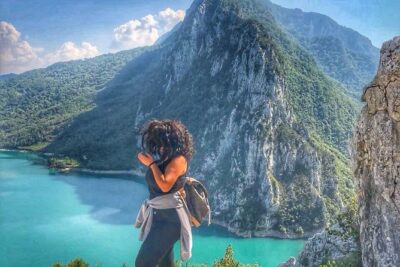
Hike Gamti Mountain with Bovilla lake view & canyon- From Tirana
Read our review →
Berat city UNESCO tour, the Castle & Belshi lake- From Tirana
Read our review →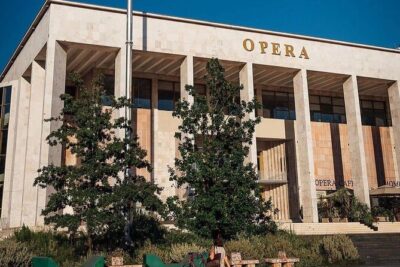
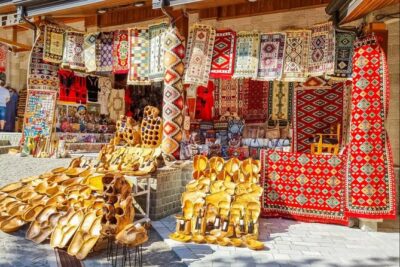
Kruja castle, the old Bazaar & Sarisalltik- Departure from Tirana
Read our review →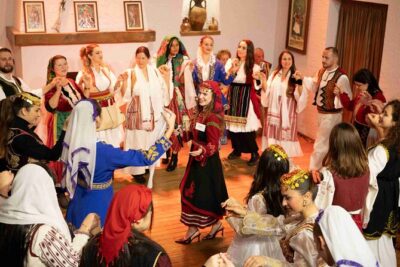
Albanian Night Show: Traditional Music, Dance & Dinner in Tirana
Read our review →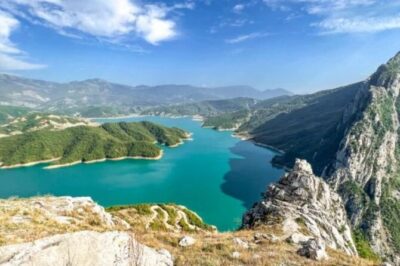
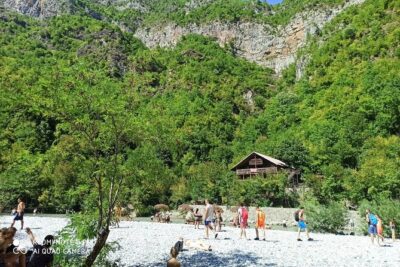
Shala river & Komani lake -Day trip departure from Tirana/Shkodra
Read our review →