
REVIEW · FOOD & DRINK
Tirana Walking Tour, Extra Virgin Olive Oil and Raki Tasting
Tirana reveals itself one square at a time. This 2 to 3-hour walking tour brings together the city’s Ottoman, communist, and modern faces, then adds a tasting of extra virgin olive oils and fruit-based raki. I like the mix of serious history and local food, and I like that the tour stays on foot, with no bus window between you and the city.
I also appreciate the local focus. Guides such as Taulant have been praised for explaining Albania in plain, personal terms and for suggesting restaurants and shops for the rest of your stay. The main drawback is that the experience depends heavily on the guide and on reliable scheduling, so the operator’s one reported missed booking is worth keeping in mind.
The tour costs $22.69 per person, which is a fair price for a private experience for your group, a certified guide, and the oil and raki tasting. It is best suited to first-time visitors who want a useful orientation rather than a long museum visit.
In This Review
- Key points to know before you book
- Why this Tirana walk works so well
- Skanderbeg Square and Tirana’s many pasts
- The Clock Tower and the Ottoman layer
- Murat Toptani Street and the city’s open-air gallery
- Tirana Castle and the tasting break
- Italian-planned boulevards and complicated history
- Blloku, from forbidden quarter to social center
- The Pyramid of Tirana and the end of the route
- What the guide adds to the experience
- Is $22.69 a fair price?
- Timing, weather, and booking cautions
- Who should book this walk?
- Should you book the Tirana walking tour?
- FAQ
- How much does the Tirana walking tour cost?
- How long does the tour last?
- What language is the tour offered in?
- Where does the tour start?
- Where does the tour end?
- Is the olive oil and raki tasting included?
- Are meals, snacks, and other drinks included?
- How many people can join the tour?
- Can I cancel for a full refund?
Key points to know before you book
- Taste several olive oils and fruit rakis: The tasting includes extra virgin olive oil and different rakis made from fruits such as blackberries and plums.
- Walk through Tirana’s changing political story: Skanderbeg, Ottoman, Italian, communist, and post-communist influences all appear along the route.
- See the Pyramid and Blloku together: These two stops help explain both Enver Hoxha’s Albania and the city’s modern social life.
- Start at Skanderbeg’s equestrian statue: The meeting point is in the center of Skanderbeg Square, at 8RH9+3CW, Sheshi Skënderbej.
- Expect a guide-led walk, not a full museum tour: Admission to the listed stops is free, but the focus is on commentary, streetscapes, and local context.
- Plan for about three hours: The route is manageable, but summer heat can make the walk feel longer. One guide took care to use shade when possible.
Why this Tirana walk works so well
Tirana is not a city you understand from one monument. Its character comes from the abrupt changes between eras. A grand square leads to Ottoman traces, an Italian-planned boulevard, a former communist power center, and cafés that represent the city’s new public life.
That makes this route useful early in your visit. I would use it on your first day to get your bearings and collect ideas for later. The guide can point out places you may want to revisit, and the walk gives you a working outline of Albania’s recent past without asking you to spend hours indoors.
The group size can reach 30 people, although the experience is described as private for your own group. That wording may matter to you. If you want a truly intimate walk, confirm how your booking will be handled. A smaller group makes it easier to ask questions, while a larger one may feel less personal.
The tour is offered in English and includes a professional certified guide. Most people can take part, and the meeting point is near public transportation. Meals, snacks, and drinks beyond the included tasting are not covered, so eat beforehand or plan a separate stop.
More Walking Tours in Tirana
- Walking Tour of Tirana
★ 5.0 · 646 reviews - Local food experience & walking tour of Tirana
★ 5.0 · 192 reviews - Berat Walking Tour
★ 5.0 · 86 reviews
Skanderbeg Square and Tirana’s many pasts
The tour begins at the equestrian statue of Skanderbeg, Albania’s national hero. This is the right place to start because the square has repeatedly changed meaning along with the country around it.
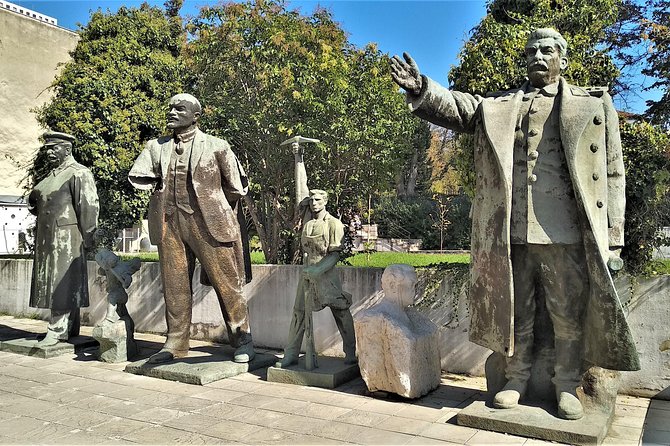
The square was first conceived before the Second World War by Italian architect Armando Brasini. Over time, it hosted statues of Stalin, Skanderbeg, and Enver Hoxha. Today, Skanderbeg remains, while the other political symbols are gone. The open space you see is therefore not just a civic plaza. It is also a record of which governments Albania has chosen to remember and which it has removed.
You spend about 20 minutes here, with no admission charge. That is enough time for a clear introduction, though not enough for an exhaustive architectural lecture. I like this stop because it gives the rest of the tour a frame. You will keep noticing how Tirana mixes older structures with planned boulevards and newer public spaces.
The square is also a practical meeting place. Look for the statue rather than relying only on a street address, and arrive with enough time to identify the exact starting point.
The Clock Tower and the Ottoman layer
The Tirana Clock Tower is one of the city’s oldest structures from the late Ottoman period. Construction was completed in 1822, making it an important reminder that Tirana existed long before its Italian boulevards and communist monuments.
The clock tower is treated as a stop along the route rather than a separate paid attraction. The supplied details do not promise entry inside, so expect the guide to explain its place in the city’s development from the outside.
This is one of the tour’s useful contrasts. Skanderbeg Square has a formal, twentieth-century appearance, while the clock tower points back to an earlier town. You get a quick lesson in how Tirana grew instead of receiving a collection of unrelated dates.
Murat Toptani Street and the city’s open-air gallery
The pedestrian Murat Toptani route links several important parts of central Tirana. It passes the Fortress of Tirana, the Academy of Sciences, the old National Library, the former Political Persecutor’s Building, and Tanners Bridge.
The route also brings you near newer attractions, including Kalaja e Tiranës, the National Gallery of Arts, and the residence of the Albanian royal family. The effect is less like walking from one isolated sight to another and more like moving through a long public corridor filled with clues.
This stretch is especially good for visitors who prefer urban observation to formal sightseeing. You can see how a pedestrian street connects the city’s institutions, old buildings, and leisure spaces. The guide’s role matters here because many of these places are more meaningful once you know what they represent.
The route description includes a park considered Albania’s first national park. Since the exact amount of time at each feature is not specified, do not expect a detailed visit to every building named along the way. Think of Murat Toptani as the connecting thread.
Something completely different:
- Hike Gamti Mountain with Bovilla lake view & canyon- From Tirana
★ 5.0 · 1,280 reviews - Berat city UNESCO tour, the Castle & Belshi lake- From Tirana
★ 5.0 · 804 reviews - Kruja castle, the old Bazaar & Sarisalltik- Departure from Tirana
★ 5.0 · 592 reviews - Albanian Night Show: Traditional Music, Dance & Dinner in Tirana
★ 5.0 · 431 reviews
Tirana Castle and the tasting break
Tirana Castle, or Kalaja e Tiranës, sits along Toptani Pedestrian Street. It is described as one of the city’s newer tourist destinations, which may surprise you. The word castle suggests medieval walls and quiet ruins, but this stop is part of contemporary Tirana’s public and commercial life.
You spend about 15 minutes here. The key reason to visit is not a long archaeological inspection. It is the chance to see how the city has turned a historic site into a place people use today.
This is also where the olive oil and raki tasting is particularly relevant. The experience includes several extra virgin olive oils and different rakis distilled from fruits such as blackberries and plums. Raki is a strong spirit, so small samples can add up quickly. Pace yourself, especially if you are walking in warm weather.
The tasting gives the tour a more personal edge than a standard monument walk. You are not only hearing about Albania’s past. You are also trying products tied to local food and drink traditions. Snacks and meals are not included, so the tasting should not be mistaken for lunch.
Italian-planned boulevards and complicated history
The route also explains Tirana’s grand boulevard planning. Brasini gave the boulevard a broad European Renaissance style, while Gherardio Bosio later shaped its buildings and formal appearance with a neoclassical, utilitarian approach.
The political context is uncomfortable but important. Mussolini took an interest in the boulevard project and called both architects to special audiences to discuss its progress. This is a useful reminder that architecture can carry the ambitions of governments, not just the taste of designers.
A good guide will help you look past the handsome façades. The buildings are not simply attractive backdrops. They reflect foreign influence, authoritarian power, and the effort to make Tirana appear like a modern European capital.
This section is one reason I would choose a guided walk over using a guidebook alone. You can photograph a boulevard without knowing why it looks that way. A local explanation connects the design to Albania’s political story.
Blloku, from forbidden quarter to social center
Blloku, also called Ish-Blloku, is one of Tirana’s most useful places for understanding the shift after communism. During the communist period, it was a restricted residential district for members of the political leadership. Ordinary Albanians were not allowed in.
Today, Blloku is known for boutiques, shops, restaurants, bars, pubs, and cafés. It is often described as a playground for the young Albanian elite, a sharp change from its earlier role as a protected zone of power.
The tour spends about 15 minutes here. That is enough for an introduction, but not enough to sample the district’s restaurants or nightlife. If you like the area, save it for a later meal or evening walk. The guide may also offer suggestions for places to eat and shop, as Taulant did for one group.
You can still find Enver Hoxha’s former residence in Blloku. That detail gives the neighborhood extra weight. Its cafés and polished storefronts sit beside a physical reminder of the leader who shaped Albania’s communist era.
I like this stop because it avoids treating Tirana as a museum. Blloku shows what happened after the old system fell: restricted spaces became public, and a former power district became a fashionable part of everyday city life.
The Pyramid of Tirana and the end of the route
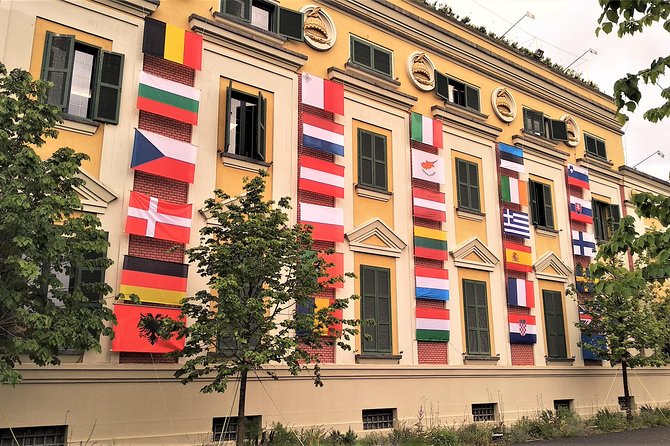
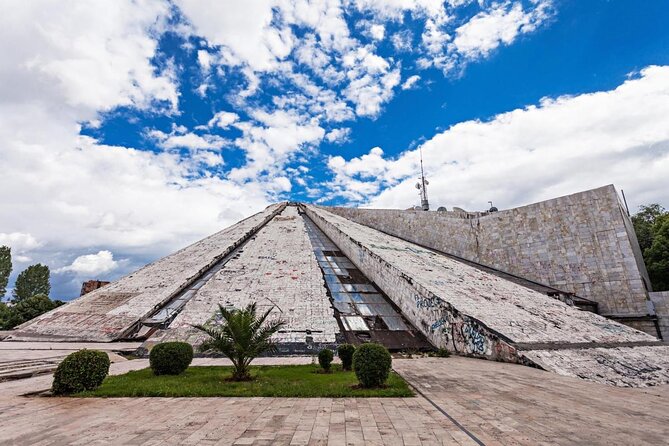
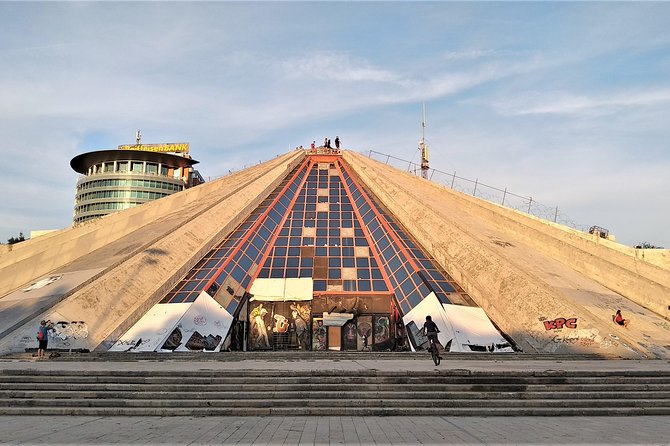
The Pyramid of Tirana was inaugurated in 1988 as the Enver Hoxha Museum. It served as a heritage museum for Hoxha until 1991 and was designed in a pyramid form, with an overhead shape resembling a communist star spreading its rays.
The building has had a complicated public life since then. The description of the tour points to its renewed form, so you should expect the guide to explain how the structure has been repurposed and changed.
You spend about 15 minutes here. The stop is mainly about the building’s meaning and appearance rather than a lengthy interior visit. The Pyramid is valuable because it makes Albania’s political memory visible in concrete. It is both an unusual piece of architecture and a reminder of how recently the country left communism behind.
The tour ends back at the original meeting point. That makes the experience easy to fit into a day of sightseeing, though the exact walking distance and pace are not specified. Wear comfortable shoes and bring water, since the tasting does not include general drinks.
What the guide adds to the experience
The strongest part of this tour is the human explanation between the landmarks. Several highly positive accounts praised Taulant for his personal approach, clear historical commentary, and helpful advice about local places. One group spent close to three hours with him, shared a coffee, and received recommendations for shops and restaurants.
That sort of help is valuable in Tirana. The city’s political history is not always obvious from its streets, and the same site can mean different things depending on the period being discussed. A guide can explain why a square changed, how a restricted district became a social center, and why a modern-looking building carries so much political weight.
The tour also appears flexible in pace. One group appreciated that the guide tried to keep them in the shade when possible. That is a useful sign for warm months, although weather and the guide’s judgment will affect how much relief you get.
Do not expect a lecture delivered at every stop. The tone appears casual and conversational, with room for local recommendations and questions. That suits you if you want context without a formal classroom experience.
Is $22.69 a fair price?
At $22.69 per person, the tour offers good value if you want three things in one outing: an orientation to central Tirana, a local guide’s interpretation, and a tasting of olive oil and raki.
The price is especially reasonable for a private booking limited to your group, provided that the private format is confirmed. You are paying less than you might expect for a dedicated guide, but the maximum group size of 30 means you should not assume every departure will feel private or highly personal.
The tasting improves the value because it adds something you would not get from simply walking between monuments. Still, the inclusion is narrow. Food, snacks, and other drinks are excluded, and the tour does not list admission to paid attractions because the described stops have free entry.
I would see this as a strong first-day purchase rather than a complete Tirana sightseeing package. It introduces the city and helps you choose what deserves more time later.
Timing, weather, and booking cautions
The experience lasts approximately two to three hours and requires good weather. If poor weather cancels it, you are offered another date or a full refund.
Tirana can feel hot during a long walk, so lightweight clothing, water, and comfortable shoes are sensible. The guide may use shaded streets when possible, but do not depend on the tasting to replace hydration or a meal.
Confirmation is provided at booking. The meeting point is the equestrian statue of Skanderbeg at Sheshi Skënderbej, and the activity returns there. Free cancellation is available up to 24 hours before the start time. Changes or cancellations made within 24 hours are not accepted for a refund.
There was also one serious scheduling failure connected to an amended booking date. The operator apologized, said the date had not appeared on its schedule, and approved a full refund. That appears to have been an isolated administrative mistake, but I would still save the confirmation and check the date before setting out.
Who should book this walk?
I would recommend it to first-time visitors, couples, families, and small groups who want an easy introduction to Tirana’s main central areas. It is also a good match if you want history explained through streets and buildings instead of spending most of your morning in a museum.
It suits you particularly well if you enjoy local food traditions and want to try several kinds of raki without committing to a full food tour. The olive oil tasting is a nice extra, especially for anyone interested in Albanian produce.
You may want something else if you dislike walking, want extensive interior visits, or need a tightly timed architectural tour. The route covers many places, but some stops are brief. The experience is about connections and context, not detailed examination of every monument.
Should you book the Tirana walking tour?
Book it if you want a reasonably priced introduction to Tirana with real local commentary and a memorable tasting. The route covers the city’s central landmarks, communist-era sites, Italian-planned streets, and post-communist social life in one manageable outing.
Before booking, confirm the private-group arrangement and double-check your date. If those details are in order, the tour offers a practical way to understand Tirana quickly, with the added pleasure of olive oil, blackberry raki, plum raki, and other local flavors.
FAQ
How much does the Tirana walking tour cost?
The listed price is $22.69 per person.
How long does the tour last?
The experience lasts approximately two to three hours.
What language is the tour offered in?
The tour is offered in English.
Where does the tour start?
It starts at the equestrian statue of Skanderbeg at 8RH9+3CW, Sheshi Skënderbej, Tirana.
Where does the tour end?
The activity ends back at the meeting point.
Is the olive oil and raki tasting included?
Yes. Extra virgin olive oil and different rakis, including fruit-based rakis distilled from blackberries and plums, are included.
Are meals, snacks, and other drinks included?
No. Meals, snacks, and drinks outside the stated tasting are excluded.
How many people can join the tour?
The maximum stated group size is 30 people. The experience is also described as private for your group.
Can I cancel for a full refund?
Yes, if you cancel at least 24 hours before the experience start time. Cancellations or changes made less than 24 hours before the start time are not accepted for a refund. If poor weather causes the operator to cancel, you are offered a different date or a full refund.
More Food Tours in Tirana
- Cooking Classes and Traditional food tasting in Tirana
★ 5.0 · 282 reviews - Best of Local Food & City Tour of Tirana – Food & Drinks Included
★ 5.0 · 160 reviews - Traditional Albanian Cooking Class in Tirana with Raki Tasting
★ 5.0 · 125 reviews - Vineyards, Albanian Wine Tasting & Boat Tour from Tirana/Durres
★ 5.0 · 64 reviews
Just added in Tirana
- Wine Tasting day in Berat (Visit to the Berat Castle & Lunch included)★ 4.5 · 6 reviews
- From Tirana Wine Tasting & Food tour in Berat★ 5.0 · 5 reviews
- Visit Albania and Kosovo★ 5.0 · 2 reviews
- Bovilla and Kruja: Where History Meets Nature★ 5.0 · 2 reviews
- Visit Albania and Montenegro★ 5.0 · 1 review
- Virtual Reality Games and Experiences – Perfect place to drink and have fun!★ 5.0 · 2 reviews
- UNESCO heritage in Albania – 4 days★ 5.0 · 3 reviews
- Exclusive Qafshtama National Park Hiking Tour With Private Transfer★ 5.0 · 1 review
Food & Drink, compared.
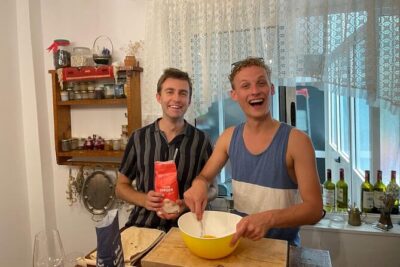
Cooking Classes and Traditional food tasting in Tirana
Read our review →
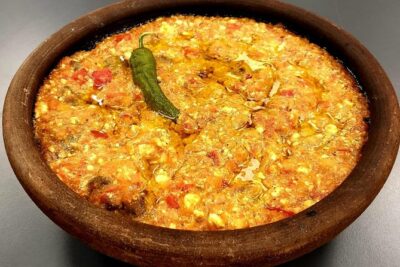
Best of Local Food & City Tour of Tirana – Food & Drinks Included
Read our review →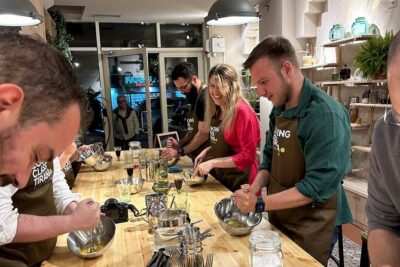
Traditional Albanian Cooking Class in Tirana with Raki Tasting
Read our review →
Mussel Sailing Tour with Food and Drink in Albania
Read our review →
Vineyards, Albanian Wine Tasting & Boat Tour from Tirana/Durres
Read our review →
Browse the lists this tour appears in