
REVIEW · HISTORICAL TOURS
Historic Corners of Tirana – Guided Walking Tour
Tirana’s past is packed into a short walk. This private two-hour tour links Skanderbeg Square, Et’hem Bey Mosque, Ottoman-era monuments, and old villas, giving you a quick but thoughtful introduction to Albania’s capital. I like the clear route through the historic center, and I like that the guide adds stories about daily life, religion, politics, and art rather than simply pointing out buildings. The main concern is the price: at $196.66 per person, it is a serious cost for a two-hour walk, especially since every stop has free admission.
You will hear about Albania’s national hero, the return of religious freedom after communism, former rulers of Tirana, and painter Sali Shijaku. The tour is private, so your group gets the guide’s attention and can ask questions as you go. Good weather is required, and the walk finishes away from Skanderbeg Square, on Rruga Sami Frashëri.
In This Review
- What makes this Tirana walk worth considering
- Starting beneath Skanderbeg’s horse
- Et’hem Bey Mosque and the return of religious life
- Tyrbja e Kapllan Pashës and Ottoman Tirana
- Avni Rustemi and a different side of the city
- Shtëpia e Miqve and Sali Shijaku’s old villa
- A short tour with a wide historical range
- What the private format changes
- Is $196.66 per person fair?
- Who should book this walking tour?
- Booking, weather, and cancellation details
- Should you book Historic Corners of Tirana?
- FAQ
- How long does the Historic Corners of Tirana tour last?
- Where does the tour begin?
- Where does the tour finish?
- Is this a private tour?
- Are admission tickets included?
- What happens if bad weather cancels the tour?
What makes this Tirana walk worth considering
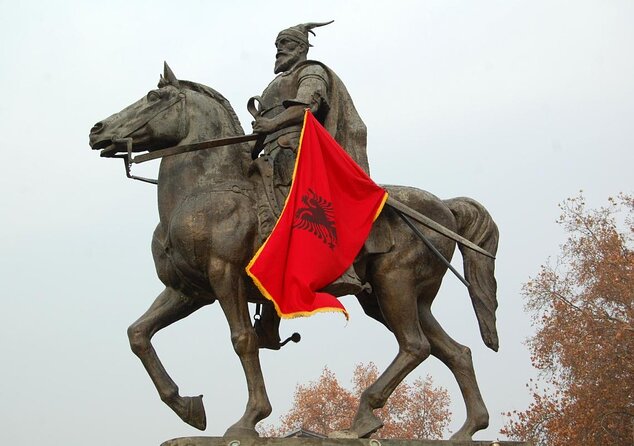
- Skanderbeg Square provides an easy starting point: You begin beside the monument to Albania’s national hero, so the guide can explain the country’s resistance to Ottoman rule before the walk moves into later periods.
- Et’hem Bey Mosque connects religion and communism: This small central mosque is presented not only as a religious building but also as a symbol of renewed religious freedom after Albania’s communist era.
- The route covers several layers of Tirana: Medieval Albanian resistance, Ottoman influence, communist restrictions, royal history, and modern city life all appear within roughly two hours.
- The old villa adds an artistic finish: The final stops are linked with the well-known Albanian painter Sali Shijaku and offer a change from large public monuments to older domestic architecture.
- The private format can make history more personal: You share the walk only with your own group, which helps if you want to stop for photographs or ask about everyday life in Tirana.
- The guide’s strongest role is interpretation: The tour is designed to explain culture and daily life, not just give dates and names.
Starting beneath Skanderbeg’s horse

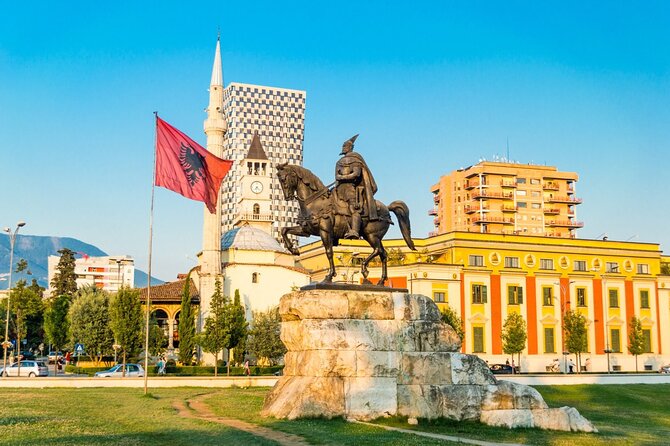
The walk begins at the Skanderbeg Statue in Skanderbeg Square, the most natural place to get your bearings in central Tirana. The monument honors Gjergj Kastrioti Skanderbeg, Albania’s national hero, whose resistance to Ottoman forces occupies an important place in the country’s national story.
You have about 18 minutes here. That is enough time for an introduction and photographs, but not a long architectural study of the square. The value is the context: the guide can explain why Skanderbeg matters to Albanians and how stories from the medieval period still shape national identity.
I like this opening because it gives the tour a firm historical starting point. Instead of beginning with a random street corner, you meet the figure who represents Albanian resistance and independence. If you know little about Albania, this first stop helps explain why the country’s symbols can feel especially important in Tirana.
Admission to the statue is free. You should also expect this part of the walk to feel open and urban rather than quiet or intimate. Skanderbeg Square is a major public space, so the guide’s storytelling is what turns the setting into a useful history lesson.
More Walking Tours in Tirana
- Walking Tour of Tirana
★ 5.0 · 646 reviews - Local food experience & walking tour of Tirana
★ 5.0 · 192 reviews - Berat Walking Tour
★ 5.0 · 86 reviews
Et’hem Bey Mosque and the return of religious life
From the square, the tour continues to Et’hem Bey Mosque, one of Tirana’s best-known historic religious buildings. The stop lasts about 18 minutes and focuses on more than the mosque’s appearance.
The guide explains the building’s place in Albania’s religious past, including the restrictions of the communist period. Under communism, religious practice was suppressed, making the reopening of mosques and churches an important part of the country’s return to religious freedom. That gives this stop a strong human meaning. You are not only looking at an old building. You are considering what it meant for people to lose, and later regain, the right to practice their faith.
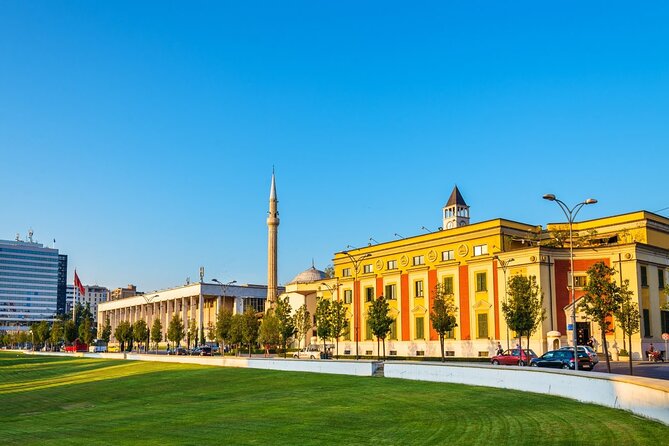
The mosque’s central location makes it easy to include in a short walking route. Its presence near Skanderbeg Square also shows how several periods of Tirana’s past sit close together. A national monument, a historic mosque, government buildings, and modern city life all meet in this part of town.
The visit is listed with free admission. The available information does not specify interior access rules, so you should follow the guide’s instructions about entering and dress respectfully. If you care most about religious architecture, you may find the 18-minute stop brief. If you want the political and social meaning of the site, the timing is more useful.
Tyrbja e Kapllan Pashës and Ottoman Tirana
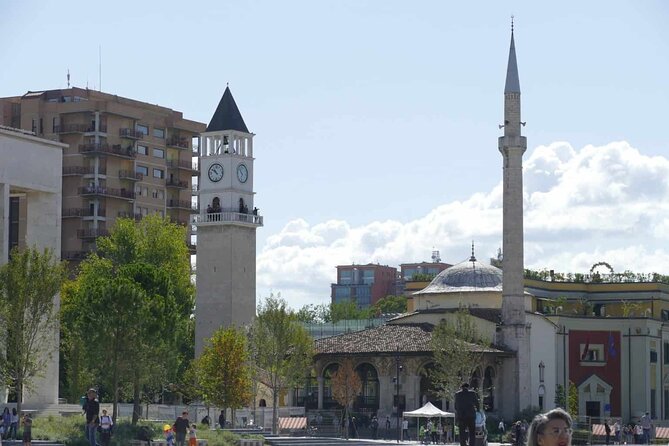
The next stop is Tyrbja e Kapllan Pashës, an early 19th-century tomb with an octagonal form. Its carved stonework includes columns with decorated capitals, giving the structure a more detailed appearance than its small size might suggest.
The guide uses this monument to explain Ottoman influence in Tirana. That matters because the city’s story is not only about opposition to the Ottoman Empire. Ottoman rule also shaped its buildings, religious life, public spaces, and local leadership.
A striking story connected with the site concerns a former ruler of Tirana. He was imprisoned here in the 19th century and later returned to Istanbul. That detail brings political conflict down to a human scale. You can picture the monument not simply as an old tomb, but as a place tied to power, punishment, and changing loyalties.
The tomb was built from carved stone and has recently been restored by the Municipality of Tirana. Restoration can make a small monument easier to appreciate, though it may also leave you wanting more time to examine the work. The stop lasts around 18 minutes, and admission is free.
You may also hear about the nearby Suleyman Pasha Tomb and the Sylejman Pasha Mosque. They are not the same place. The mosque was demolished during World War II, so this part of the route also helps explain how Tirana’s older religious buildings have been lost, altered, or preserved.
Avni Rustemi and a different side of the city
The fourth stop is Busti i Avni Rustemit, presented as an architectural and cultural point connected with Albanian painter Sali Shijaku. The stop lasts about 19 minutes.
This section shifts away from grand national symbols and religious buildings. You begin to see Tirana through its streets, older structures, and artistic connections. The tour description identifies the setting as more than 300 years old and describes it as a place with a calm, pleasant character.
There is an important limit here. The supplied details give the same description for Busti i Avni Rustemit and the next stop, Shtëpia e Miqve, so the precise difference between the two locations is not fully clear. I would treat this portion as an introduction to old Tirana and its artistic heritage rather than expect a sharply defined museum visit at each stop.
The connection with Sali Shijaku is still useful. He is identified as a famous Albanian painter, and the route gives you a chance to link the city’s older architecture with Albanian art. If you enjoy photographing doors, façades, and historic domestic buildings, this part may be more rewarding than its brief description suggests.
Something completely different:
- Hike Gamti Mountain with Bovilla lake view & canyon- From Tirana
★ 5.0 · 1,280 reviews - Berat city UNESCO tour, the Castle & Belshi lake- From Tirana
★ 5.0 · 804 reviews - Kruja castle, the old Bazaar & Sarisalltik- Departure from Tirana
★ 5.0 · 592 reviews - Albanian Night Show: Traditional Music, Dance & Dinner in Tirana
★ 5.0 · 431 reviews
Shtëpia e Miqve and Sali Shijaku’s old villa
The final stop is Shtëpia e Miqve, also described as an old villa connected with Sali Shijaku. It receives about 18 minutes of the tour.
After the large square, mosque, and Ottoman tomb, an old villa changes the scale of the experience. You are looking at a building tied to a person and a neighborhood rather than a national event. That can make Tirana feel less like a collection of official monuments and more like a lived-in city.
The villa is described as more than 300 years old and as a cultural monument. It is also associated with Shijaku, whose work gives the site an artistic connection. You may find this final stop especially appealing if you like historic homes and local culture more than formal political memorials.
Again, the description overlaps with the previous stop, so I would not book this tour expecting an extensive art collection or a long interior visit. The confirmed strength is the guide’s explanation of the building’s cultural role and connection with Shijaku.
The tour ends at Shtëpia e Ofertave on Rruga Sami Frashëri, not back at the starting point. That is a small but useful detail when planning your day. You will finish in a different part of Tirana, and the location is near public transportation.
A short tour with a wide historical range
Two hours is enough for an overview, not a complete study of Tirana. The scheduled stops add up to roughly 91 minutes, leaving the remaining time for walking between sites, introductions, questions, and explanations along the route.
I see that as a sensible length for a first visit. You can learn the city’s main historical themes without giving up an entire morning or afternoon. The route moves through several periods:
- Skanderbeg and medieval resistance
- Ottoman rule and local leadership
- Religious life and the communist era
- The restoration of historic monuments
- Traditional homes and Albanian art
- The contrast between old buildings and modern city life
The strongest part of the experience is the connection between these subjects. The guide does not only take you from one monument to another. The tour is designed to show how contemporary Tirana meets older traditions, and how the city’s daily life has changed over time.
The short schedule also creates limits. You should not expect long stops, extensive museum visits, or a full treatment of Albania’s national history. The tour works best as a first orientation, especially if you want a human explanation before exploring Tirana independently.
What the private format changes

This is a private tour, so only your group participates. That is a major advantage if you want to ask questions about Albania’s culture, communist past, religion, or everyday life without holding up a larger group.
The private setup may also help with photographs. The itinerary includes several monuments where you might want a little time to look around, and a guide focused on one group can usually respond more easily to those interests. The information provided does not promise a custom route, but the private format gives the experience a more personal feel than a large shared walk.
The guide’s role appears particularly important. The strongest praise focuses on engagement during the walk and explanations of history, culture, and daily life. You should choose this experience for the storytelling, not simply for access to the sites, since all listed stops have free admission.
The tour is near public transportation, and most people can participate. It is still a walking experience, so comfortable shoes are sensible. Because the tour requires good weather, check the forecast before you plan other fixed activities around it.
Is $196.66 per person fair?
At $196.66 per person, the price is high for a two-hour walking tour. The main reason to consider it is the private format, not admission savings. You are paying for a guide dedicated to your group, a prepared route, and an explanation of Tirana’s history, culture, and daily life.
The value improves if you are a small group that wants a private introduction and prefers not to organize the route yourself. It may also suit you if you have limited time in Tirana and want to cover several central landmarks quickly.
The value is weaker for a solo visitor or a couple who mainly wants to see the monuments. Since the statue, mosque, tomb, and other stops have free admission, you could visit the places independently at little cost. You would, however, lose the connected story about Skanderbeg, Ottoman rule, communist restrictions, religious freedom, and Sali Shijaku.
Group discounts are available, though the amount is not specified. Ask about the final per-person price for your group before booking. That may change the calculation considerably.
Who should book this walking tour?
I would recommend it most strongly to first-time visitors who want a guided introduction to central Tirana. It suits you if you enjoy history but also want the guide to explain how events affected ordinary life.
It is a good fit for:
- Small groups wanting a private guide
- Visitors with only a short time in Tirana
- People interested in Albania’s communist period and religious history
- Anyone who likes old buildings, monuments, and local art
- Visitors who want help connecting separate sights into one story
I would be more cautious if you want a long museum visit, a highly detailed architectural tour, or a route built around food and nightlife. The experience is also less attractive at full price if you are comfortable exploring central Tirana alone.
The two available ratings are both five-star, with particular praise for the guide’s ability to engage the group and explain the contrast between traditional and contemporary lifestyles. That is the clearest reason to book: you get a guided interpretation of the city rather than a simple checklist of monuments.
Booking, weather, and cancellation details
You receive confirmation at booking, and a mobile ticket is available. The tour starts at the Skanderbeg Statue, Sheshi Skënderbej, and ends at Shtëpia e Ofertave on Rruga Sami Frashëri.
You can cancel for a full refund up to 24 hours before the local start time. Cancellations or changes made within 24 hours are not refunded or accepted. If poor weather causes the operator to cancel, you will be offered another date or a full refund.
Should you book Historic Corners of Tirana?
Book this tour if you want a private, story-led introduction to Tirana and are willing to pay for personal guidance. Its best features are the connected route, the attention given to communist-era religious restrictions, and the contrast between public monuments and Sali Shijaku’s old villa.
Skip it if you mainly need directions or want the cheapest way to see free sights. For a small group with limited time, the guide’s explanations can justify the cost. For independent budget visitors, the same central sites are easy to visit without paying nearly $200 per person.
FAQ
How long does the Historic Corners of Tirana tour last?
The tour lasts approximately two hours.
Where does the tour begin?
It begins at the Skanderbeg Statue in Skanderbeg Square, Tirana 1000, Albania.
Where does the tour finish?
The tour ends at Shtëpia e Ofertave on Rruga Sami Frashëri in Tirana.
Is this a private tour?
Yes. Only your group participates in the activity.
Are admission tickets included?
The listed stops have free admission, so there are no entry fees specified for them.
What happens if bad weather cancels the tour?
If the experience is canceled because of poor weather, you will be offered a different date or a full refund.
More History Tours in Tirana
- Tirana Walking Tour: History, Culture &Gems by a Passionate Guide
★ 5.0 · 52 reviews - Semi – Private Tour at Cape of Rodon; Hidden Beaches & History
★ 5.0 · 46 reviews - Walking tour of Tirana; History & Culture
★ 5.0 · 37 reviews - Berat Cultural Tour by 1001 Albanian Adventures
★ 5.0 · 26 reviews
Just added in Tirana
- Wine Tasting day in Berat (Visit to the Berat Castle & Lunch included)★ 4.5 · 6 reviews
- From Tirana Wine Tasting & Food tour in Berat★ 5.0 · 5 reviews
- Bovilla and Kruja: Where History Meets Nature★ 5.0 · 2 reviews
- Visit Albania and Kosovo★ 5.0 · 2 reviews
- Visit Albania and Montenegro★ 5.0 · 1 review
- Virtual Reality Games and Experiences – Perfect place to drink and have fun!★ 5.0 · 2 reviews
- UNESCO heritage in Albania – 4 days★ 5.0 · 3 reviews
- Exclusive Qafshtama National Park Hiking Tour With Private Transfer★ 5.0 · 1 review
Historical Tours, compared.

Tirana Walking Tour: History, Culture &Gems by a Passionate Guide
Read our review →
Semi – Private Tour at Cape of Rodon; Hidden Beaches & History
Read our review →
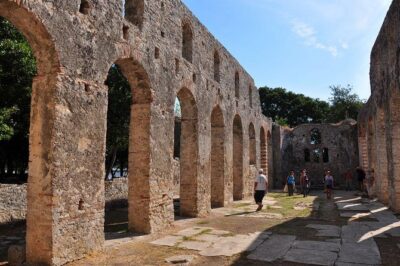
Ancient City of Butrint, UNESCO World Heritage site – A Must
Read our review →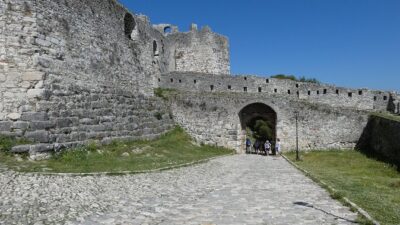
Day Trip To Berat,UNESCO Heritage with Tirana Day Trips
Read our review →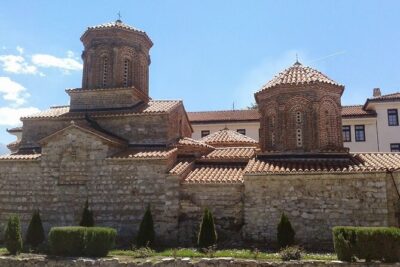
Private Full-Day Historical Day Tour in North Macedonia and Albania
Read our review →
Browse the lists this tour appears in