
REVIEW · WALKING TOURS
TIRANA Walking Tour: Discover the ever-changing capital city
Tirana changes block by block. This walking tour makes that change easier to read, from Ottoman landmarks and communist memories to cafés, galleries, and the stylish Blloku district. I like the small maximum group of 15 and the way a guide connects each sight to Albania’s complicated past. I also like that entry to the National Historical Museum, Clock Tower, and Et’hem Bey Mosque is included. The main drawback is that some sights can close unexpectedly, and the National Gallery is currently closed for expansion.
At $42.10 per person, this is not the cheapest way to see central Tirana, but it offers more than a simple orientation walk. You get three to four hours on foot, a qualified English-speaking guide, and historical context that is hard to pick up by wandering alone. Guides Gloria and Ilir have earned especially strong praise for their clear English, patience, humor, and ability to adjust the walk to your interests.
In This Review
- Key things to know before booking
- Why this Tirana walk is useful on a first visit
- Skanderbeg Square puts Albania’s past in one frame
- The Clock Tower rewards a short climb
- Et’hem Bey Mosque carries a difficult story
- Rruga Murat Toptani leads to Tirana Castle
- Tanners’ Bridge explains Tirana’s older trade routes
- The National Gallery area reveals Albania’s artistic past
- Blloku shows the capital’s most dramatic change
- How the guides affect the experience
- Is $42.10 a fair price?
- What to bring and how to plan the morning
- Who should book this Tirana walking tour?
- Should you book this Tirana tour?
- FAQ
- How long does the Tirana walking tour last?
- What time does the tour begin?
- Where does the tour start?
- Where does the tour end?
- Is the National Historical Museum ticket included?
- Are the Clock Tower and Et’hem Bey Mosque included?
- Is hotel pickup and drop-off provided?
- What language is the tour offered in?
- Can I cancel for a full refund?
Key things to know before booking
- Skanderbeg Square is the tour’s history lesson: You see Ottoman, royal, communist, and modern Albania in one central setting.
- Three admissions are included: The Clock Tower, Et’hem Bey Mosque, and National Historical Museum are covered in the price.
- The Clock Tower requires 90 steps: The climb is short but narrow and may not suit everyone.
- Blloku shows Tirana’s sharpest contrast: A former party-elite neighborhood is now packed with cafés, restaurants, boutiques, and nightlife.
- The walk stays in central Tirana: You start and finish at Tirana International Hotel, with no hotel pickup or drop-off.
- Guiding is the real value: Gloria and Ilir have been praised for making Albanian history clear, personal, and entertaining.
Why this Tirana walk is useful on a first visit
Tirana can feel hard to read at first. Its center mixes Ottoman mosques, socialist planning, modern towers, colorful public spaces, and fashionable streets. A short guided walk gives you the basic map and the political background before you explore on your own.
The route lasts about three to four hours and begins at 9:30 am outside Tirana International Hotel on Skanderbeg Square. It ends at the same place, which is handy if you want to continue sightseeing, find lunch, or return to your accommodation afterward.
I would choose this tour early in a Tirana stay. The guide can help you understand which parts of the city reflect Ottoman rule, which belong to the communist period, and which show the capital’s rapid current change.
The maximum group size is 15, though some departures may be much smaller. On one occasion, Ilir led a private walk for a single person, while another small group had only three people. A small group gives you more room to ask questions and makes it easier for the guide to focus on your interests.
The walk is offered in English. Most people can take part, and the route is near public transportation. You should still expect several hours on foot, outdoor sightseeing, and the 90-step climb to the Clock Tower.
More City Tours in Tirana
- Berat city UNESCO tour, the Castle & Belshi lake- From Tirana
★ 5.0 · 804 reviews - Best of Local Food & City Tour of Tirana – Food & Drinks Included
★ 5.0 · 160 reviews - City Tour of Tirana & Dajti Mountain with Pickup
★ 4.5 · 59 reviews
Skanderbeg Square puts Albania’s past in one frame
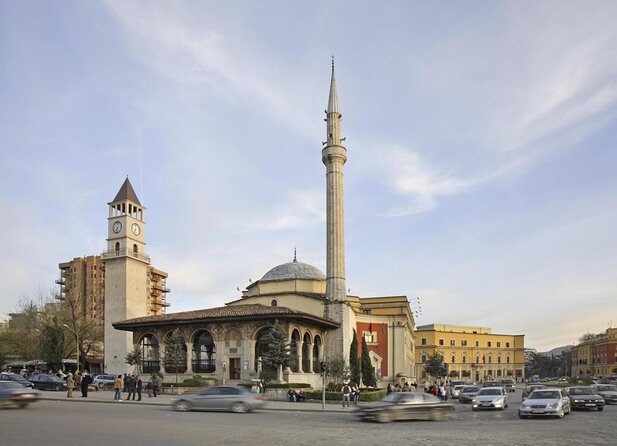
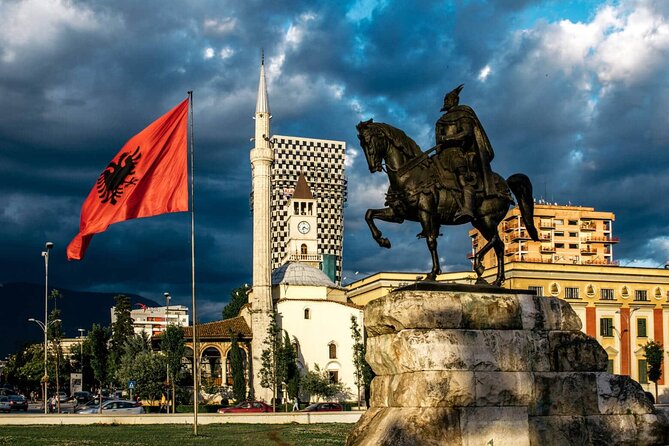
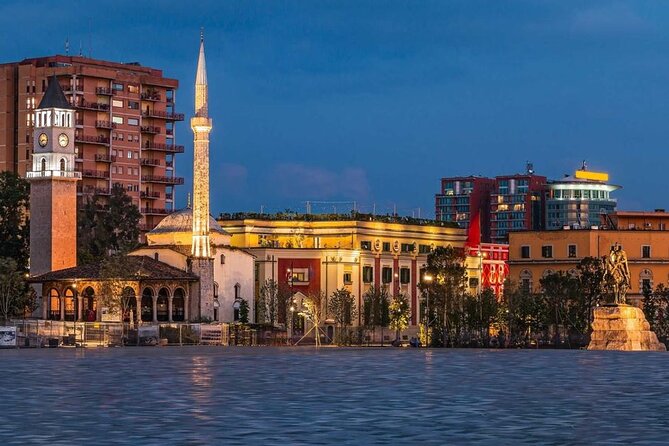
The tour begins at the heart of Tirana, Skanderbeg Square. The square takes its name from Albania’s medieval national hero, Skanderbeg, but the setting tells a much wider story than his name alone suggests.
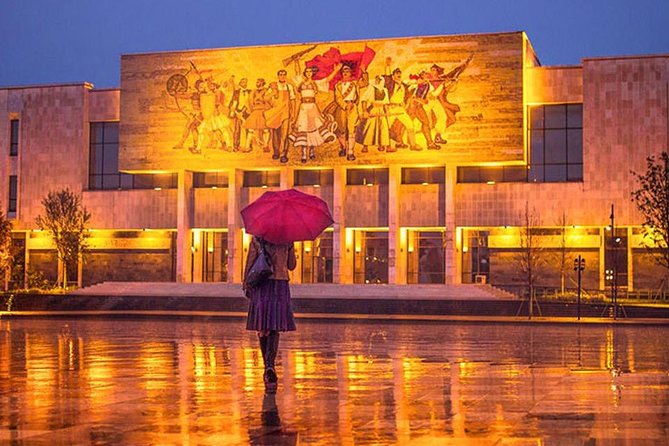
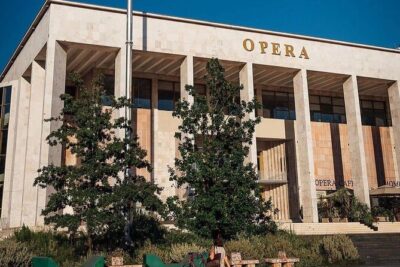
Your guide explains the buildings around the square, including the National Historical Museum, National Opera House, Old Clock Tower, and Et’hem Bey Mosque. Together, they show how Tirana has changed through Ottoman rule, the 20th century, communism, and the present day.
This is a good place for a guide to set the scene because the square has an unusually concentrated collection of landmarks. You do not need a long transfer between them, and each building adds another piece to the story.
Allow about 30 minutes here. Admission to the square is free, so the value comes from the explanation rather than an entrance ticket. I would pay close attention to the guide’s comments about the city’s changing urban design. The square is not a frozen historic monument. It continues to change, and that is part of what makes Tirana interesting.
The Clock Tower rewards a short climb
The Clock Tower opened to tourists in 1996. Built in 1840 during the Ottoman period, it rises 35 meters and was once Tirana’s tallest building until 1970.
The climb involves 90 steps. That is manageable for many people, but the number matters if you have knee problems, dislike enclosed stairways, or prefer a completely level route. The tour allows about 20 minutes, enough for the ascent, a look around, and the view from the top.
The panorama is not an untouched postcard scene. High-rise construction now surrounds parts of the city center, which can limit the old-world feel. Still, the tower offers a useful view of central Tirana and helps you see how quickly the capital is growing.
Admission is included. I consider this one of the better parts of the price because the tower gives you both a historic building and a practical sense of the city’s layout.
Et’hem Bey Mosque carries a difficult story
Et’hem Bey Mosque was built in 1823 and is one of central Tirana’s most important landmarks. It is also the only religious monument in the city described as surviving Albania’s Cultural Revolution.
The building is known for restored floral designs and colorful frescoes. Your guide explains the place of Islam in Albania and the mosque’s complicated path through the country’s religious and political history.
The stop lasts about 15 minutes, with admission included. That is enough time for a focused visit, though you should not expect a long, quiet museum-style exploration. The guide’s explanation is the main reason to include it.
Because this is an active religious site, you should follow any instructions given during the visit. The supplied information confirms that both tourists and believers can enjoy the restored decoration, but it does not provide a dress code or specific visiting rules.
More Walking Tours in Tirana
- Walking Tour of Tirana
★ 5.0 · 646 reviews - Local food experience & walking tour of Tirana
★ 5.0 · 192 reviews - Berat Walking Tour
★ 5.0 · 86 reviews - Tirana Walking Tour: History, Culture &Gems by a Passionate Guide
★ 5.0 · 52 reviews
Rruga Murat Toptani leads to Tirana Castle
From the square, the route continues along Rruga Murat Toptani toward Tirana Castle. Recent excavations in 2001 and 2008 revealed traces of castle walls dating from the period of Emperor Justinian, between the fourth and sixth centuries.
There is not much of the original castle left to see. Wars and destruction took their toll, so you should arrive expecting a historical site with limited surviving fabric rather than a grand fortress.
The modern use of the area is part of its appeal. The castle area has become a gathering place for artists and artisans, with cafés, restaurants, and galleries. The contrast is typical of Tirana: fragments of an old defensive structure now sit beside places made for eating, shopping, and meeting friends.
The visit lasts about 20 minutes and costs nothing. I like this stop because it shows how the city uses a small amount of surviving history without pretending the ruins are larger than they are.
Tanners’ Bridge explains Tirana’s older trade routes
The 18th-century Tanners’ Bridge is an Ottoman stone footbridge near the Albanian Parliament. It once linked Tirana with the eastern highlands and helped farmers bring produce and livestock toward the city.
Its Albanian name, Ura e Tabakëve, is linked to the tabakë trade, associated with butchering and tanning. The bridge crossed the Lana stream until the 1930s, when the river was diverted. After that change, the bridge fell into poor condition.
Restoration in the 1990s cleaned and rebuilt the original stonework. An artificial pond was made on both sides, and the bridge is now used only by pedestrians.
This is a short 10-minute stop, with no admission charge. It may not impress you through size, but it gives useful detail about daily work, food supply, and movement in older Tirana. I would listen carefully here because the bridge makes urban history practical. You can picture how farmers once entered the city, rather than simply hearing another date.
The National Gallery area reveals Albania’s artistic past
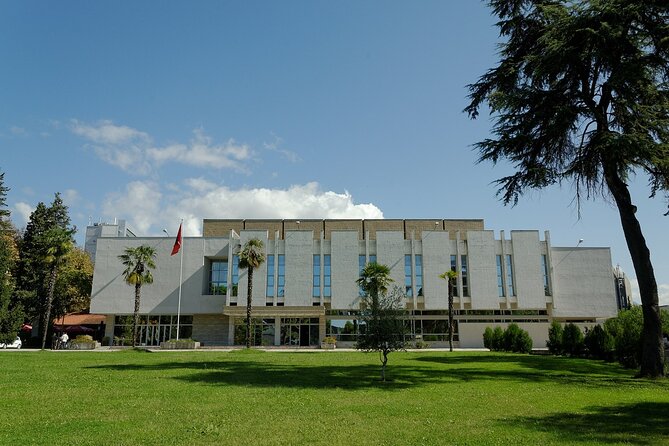
The Albanian National Gallery of Arts was established in 1954. It is known for social-realist art and figurative work from Albania. At present, the gallery is temporarily closed for expansion, so this tour does not include an interior visit or admission.
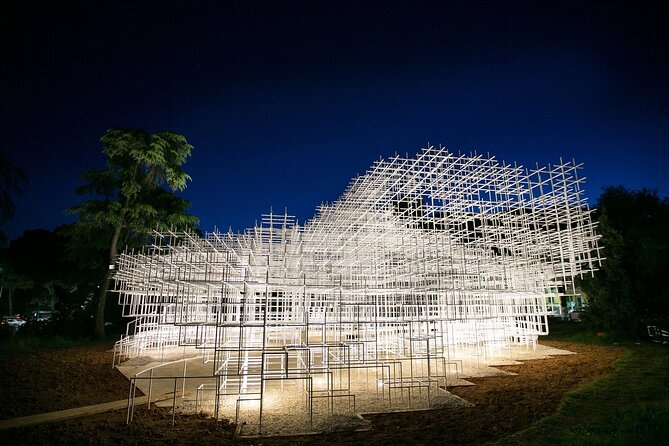
You can still see the building from outside and look for social-realist statues connected with Eastern European communist leaders such as Stalin and Lenin. The nearby Cloud, known locally as Reja, was designed by Japanese architect Sou Fujimoto.
The Cloud has become a setting for film screenings, performance festivals, and live concerts. The stop lasts about 10 minutes, and admission is not included.
This is best treated as a brief exterior stop, not a gallery visit. If Albanian art is a major reason for your trip, you will need to make a separate plan for museums and exhibitions. On the walking tour, the area works well because it connects art, communist memory, and present-day public culture in a small space.
Blloku shows the capital’s most dramatic change
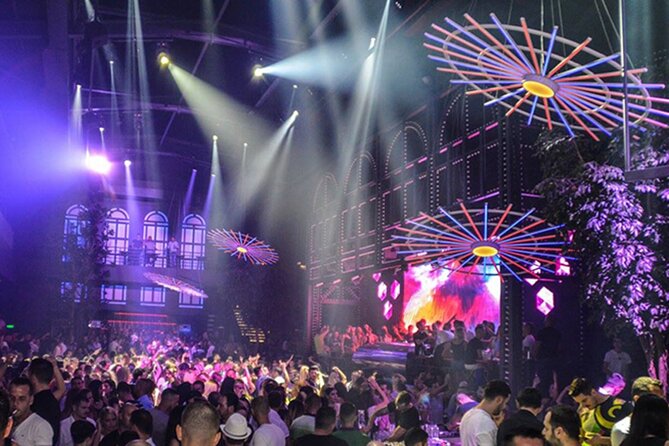
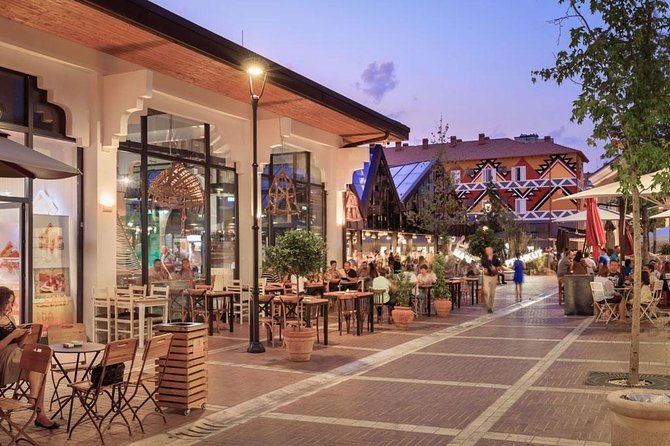
The final major stop is Blloku, one of Tirana’s most popular areas for restaurants, bars, cafés, boutiques, and nightlife. Today it has a polished, social feel, but its earlier role was far more exclusive.
During communist rule, Blloku was closed to ordinary people and reserved for party officials. Enver Hoxha’s modest modern-style villa was located here, and the area was tied to decisions that affected the whole country.
The route also passes the Presidential Office, known as Presidenca e Republikës. That adds another layer to the district’s political importance.
The stop lasts about 15 minutes, which is enough for an introduction but not enough to experience Blloku fully. I recommend returning later if you want dinner, drinks, shopping, or a closer look at the neighborhood. The guide gives you the context; your own evening can show you how completely the area has changed.
Blloku is one of the tour’s strongest stops because it makes Albania’s political shift easy to grasp. A place once closed to most people is now one of the city’s main public social centers.
How the guides affect the experience
The strongest part of this tour is the guiding. Gloria has been praised for leading an extensive walk, explaining both Albanian and Tirana history, and adjusting the focus to what interested each person. Ilir has also received high marks for his English, historical knowledge, patience, and ability to make the walk entertaining.
That flexibility matters. Tirana’s story includes Ottoman rule, religious change, monarchy, communism, isolation, and rapid modernization. A guide who simply lists dates would make the walk tiring. The better approach is to connect the buildings and streets to ordinary life and modern politics.
The tour has received a 4.8 out of 5 rating from 13 ratings, with 92 percent recommending it. The praise focuses heavily on clear explanations, strong English, professional conduct, and a personal style.
One practical example is worth noting. When the National Historical Museum unexpectedly closed during one walk, the guide offered cake and tea at a nearby café instead. That is not a replacement for the museum ticket, but it shows useful flexibility when Tirana’s changing schedule gets in the way.
Is $42.10 a fair price?
At $42.10 per person, the price is reasonable if you want a guided introduction rather than simply a route between landmarks. The cost includes a three to four-hour city tour, a qualified guide, and admission to the Clock Tower, Et’hem Bey Mosque, and National Historical Museum.
The museum closure example also shows why you should keep expectations realistic. The ticket is included, but a museum can still be unavailable on a particular day. The National Gallery is currently closed for expansion and is not part of the admission package.
Food, drinks, tips, optional activities, and hotel transportation are not included. You meet at Tirana International Hotel and return there at the end. Since the route is central, the lack of hotel pickup is less important than it would be on a countryside excursion.
For a solo visitor or first-time arrival who wants a quick grounding in the capital, the cost can make sense. If you already know Tirana well or prefer to explore without a guide, you may find the price harder to justify.
What to bring and how to plan the morning
Start at 9:30 am at Tirana International Hotel, Sheshi Skënderbej 8. Arrive ready to walk, since the experience is entirely city-based and does not include transport between stops.
Wear comfortable shoes. The route includes several streets and landmarks, and the Clock Tower adds 90 steps. Bring water, especially in warm weather. One guide stopped for a drink during a hot walk, so a short refreshment pause may be possible, but food and drinks remain your responsibility.
The tour requires good weather. If poor weather causes cancellation, you can choose another date or receive a full refund. You can cancel for a full refund up to 24 hours before the start time, but changes or cancellations inside that period are not accepted.
Service animals are allowed, and the route is near public transportation. Most people can participate, though anyone concerned about stairs or several hours of walking should ask the provider before booking.
Who should book this Tirana walking tour?
I would recommend it most strongly to first-time visitors, solo explorers, couples, and anyone who wants Albania’s history explained in plain English. It also suits people with only part of a day in Tirana because the route covers major central sights without requiring a vehicle.
It is a good choice if you want both landmarks and context. The mosque, bridge, tower, square, communist-era memories, and Blloku nightlife district each show a different side of the capital.
I would be more cautious if you want long museum visits, a slow photography walk, or a fully accessible route with no stairs. The National Gallery is closed, the Clock Tower requires climbing, and several stops are brief.
Should you book this Tirana tour?
Book it if you want to understand Tirana quickly and prefer a guide who can explain the city’s sharp turns in history. The included admissions, central route, small group limit, and strong praise for Gloria and Ilir make $42.10 a fair price for a first orientation.
Skip it if you prefer complete independence or already have a detailed plan for the center. Otherwise, this is a useful first morning in Tirana: short enough to fit into a busy visit, but substantial enough to give the city a human story.
FAQ
How long does the Tirana walking tour last?
The experience lasts approximately three to four hours.
What time does the tour begin?
The tour begins at 9:30 am.
Where does the tour start?
It starts at Tirana International Hotel, Sheshi Skënderbej 8, Tiranë 1001, Albania.
Where does the tour end?
The tour ends back at the original meeting point.
Is the National Historical Museum ticket included?
Yes. Admission to the National Historical Museum is included in the tour price.
Are the Clock Tower and Et’hem Bey Mosque included?
Yes. Admission to both the Clock Tower and Et’hem Bey Mosque is included.
Is hotel pickup and drop-off provided?
No. Hotel pickup and drop-off are not included.
What language is the tour offered in?
The tour is offered in English.
Can I cancel for a full refund?
Yes. You can cancel at least 24 hours before the experience start time for a full refund. If poor weather causes cancellation, you can choose another date or receive a full refund.
Just added in Tirana
- Wine Tasting day in Berat (Visit to the Berat Castle & Lunch included)★ 4.5 · 6 reviews
- From Tirana Wine Tasting & Food tour in Berat★ 5.0 · 5 reviews
- Visit Albania and Kosovo★ 5.0 · 2 reviews
- Bovilla and Kruja: Where History Meets Nature★ 5.0 · 2 reviews
- Visit Albania and Montenegro★ 5.0 · 1 review
- Virtual Reality Games and Experiences – Perfect place to drink and have fun!★ 5.0 · 2 reviews
- UNESCO heritage in Albania – 4 days★ 5.0 · 3 reviews
- Exclusive Qafshtama National Park Hiking Tour With Private Transfer★ 5.0 · 1 review
Walking Tours, compared.


Tirana Walking Tour: History, Culture &Gems by a Passionate Guide
Read our review →
Premium Walking Tour of Berat with Expert Guides
Read our review →
Private Walking Tour Visit to Durrës with Licensed Guide
Read our review →
Walking Tour Baazar – The Argjiro Castle – Zekate house
Read our review →Browse the lists this tour appears in